
Why do some fighter jets have a fake cockpit painted on their underside
It’s not just paint; it's a brilliant, life-saving illusion designed to fool an enemy pilot in the critical seconds of a dogfight.

Too Long; Didn't Read
The fake cockpit is a camouflage tactic for dogfights. It momentarily confuses an enemy pilot about the jet's orientation and direction of travel, creating a vital tactical advantage.
Seeing Double: Why Do Some Fighter Jets Have a Fake Cockpit Painted on Their Underside?
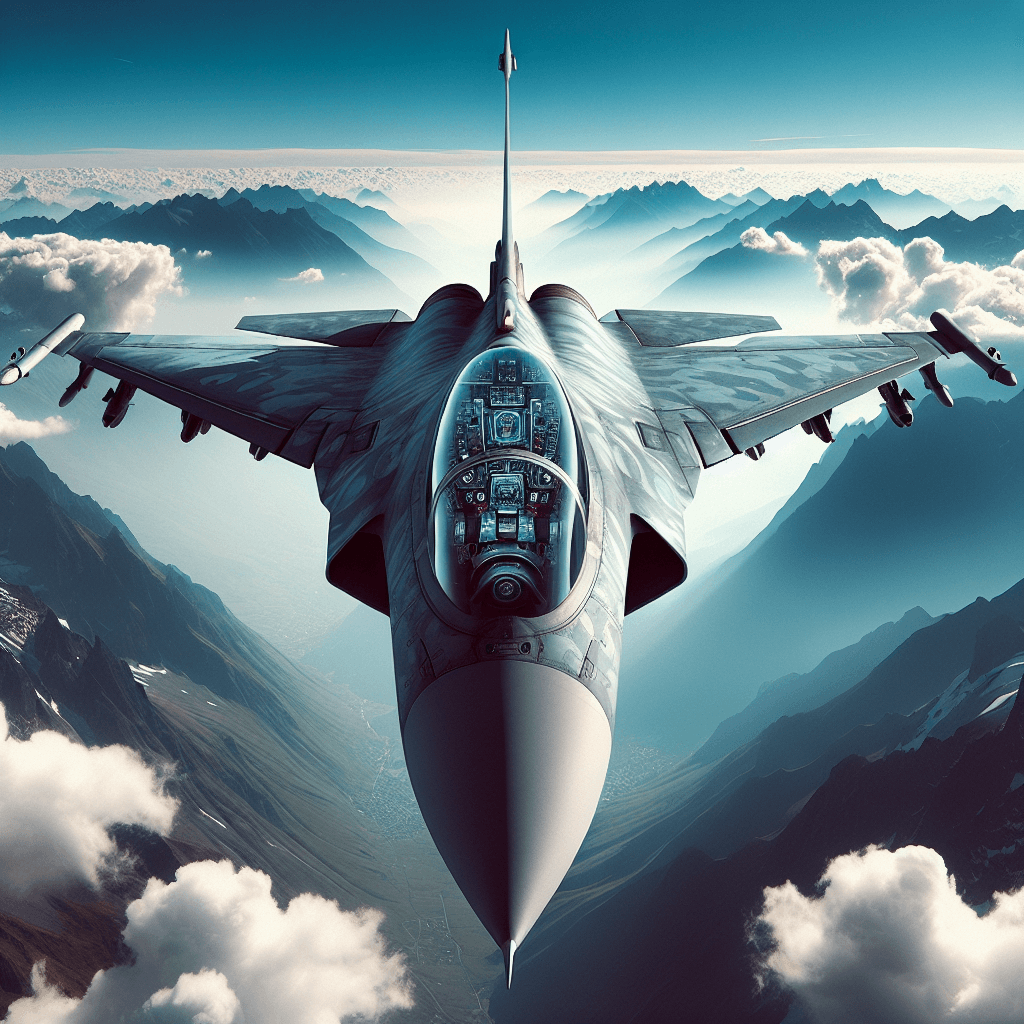
Have you ever looked at a photo of a military jet, perhaps the formidable A-10 Warthog or a Canadian CF-18 Hornet, and noticed something peculiar on its belly? From a distance, it looks like a second, upside-down cockpit, complete with a canopy and frame. This isn't a bizarre design flaw or a manufacturing error; it's a deliberate and surprisingly clever piece of low-tech deception known as a "false canopy." This simple coat of paint serves a critical, life-saving purpose in the high-stakes world of aerial combat. This post will explore the fascinating reason behind this visual trickery, delving into how it works, its history, and its continued relevance in the age of advanced warfare.
The Art of Deception: What is a False Canopy?
A false canopy is a visual camouflage scheme where a replica of the aircraft's cockpit is painted on its underside. The goal is simple but ingenious: to confuse an enemy pilot during a dogfight. In the chaotic, high-G environment of close-range aerial combat, pilots have mere fractions of a second to assess their opponent's orientation, anticipate their next move, and decide on a counter-maneuver. The false canopy is designed to disrupt this critical decision-making process by making it momentarily difficult to determine which way the aircraft is facing or turning.
A Split-Second of Confusion Saves Lives
To understand the effectiveness of the false canopy, you have to put yourself in the cockpit of an opposing pilot. A dogfight is a three-dimensional ballet of physics and instinct, where knowing your enemy's attitude—their orientation relative to you—is everything.
Imagine you are tracking an aircraft. You instinctively look for the familiar shape of the cockpit and canopy to judge if the plane is banking left, turning right, climbing, or diving. Now, what if that aircraft has a convincing silhouette of a cockpit painted on its belly?
- Obscuring Attitude: For a crucial moment, you might misinterpret the aircraft's maneuver. An enemy pilot might see the false canopy and believe the jet is in a gentle turn away from them, when in reality it is inverted and pulling a hard turn towards them.
- Forcing Hesitation: This momentary confusion can cause a critical hesitation. That split-second of doubt is often all it takes for the targeted pilot to gain a tactical advantage, either by escaping the enemy's sights or maneuvering into a superior firing position.
In a world where engagements are won and lost in the blink of an eye, this simple visual trick can be the difference between victory and defeat.
A Cold War Innovation Still in Use
The concept of the false canopy gained significant popularity during the Cold War. It was a low-cost, high-reward modification that could provide a tangible edge in Within Visual Range (WVR) combat. One of the most famous adopters of this tactic is the Royal Canadian Air Force, which has used the false canopy on its CF-18 Hornets for decades. The design became an iconic feature of their fleet.
Another prominent example is the United States Air Force's A-10 Thunderbolt II, better known as the "Warthog." The A-10's primary mission is close air support, flying low and slow to attack ground targets. This makes it a vulnerable target for both ground-based anti-aircraft fire and enemy fighters. The false canopy offers an additional layer of passive defense, helping to confuse enemy pilots who might try to engage the relatively slow-moving aircraft.
Interestingly, U.S. Navy and Air Force "Aggressor" squadrons—specialized units that play the role of the enemy to train pilots in realistic combat scenarios—have also frequently used false canopies to simulate adversary tactics and teach pilots how to overcome this specific type of visual deception.
Conclusion: A Clever Trick in a High-Tech World
In an era dominated by beyond-visual-range missiles, stealth technology, and advanced sensor fusion, a simple paint job might seem anachronistic. However, the false canopy is a powerful reminder that the fundamentals of combat haven't entirely changed. Dogfighting remains a critical skill, and in those close-quarters engagements, psychological tactics and visual deception are as relevant as ever. The false canopy is a testament to military ingenuity, proving that sometimes the most effective solutions aren't the most expensive or technologically complex. So, the next time you see that upside-down cockpit, you'll know you're looking at a clever, life-saving illusion painted on the skin of a war machine.


