
Why do some glasses automatically get dark when you step into the sunlight
It’s not magic, but a marvel of molecular engineering happening right before your eyes; discover the secret behind the tiny molecules that give your glasses their sun-adaptive superpowers.

Too Long; Didn't Read
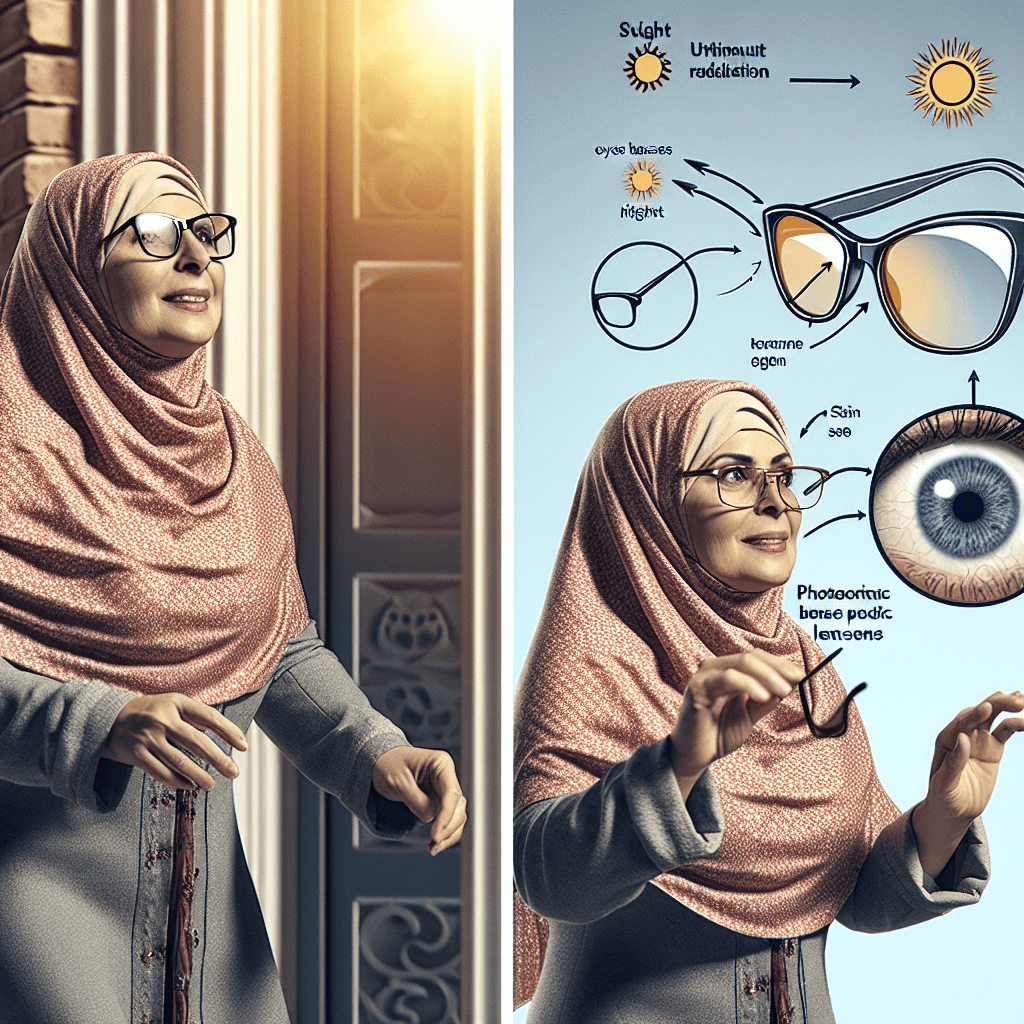
The lenses have molecules that change shape when exposed to the suns UV rays. This change makes them absorb light and get dark. Without UV light, they change back and become clear.
The Science of Shade: Why Do Some Glasses Automatically Get Dark When You Step into the Sunlight?
Have you ever watched someone step outside and, like magic, their clear eyeglasses transform into sunglasses? It’s a seamless, almost futuristic technology that many of us have seen but might not fully understand. It’s not a battery-powered trick or a digital screen; it’s a brilliant display of chemistry in action. So, why do some glasses automatically get dark when you step into the sunlight? This post will demystify the science behind these adaptive lenses, exploring how they work, their benefits, and their limitations.
The Science Behind the Shade: Introducing Photochromic Lenses
The official name for these "magical" lenses is photochromic lenses. The term itself offers a clue: "photo" means light, and "chroma" means color. So, these are lenses that change color in response to light. While Transitions® is a well-known brand name, it's the underlying photochromic technology that powers this convenient feature, available from many different lens manufacturers.
The core principle is simple: photochromic lenses are engineered to react specifically to ultraviolet (UV) radiation from the sun. When you're indoors or in a place with no UV light, the lenses remain clear. The moment you step into the sun's UV rays, the transformation begins.
The Molecular Dance: How UV Light Triggers the Change
The secret to this transformation lies in trillions of microscopic molecules embedded within the lens material. These molecules, often based on compounds like silver halide or spirooxazine, are the true workhorses of photochromic technology.
Here's a step-by-step breakdown of what happens:
- The Resting State: Indoors, away from UV light, these molecules have a specific, stable structure that doesn't absorb visible light. As a result, the lenses are perfectly transparent.
- UV Activation: When UV radiation from the sun hits the lenses, it provides a burst of energy. This energy causes the photochromic molecules to change their chemical structure, essentially twisting and "opening up."
- Absorbing Light: In their new, altered state, these molecules can now absorb parts of the visible light spectrum.
- The Darkening Effect: As billions of these molecules change shape simultaneously across the lens, they collectively block a significant amount of light from passing through to your eyes, causing the lens to darken and take on a sunglasses tint. The more intense the UV radiation, the more molecules change shape, and the darker the lenses become.
When you go back indoors, the process reverses. Without the energy from UV rays, the molecules gradually return to their original, clear state.
The Car Conundrum: Why They Stay Clear Behind the Wheel
One of the most common questions from photochromic lens wearers is, "Why don't my glasses darken in the car?" The answer lies in your car's windshield. Most modern windshields are designed to block over 99% of UV rays to protect the car's interior from sun damage. Since standard photochromic lenses rely on UV light as their trigger, the windshield effectively prevents them from activating.
However, lens technology is always evolving. Some newer generations of photochromic lenses, like Transitions® XTRActive®, are designed to react to a small amount of visible light in addition to UV, allowing them to achieve a partial tint inside a car.
Beyond Convenience: The Pros and Cons
While incredibly convenient, photochromic lenses have specific advantages and disadvantages to consider.
-
Pros:
- Convenience: They combine two pairs of glasses—clear prescription lenses and sunglasses—into one, eliminating the need to switch back and forth.
- Constant UV Protection: Whether clear or dark, photochromic lenses provide 100% protection against harmful UVA and UVB rays, safeguarding your eye health.
- Reduced Eye Strain: By automatically adapting to light conditions, they reduce squinting and eye fatigue in bright environments.
-
Cons:
- Transition Speed: The change isn't instantaneous. It can take 30-60 seconds to fully darken and several minutes to completely clear up when you return indoors.
- Temperature Sensitivity: Performance can be affected by the climate. They tend to get darker in cold weather and may not get quite as dark in very hot conditions.
- The Car Issue: As mentioned, most standard versions don't work effectively inside a vehicle.
Conclusion
The next time you see a pair of glasses darken in the sun, you'll know it’s not magic, but a marvel of molecular chemistry. Photochromic lenses use specialized molecules that undergo a reversible chemical reaction when exposed to UV light, providing a seamless transition from clear eyewear to protective sunglasses. This technology offers an elegant solution that marries convenience with crucial, continuous UV protection for your eyes. While they have a few limitations, these smart lenses represent a remarkable innovation in optics, making life a little easier and our eyes a lot safer, one sunny day at a time.


