
Why do some historic brick garden walls follow a wavy serpentine shape instead of a straight line
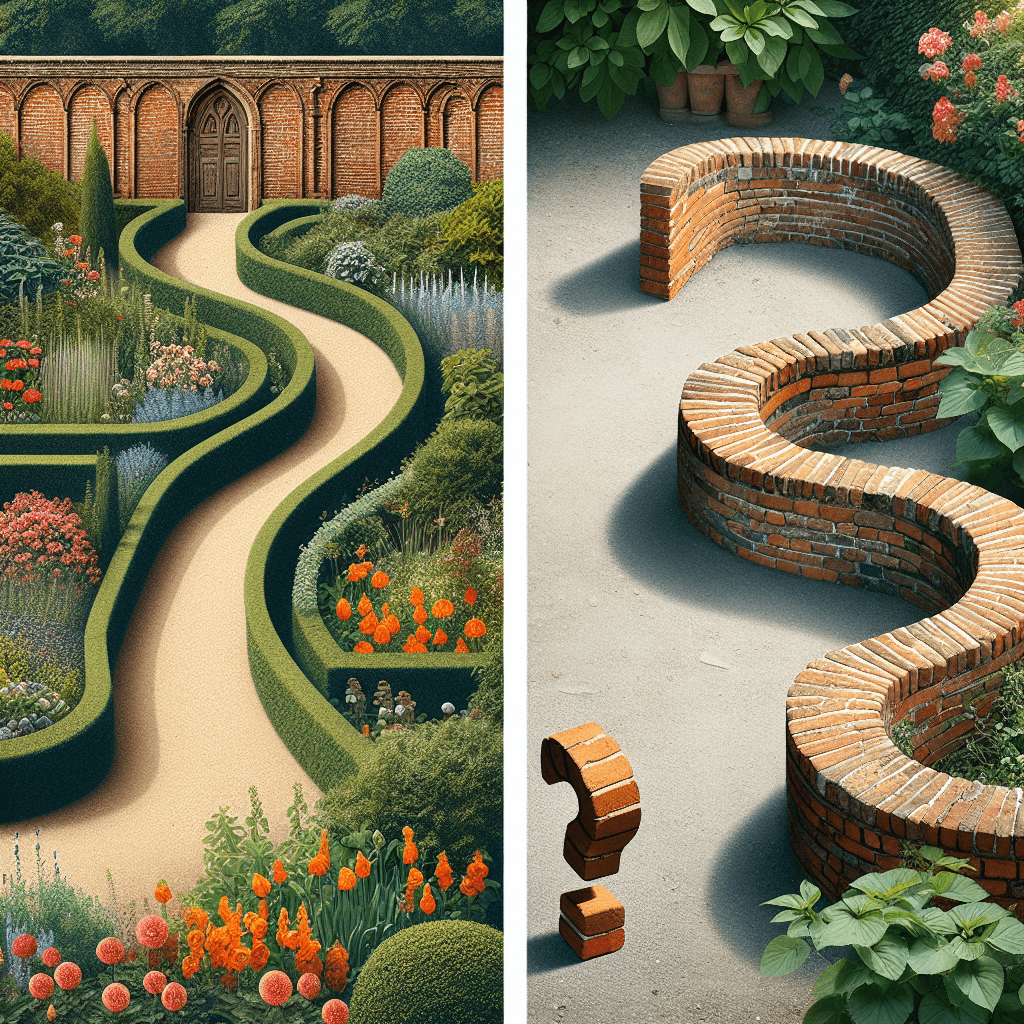
They may look like a builder’s artistic whim, but these elegant "crinkle-crankle" walls are actually a masterclass in structural engineering. Discover the surprising secret of why a wavy line is actually stronger—and more affordable—than a straight one.

Too Long; Didn't Read
Wavy serpentine walls are structurally stronger than straight walls, allowing them to be built using only a single layer of bricks. The curves provide inherent stability that prevents the wall from toppling, making them more cost-effective because they require fewer materials than a thicker straight wall.
Curves of Convenience: Why Do Some Historic Brick Garden Walls Follow a Wavy Serpentine Shape Instead of a Straight Line?
Walking through an 18th-century English estate or the historic campus of the University of Virginia, you might encounter a peculiar sight: a brick wall that meanders in a rhythmic, wave-like pattern. Known colloquially in England as "crinkle crankle" walls, these structures appear to be a whimsical choice made by a playful architect. However, these wavy boundaries are far more than a decorative flourish. In the world of historical masonry, the serpentine shape is a masterclass in functional engineering and economic efficiency. Why do some historic brick garden walls follow a wavy serpentine shape instead of a straight line? This post explores the ingenious blend of physics, horticulture, and frugality that allowed these walls to stand the test of time while using fewer resources than their straight-edged counterparts.
The Engineering Logic: Strength Through Geometry
The primary reason for the serpentine shape is structural stability. To understand why a wavy wall is superior, one must consider the limitations of a standard straight wall. A straight wall built only one brick thick (known as "single wythe") is incredibly fragile and prone to toppling under the pressure of wind or shifting soil. To make a straight wall stable, masons must either build it two or three bricks thick or reinforce it with heavy pillars called buttresses at regular intervals.
In contrast, the serpentine wall uses geometry to create its own support. The alternating curves act like built-in buttresses. Much like a piece of paper that cannot stand on its edge when flat but becomes rigid when folded into an accordion shape, the curves of a serpentine wall provide a wide base of support. This lateral strength allows the wall to remain upright despite being only a single brick thick.
Economic Efficiency: Doing More with Less
At first glance, it seems logical that a wavy path would require more bricks because the total linear distance traveled by the wall is longer than a straight line. However, the opposite is true. Because the serpentine design is inherently stable with just one layer of brick, it eliminates the need for:
- Double or triple thickness: Straight walls often require twice the amount of brick to achieve the same height and stability.
- Support Pillars: The labor and materials required to build external buttresses are entirely removed.
- Deep Foundations: In many cases, the distributed weight and stability of the curves allowed for shallower footings compared to heavy, multi-layered straight walls.
Historically, bricks were expensive and labor-intensive to produce. By using the serpentine method, builders could save approximately 25% to 50% on materials compared to a stable straight wall, making it a preferred choice for large garden enclosures where budget was a concern.
The Horticultural Advantage: Creating Microclimates
While the structural and economic benefits were significant, these walls were often built for gardens, where they served a biological purpose. The "bays" or alcoves created by the concave curves of the wall served as specialized microclimates.
- Heat Retention: In northern climates, such as Suffolk, England (where the majority of these walls are found), the brick absorbs solar heat during the day. The curved shape traps this warmth within the alcove, protecting plants from harsh winds.
- Fruit Production: Gardeners often planted "wall fruit," such as peaches or grapes, within these sunny recesses. The wall acted as a thermal mass, radiating heat back to the plants at night and effectively extending the growing season.
- Wind Protection: The undulating shape breaks up wind patterns, preventing the "wind tunnel" effect often created by long, flat surfaces.
Historical Context: From England to America
The serpentine wall reached its peak popularity in the 18th century. Suffolk, England, is particularly famous for them, boasting over 50 historic examples. Perhaps the most famous proponent of the style in the United States was Thomas Jefferson.
Jefferson integrated serpentine walls into the design of the University of Virginia. While some mistakenly credit him with the invention of the style, he actually adapted the English "crinkle crankle" design to suit the local landscape. Jefferson recognized that the serpentine shape was the most efficient way to enclose the university’s ten pavilions, providing privacy and garden space for faculty while minimizing the university’s construction costs.
Conclusion
The mystery of why some historic brick garden walls follow a wavy serpentine shape instead of a straight line is solved by looking at the intersection of beauty and pragmatism. These walls are a testament to a time when builders had to be innovative with limited resources. By trading a straight line for a curve, they achieved a structure that was stronger, cheaper to build, and more beneficial to the surrounding flora.
Today, these walls remain iconic landmarks, reminding us that the most elegant solutions are often those that solve multiple problems at once. Whether you appreciate them for their rhythmic aesthetic or their brilliant engineering, serpentine walls stand as a permanent reminder that in architecture, the "long way around" is sometimes the most efficient path of all.


