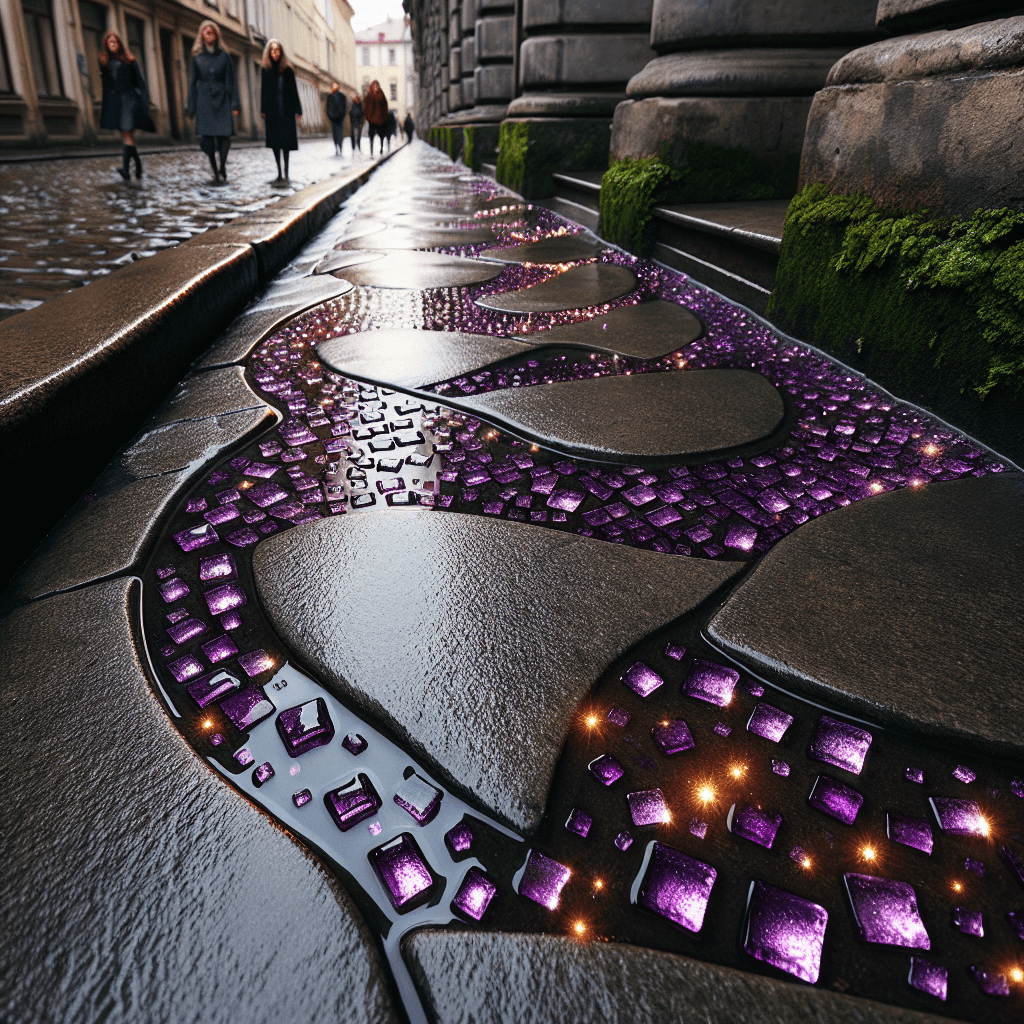
Why do some old city sidewalks have small purple glass squares embedded in the concrete
You’ve likely stepped over these mysterious amethyst tiles without realizing they were once "high-tech" skylights for a hidden world beneath the pavement. Discover the accidental science and secret history behind these glowing relics of a forgotten era.

Too Long; Didn't Read
Known as vault lights, these glass prisms were installed in the late 19th century to channel sunlight into underground basements before electricity was common. While originally clear, the glass turned purple over decades because manganese used in its production reacted to ultraviolet light.
The Secret History of the Sidewalk: Why Do Some Old City Sidewalks Have Small Purple Glass Squares Embedded in the Concrete?
Have you ever looked down while walking through the historic district of a city like Seattle, New York, or Victoria, B.C., and noticed clusters of small, jewel-toned purple glass squares embedded in the concrete? At first glance, they look like intentional decorations or perhaps a forgotten artistic installation. However, these "purple amethysts of the sidewalk" were not designed to be purple, nor were they meant to be decorative. They are actually a fascinating remnant of 19th-century urban engineering known as vault lights. Understanding why do some old city sidewalks have small purple glass squares embedded in the concrete reveals a story of architectural necessity and accidental chemical transformation. This post will explore the history, function, and science behind these curious urban features.
The Original Purpose: Illuminating the Underground
Before the widespread adoption of reliable electric lighting in the late 1800s and early 1900s, lighting the subterranean levels of city buildings was a significant challenge. Many commercial buildings featured "vaults"—extensions of the basement that reached out underneath the public sidewalk. These spaces were vital for storage, coal delivery, and even workspace.
To make these dark, damp areas usable, architects used vault lights (also called pavement lights). These were heavy frames of iron or concrete containing thick glass lenses. By embedding these lenses into the sidewalk above, natural sunlight could be funneled directly into the basements below. This system provided several key benefits:
- Cost Efficiency: Natural sunlight was free, reducing the need for expensive gas lighting.
- Fire Safety: Gas lamps were a major fire hazard in cramped, poorly ventilated basements. Vault lights provided a safe, "cold" light source.
- Productivity: By illuminating the vaults, businesses could maximize their usable square footage for manufacturing or inventory management.
The Chemistry of the Purple Hue
The most striking feature of these glass squares today is their vibrant purple color, but they weren't always this way. When they were first installed, the glass was crystal clear. The transformation is the result of a chemical reaction known as solarization.
During the late 19th century, glass manufacturers often struggled with iron impurities in their raw materials, which gave the finished glass a greenish tint. To achieve a clear, colorless product, manufacturers added manganese dioxide as a clarifying agent. This worked perfectly for decades—until the glass was exposed to prolonged ultraviolet (UV) radiation from the sun.
According to historical conservationists, the UV rays cause a slow chemical change in the manganese, shifting its oxidation state. Over 50 to 100 years of sun exposure, this process turns the glass from transparent to a light lavender, and eventually to a deep, royal purple. Ironically, the very thing that made the glass clear initially is what eventually gave it its signature color.
The Evolution and Decline of Vault Lights
The use of vault lights peaked between the 1860s and the 1930s. One of the most famous manufacturers was the Tucker & Vinton company, which produced the "Luxfer Prism" style of glass. These weren't just flat panes; they often featured prismatic bottoms designed to bend light and throw it deep into the corners of a room rather than just letting it drop straight down.
However, several factors led to their eventual decline:
- Electricity: As electric bulbs became cheap and ubiquitous, the need for natural basement lighting vanished.
- Maintenance Issues: Over time, the iron frames would rust and expand, cracking the glass and the surrounding concrete, leading to sidewalk leaks.
- Safety Concerns: Older glass squares can become extremely slippery when wet, posing a hazard to pedestrians.
Because of these issues, many cities paved over their vault lights with standard concrete or replaced the glass with metal plates. Today, finding an intact "purple sidewalk" is becoming increasingly rare.
Conclusion
The presence of purple glass squares in old city sidewalks is a beautiful example of how functional infrastructure can transform into a historical treasure. While they began as a practical solution for lighting dark basements during the pre-electric era, their accidental chemical evolution has turned them into iconic markers of urban heritage. Understanding why do some old city sidewalks have small purple glass squares embedded in the concrete allows us to appreciate the ingenuity of past architects and the literal "marks of time" left by the sun. Next time you find yourself in an older part of town, keep your eyes on the ground; you might just be walking over a century of hidden history.