
Why do some people have a tiny hole above their ear that is actually a vestigial remnant of gills
That tiny hole above your ear isn’t just a random mark—it’s a fascinating biological relic that links you directly to the prehistoric sea. Discover the strange reason why some humans are born with these "evolutionary leftovers" from our ancient, fish-like ancestors.

Too Long; Didn't Read
Some people are born with a tiny hole called a preauricular sinus, which is a congenital feature formed during fetal development. Evolutionary biologists suggest these holes are vestigial remnants of fish gills, serving as a biological link to our ancient aquatic ancestors. While typically harmless, they represent a rare structural leftover from early vertebrate evolution.
Hidden Evolutionary Echoes: Why Do Some People Have a Tiny Hole Above Their Ear That Is Actually a Vestigial Remnant of Gills?
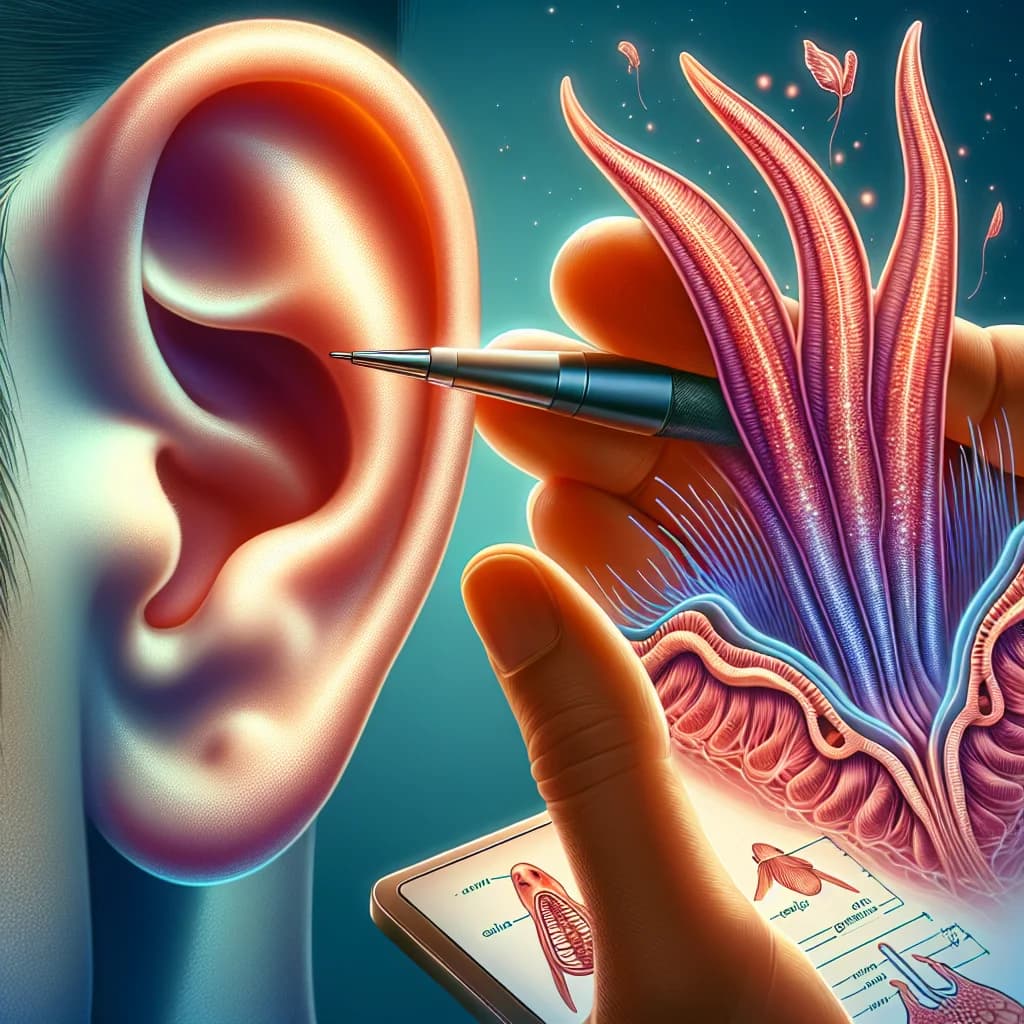
Have you ever noticed a tiny, pin-sized hole tucked away where the top of a person's ear meets their face? While it might look like a stray piercing or a minor scar, this feature is actually a congenital condition known as a preauricular sinus. Far from being a random blemish, some evolutionary biologists suggest this tiny pit is a living "fossil" on the human body—a vestigial remnant of the gills our distant ancestors once used to breathe underwater. This fascinating anatomical quirk affects a small percentage of the global population and serves as a direct link to our deep biological past. This blog post explores the science behind the preauricular sinus, explaining why it forms during embryonic development and what it reveals about the evolutionary journey of the human species.
What Exactly Is a Preauricular Sinus?
A preauricular sinus (also known as a preauricular pit or cyst) is a small hole or tract located just in front of the ear, usually at the point where the ear cartilage meets the temple. Though it appears to be just a surface-level indentation, it is actually the opening to a narrow tunnel or "sinus tract" under the skin.
According to medical data published in the Journal of the American Academy of Otolaryngology, the prevalence of these holes varies significantly by region:
- North America and Europe: Approximately 0.1% to 0.9% of the population.
- Asia and Parts of Africa: Prevalence can be as high as 4% to 10%.
While these holes are often present on only one side (unilateral), they can appear on both ears (bilateral) in about 25% to 50% of cases. For most people, the sinus is entirely asymptomatic and requires no treatment, existing simply as a unique anatomical trait.
The Evolutionary Link: From Gills to Ears
The most compelling explanation for these holes comes from the field of evolutionary biology. During the first few weeks of human embryonic development, all vertebrate embryos—including humans—develop structures called pharyngeal arches (or branchial arches).
In fish, these arches eventually develop into gills. In humans, however, these same embryonic structures are repurposed to form the various components of the head and neck. For instance, the first and second arches eventually become the bones of the inner ear, the jaw, and the muscles used for swallowing.
The "Inner Fish" Theory
Evolutionary biologist Neil Shubin, author of the renowned book Your Inner Fish, suggests that the preauricular sinus is an "evolutionary remnant of fish gills." When the first and second pharyngeal arches fail to fuse perfectly during the early stages of pregnancy, a small gap remains. This gap manifests as the tiny hole we see today. Essentially, it is a biological glitch that occurs when the body "forgets" to completely transition from its ancient aquatic blueprint to its modern terrestrial form.
Why Do Some People Have Them and Others Don’t?
The appearance of a preauricular sinus is primarily determined by genetics. Studies in human genetics suggest that the trait is often inherited in an autosomal dominant pattern. This means that if one parent has the hole, there is a significant chance their children will also possess the feature.
While the "gill remnant" theory provides an evolutionary context, the immediate cause is a developmental failure during the sixth week of gestation. This is the period when the "hillocks of His"—six small protuberances that fuse together to form the external ear—are supposed to join. If these hillocks do not merge seamlessly, the resulting gap creates the sinus tract.
Living with a Preauricular Sinus: Is It Dangerous?
In the vast majority of cases, these vestigial holes are harmless. They do not impair hearing and are not connected to the brain or the inner ear canal. However, because the sinus is a hollow tract lined with skin cells, it can occasionally face minor complications:
- Infection: Bacteria can become trapped in the narrow tract, leading to redness, swelling, or discharge.
- Cyst Formation: If the opening becomes blocked, a sebaceous cyst can develop under the skin.
- Surgical Removal: While most people never need medical intervention, doctors may recommend surgical excision if the site becomes chronically infected.
Conclusion
The tiny hole above the ear is much more than a medical curiosity; it is a remarkable piece of evidence regarding our evolutionary heritage. By understanding the preauricular sinus as a vestigial remnant of the structures that once formed gills, we gain a deeper appreciation for the complex history written into the human body. These "gill pits" remind us that our anatomy is a work in progress, shaped by millions of years of adaptation and transition from sea to land. Whether you have one of these holes yourself or have simply noticed them on others, they serve as a fascinating reminder that we still carry traces of our ancient ancestors within our very skin.


