
Why do some people's hair turn curly only when it gets wet
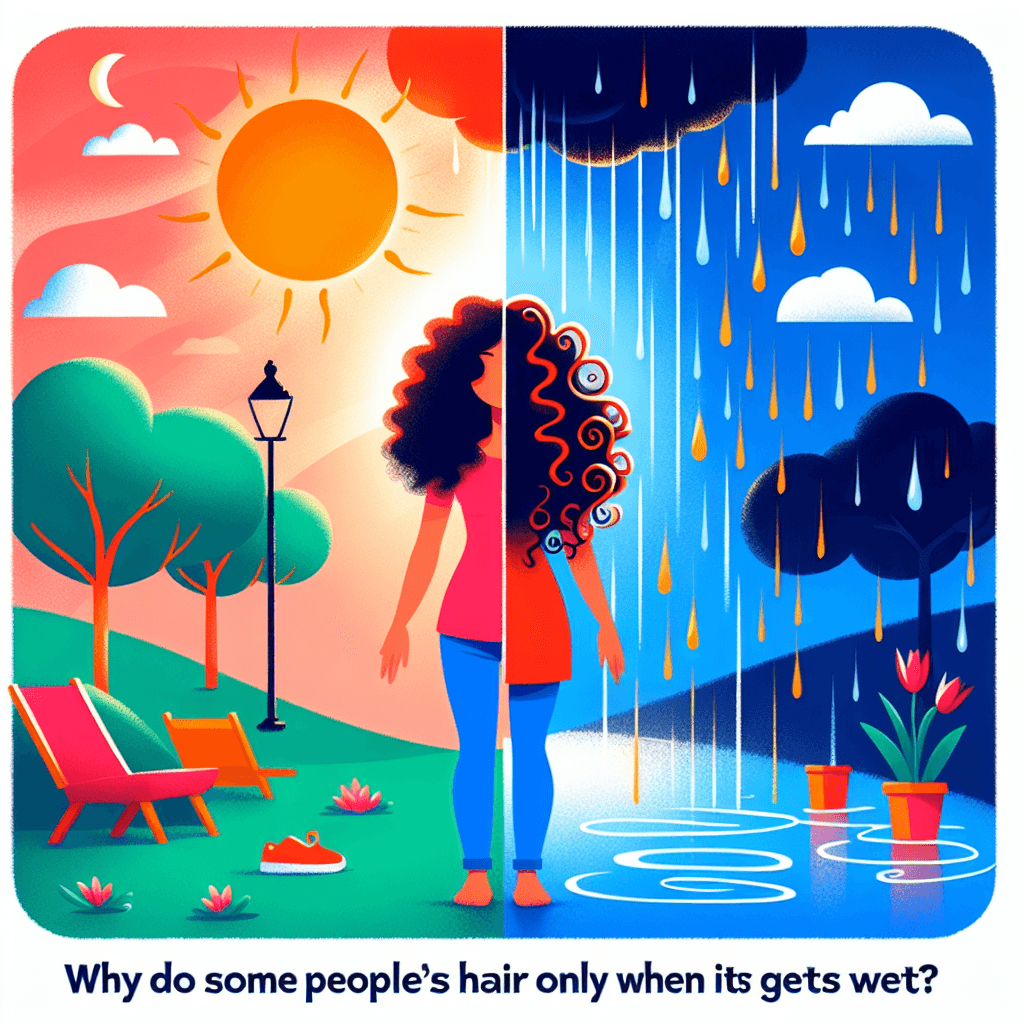
Does your hair have a secret curly identity that only emerges with a splash of water? We’re uncovering the hidden science that explains why your hair might not be as straight as you think.

Too Long; Didn't Read
Water breaks the temporary bonds holding your hair straight, revealing its true, underlying curl pattern. As it dries, those bonds reform, often pulling the hair straighter again, especially with styling.
The Hidden Wave: Why Does Some Hair Turn Curly Only When It Gets Wet?
Have you ever stepped out of the shower, looked in the mirror, and seen a head full of waves or curls, only to watch them disappear into a much straighter style as your hair dries? You're not imagining things, and you're certainly not alone. This common and often baffling phenomenon isn't a trick of the light; it's a fascinating display of chemistry and biology happening right on your head. Understanding why your hair reveals its true, curly nature only when wet can unlock the secret to embracing your natural texture. This post will dive into the molecular science behind this "wet curl" effect, exploring the permanent and temporary bonds that dictate your hair's shape from one moment to the next.
It All Starts at the Root: The Role of the Hair Follicle
Before we can understand why hair changes shape, we need to know where its fundamental texture comes from. The shape of your hair is primarily determined by the shape of the hair follicles in your scalp.
- Round follicles typically produce straight hair.
- Oval or asymmetrical follicles produce wavy or curly hair.
This follicle shape dictates the angle at which your hair grows out and influences its internal structure. This is your hair’s genetic blueprint—the natural pattern it wants to follow. So, if you have oval follicles, your hair has the potential to be curly, even if it doesn't always look that way when dry.
The Science of Shape: Disulfide vs. Hydrogen Bonds
The real key to the wet-to-dry transformation lies in two types of chemical bonds within the keratin proteins that make up each strand of hair. Think of them as two different kinds of "glue" holding your hair in a particular shape.
Disulfide Bonds: The Permanent Framework
Disulfide bonds are strong, covalent bonds that permanently link keratin protein chains together. They are like the steel frame of a building—they create the fundamental, lasting structure of your hair. These bonds are responsible for your natural hair type (straight, wavy, or curly) as determined by your follicles. They don't break easily and are only altered by strong chemical treatments like perms or chemical straighteners.
Hydrogen Bonds: The Temporary Stylists
Hydrogen bonds are much weaker and far more numerous than disulfide bonds. If disulfide bonds are the building's frame, hydrogen bonds are the interior decorations. They are easily broken by the presence of water and then reform as the hair dries. This is the crucial element in our mystery. There are millions of these bonds in your hair, and their collective power is what gives your hair its shape on a day-to-day basis.
Enter Water: The Great "Reset" for Your Hair
When your hair gets wet, a remarkable process unfolds at the molecular level. Water molecules (H₂O) are absorbed by the hair shaft and immediately get to work breaking down the temporary hydrogen bonds. With these temporary "stylists" out of the picture, your hair is freed from its dry, styled shape.
Once the hydrogen bonds are broken, your hair defaults to the natural shape dictated by its permanent disulfide bonds and follicle structure. For many, this is a wavy or curly pattern that was previously hidden. The water essentially hits a "reset" button, allowing your hair's innate texture to spring to life.
As your hair begins to dry, new hydrogen bonds start to form, locking the strands into whatever shape they are currently in. If you let it air-dry without touching it, you might preserve those curls. However, if you brush, comb, or pull it straight while it's drying, the hydrogen bonds will reform around this new, straighter shape.
The Straight-When-Dry Mystery: What's Hiding Your Waves?
If your hair has a natural curl pattern when wet, why does it often appear straight when dry? Several factors can be working against your hidden waves:
- Gravity and Weight: Longer or heavier hair can be pulled downward by gravity, stretching out the curl pattern as it dries.
- Brushing: Brushing dry or drying hair pulls the strands apart and breaks up curl clumps, creating a straighter, fluffier appearance.
- Product Buildup: Heavy conditioners, silicones, or oils can weigh hair down, preventing it from springing up into its natural curl.
- Damage: Heat styling or chemical damage can disrupt the hair's cuticle, making it less able to form and hold a consistent curl pattern.
Conclusion
The case of the disappearing curls is not magic, but a beautiful example of chemistry in action. Your hair's tendency to curl when wet is a glimpse of its true, genetically determined texture, which is governed by strong disulfide bonds. The temporary hydrogen bonds are what allow it to be styled straight, but they are no match for water, which acts as a reset button every time you wash it. So, the next time you see those waves appear in the mirror, know that you're seeing your hair in its most natural state. By understanding this science, you can choose to work with your hair's hidden texture, using techniques like scrunching or diffusing to encourage those wet curls to stick around long after your hair is dry.


