
Why do some species of birds deliberately rub live ants all over their feathers
It looks like a frantic struggle, but for many birds, coating their wings in angry ants is a calculated survival strategy rather than a mistake. Discover the hidden chemical secrets behind this bizarre ritual and why it might be nature’s most unusual spa treatment.

Too Long; Didn't Read
Birds engage in a behavior called anting, where they rub live ants on their feathers to utilize the insects' formic acid. This chemical acts as a natural pesticide to kill parasites like lice and mites, while also soothing skin irritation and making the ants safer to eat by depleting their chemical reserves.
Nature’s Natural Pesticide: Why Do Some Species of Birds Deliberately Rub Live Ants All Over Their Feathers?
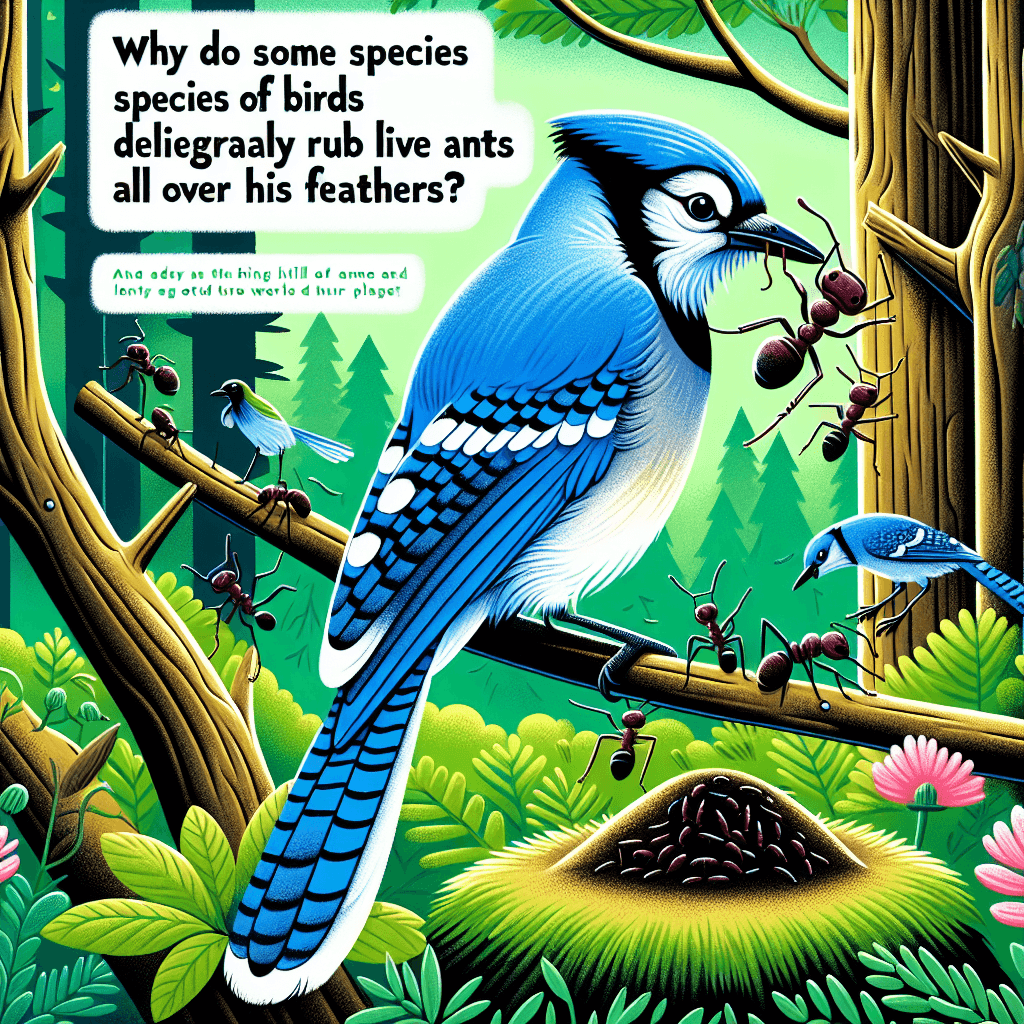
Imagine walking through a park and spotting a songbird seemingly in distress, frantically rolling in an anthill or picking up stinging insects and smearing them across its wings. This bizarre behavior, which has fascinated naturalists for decades, is known as "anting." While it looks like a chaotic struggle, it is actually a calculated and deliberate biological tactic. More than 200 species of birds, including crows, jays, starlings, and weavers, have been observed engaging in this unique activity. But what drives this behavior? Understanding why do some species of birds deliberately rub live ants all over their feathers reveals a fascinating intersection of chemistry, hygiene, and survival in the avian world. This post explores the leading scientific theories behind anting and how it benefits our feathered friends.
What Exactly is Anting?
Ornithologists categorize anting into two distinct behaviors: active and passive.
- Active Anting: The bird picks up an ant with its beak and rubs it vigorously against its primary flight feathers, tail feathers, and skin.
- Passive Anting: The bird finds a densely populated ant mound, crouches down, and spreads its wings, allowing hundreds of ants to crawl through its plumage.
In both instances, the bird’s goal is to provoke the ants into releasing their chemical defenses. Most ants used in this process belong to the subfamily Formicinae, which do not sting but instead spray or secrete formic acid.
The Leading Theory: Chemical Pest Control
The most widely accepted explanation for anting is that birds use the ants as a form of "chemical grooming." Birds are frequently plagued by ectoparasites, such as feather mites, lice, and ticks, which can damage their plumage and transmit diseases.
According to research published in the journal The Auk, formic acid is a potent insecticide and fungicide. When a bird rubs an ant on its feathers, the acid acts as a natural pesticide that can kill or repel these harmful parasites. This behavior is particularly prevalent during the summer months when parasite populations are at their peak. By utilizing the ants' natural defenses, birds can maintain the integrity of their feathers, which is vital for flight and insulation.
Soothing the Skin During Molting
Another compelling theory suggests that anting serves a medicinal purpose during the molting season. Molting is a physically taxing process where old feathers fall out to make way for new ones. The emergence of "pin feathers"—new feathers encased in a waxy sheath—can cause significant skin irritation and inflammation.
Some researchers believe that the formic acid or other secretions from the ants may act as a soothing agent or an antiseptic for the bird's itchy skin. Observations have shown that many species increase their anting behavior precisely when their new feathers are beginning to grow. This suggests that the chemical "bath" might provide relief from the discomfort associated with feather replacement.
Gourmet Preparation: Removing the Bitter Taste
Beyond hygiene, anting may also be a clever culinary trick. Many of the birds that engage in anting also consume ants as part of their diet. However, ants are often unpalatable because of their toxic chemical sprays.
By "wringing out" the ant against their feathers, the birds force the insect to deplete its entire supply of formic acid. Once the "poison" has been spent, the bird can then swallow the ant without the bitter taste or the risk of internal irritation. This theory positions anting as a form of food preparation, allowing birds to turn a chemically protected insect into a safe, protein-rich snack.
A Multifaceted Survival Strategy
While scientists continue to debate which of these reasons is the primary driver, it is likely that anting serves multiple purposes depending on the species and the environment. To summarize the potential benefits:
- Eradication of Parasites: Killing mites and lice that damage feathers.
- Antifungal Properties: Preventing fungal growth in damp plumage.
- Skin Relief: Reducing irritation during the molting cycle.
- Toxin Removal: Making the ants safer and tastier to eat.
Conclusion
The question of why do some species of birds deliberately rub live ants all over their feathers highlights the incredible ingenuity found in nature. Far from being a random act, anting is a sophisticated example of "zoopharmacognosy"—the process by which animals self-medicate using natural substances. Whether they are using formic acid to shield themselves from parasites, soothe their skin, or prepare a meal, these birds demonstrate a remarkable understanding of their chemical environment. As we continue to study avian behavior, anting remains a powerful reminder of the complex and often surprising ways that wildlife adapts to survive. The next time you see a bird performing this strange ritual, you’ll know you are witnessing a masterclass in natural chemistry.


