
Why do the largest objects in a shaken container of mixed nuts always rise to the very top
It seems to defy the laws of gravity: why do the largest, heaviest nuts always "float" to the top of the jar while the small pieces sink? Dive into the mind-bending physics of the "Brazil Nut Effect" and discover the secret science hiding in your favorite snack bowl.

Too Long; Didn't Read
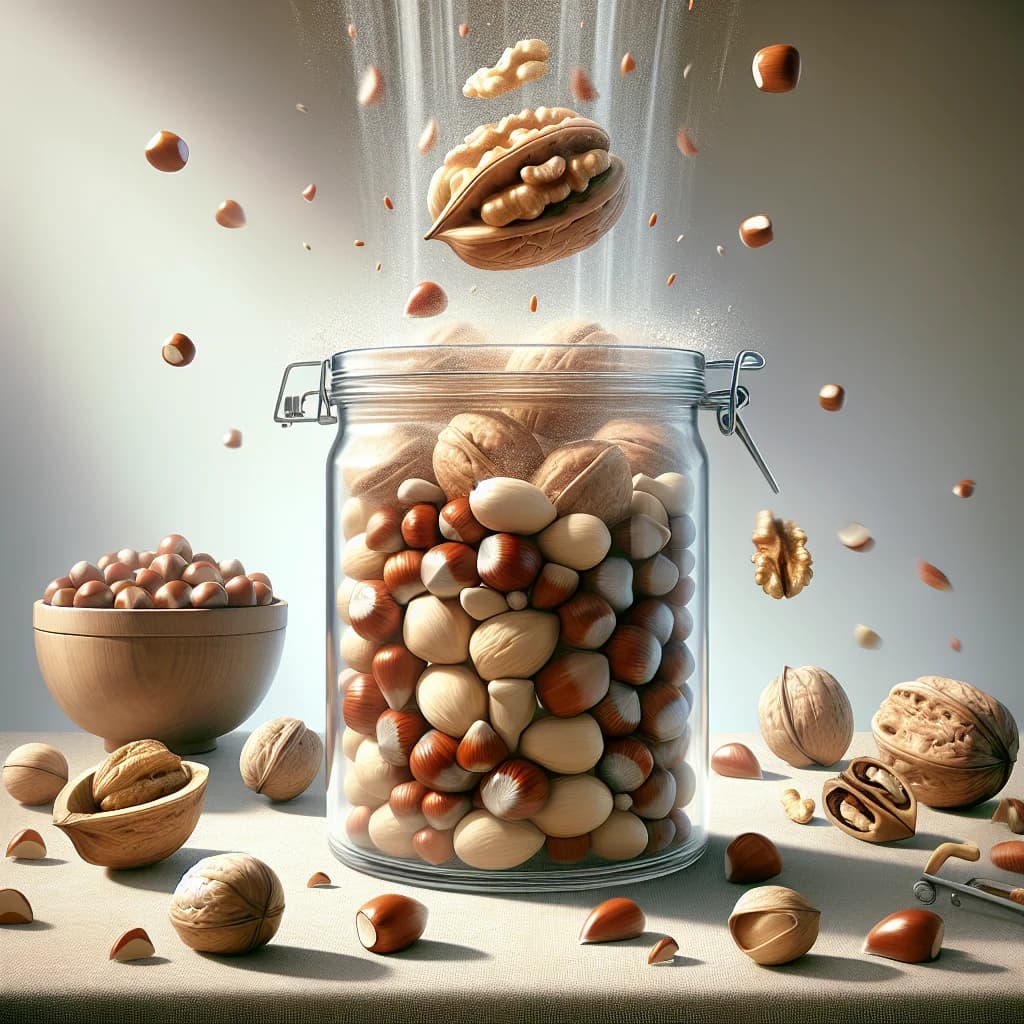
Shaking creates temporary gaps that small particles fall through, but large objects cannot. These smaller pieces settle underneath, gradually wedging the largest items to the top in a process known as the Brazil nut effect.
The Brazil Nut Effect: Why Do the Largest Objects in a Shaken Container of Mixed Nuts Always Rise to the Very Top?
Have you ever reached into a brand-new container of mixed nuts, hoping for a variety, only to find the massive Brazil nuts staring back at you from the surface? It feels like a magic trick performed by the grocery store, but it is actually a well-documented physical phenomenon. Whether it is cereal, muesli, or even pebbles on a construction site, the largest items almost always migrate to the top when shaken. This puzzling occurrence is known to physicists as the "Brazil Nut Effect." While it might seem like a simple matter of weight or size, the underlying mechanics involve complex interactions between gravity, friction, and movement. This post explores the scientific reasons why the largest objects in a shaken container of mixed nuts always rise to the very top.
Understanding Granular Materials
To understand this effect, we must first look at what nuts are: granular materials. Unlike liquids, which mix into a homogenous blend, or solids, which stay put, granular materials (like sand, seeds, or nuts) behave uniquely. They can flow like a liquid when poured but can also support weight like a solid.
When you shake a container of mixed nuts, you are adding kinetic energy to a granular system. This energy allows the individual pieces to move relative to one another. However, because they are discrete solids, they do not move randomly. Their movement is dictated by two primary mechanisms: percolation and granular convection.
The Mechanism of Percolation and Infilling
One of the most straightforward explanations for why large objects rise is "void filling" or percolation. Imagine a container filled with large Brazil nuts and small peanuts. As you shake the jar, all the nuts move upward momentarily, creating small gaps or "voids" beneath them.
- Small Gaps, Small Nuts: The smaller nuts (like peanuts or cashews) are small enough to fall into these newly created gaps.
- The One-Way Street: Once a small nut occupies the space beneath a large Brazil nut, the larger nut cannot move back down.
- The Upward Climb: With every shake, small particles continue to trickle downward, effectively "jacking up" the larger objects. Over time, this one-way movement forces the largest items to the very top of the pile.
Granular Convection: The Nut "Current"
While percolation explains movement in many scenarios, researchers at the University of Manchester and other institutions have identified a second, more complex process called granular convection. This process creates a circular flow similar to how boiling water moves in a pot.
- The Upward Flow: When a container is shaken, the friction from the walls of the container causes the nuts in the center to move upward more easily than those at the edges.
- The Downward Path: Once the nuts reach the top, they migrate toward the edges and attempt to move back down the sides of the container.
- The Size Trap: The "current" flowing down the sides of the jar is usually very narrow. While small nuts can fit into this narrow downward stream, the large Brazil nuts are too wide. They get trapped at the surface, unable to re-enter the cycle.
Real-World Implications of the Brazil Nut Effect
While it might seem like a trivial kitchen mystery, understanding why the largest objects in a shaken container rise to the top is critical for several industries. If ingredients do not stay mixed, it can lead to serious consequences:
- Pharmaceuticals: In the production of tablets, active ingredients must be perfectly mixed with fillers. If the "Brazil Nut Effect" occurs, one pill might have too much medicine while another has none.
- Construction: When mixing concrete, engineers must ensure that large stones (aggregates) stay evenly distributed rather than rising to the surface, which would weaken the structure.
- Geology: Scientists use these principles to understand how rocks and soil settle after earthquakes or how landslides behave.
Conclusion
The mystery of why the largest objects in a shaken container of mixed nuts always rise to the very top is a fascinating intersection of physics and everyday life. Through the combined forces of percolation—where small nuts fill the gaps beneath large ones—and granular convection—where large objects are trapped by narrow downward currents—nature ensures that the biggest pieces end up on display. This "Brazil Nut Effect" is more than just a snack-time quirk; it is a fundamental principle of granular science that affects everything from the medicine we take to the buildings we live in. Next time you shake a jar of nuts, remember that you are witnessing a complex display of fluid dynamics and mechanical physics in action.


