
Why do the nitrogen bubbles in a glass of Guinness appear to sink instead of rising to the surface
It looks like a gravity-defying magic trick, but the mesmerizing downward cascade in your pint is actually a fascinating feat of fluid dynamics. Discover the hidden science behind why Guinness bubbles appear to "sink" and why your eyes aren't actually deceiving you.

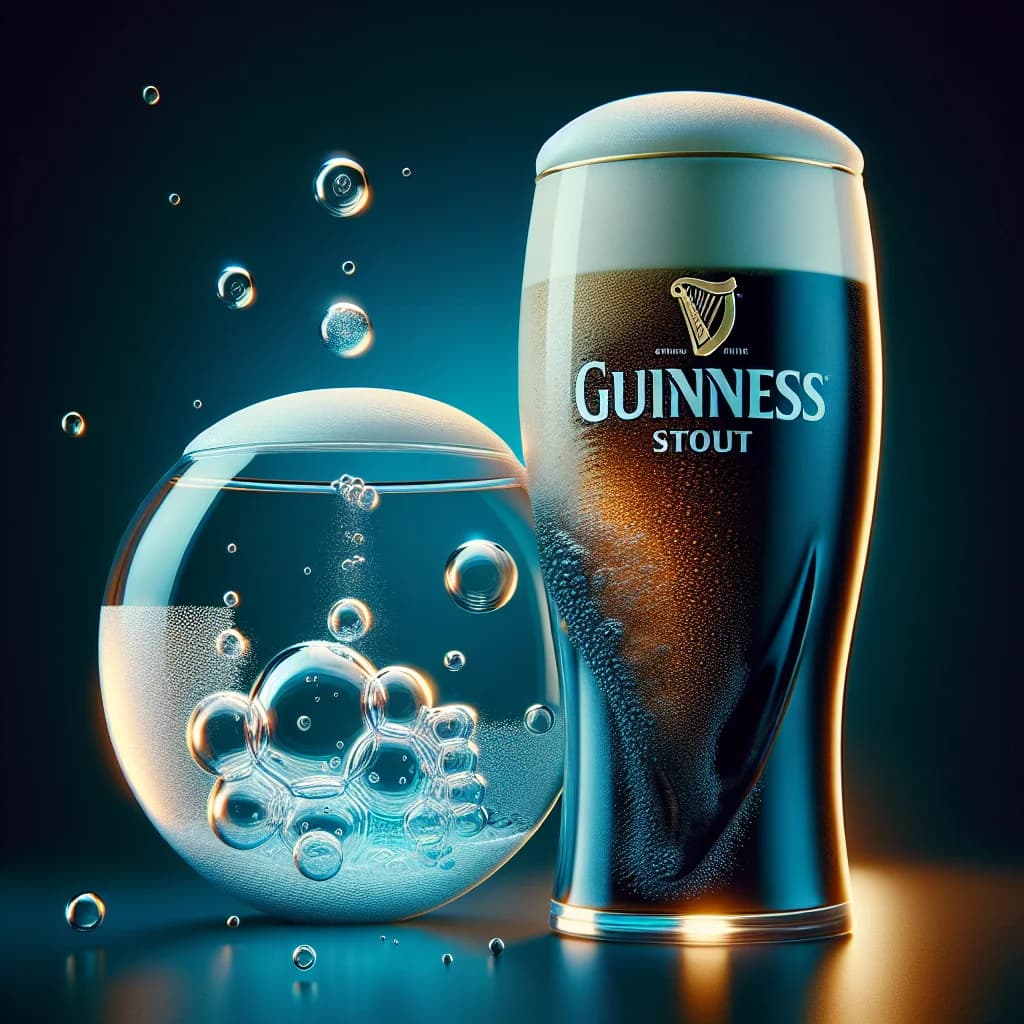
Too Long; Didn't Read
Bubbles in the center of the glass rise rapidly, creating a circular convection current that pushes liquid and smaller bubbles downward along the sides. This downward flow is stronger than the bubbles' natural buoyancy, making them appear to sink.
The Science of the Sinking Bubble: Why do the nitrogen bubbles in a glass of Guinness appear to sink instead of rising to the surface?
Watching a bartender pour a perfect pint of Guinness is a mesmerizing experience. As the dark liquid settles, a creamy white cascade appears to flow downward against the sides of the glass, seemingly defying the fundamental laws of buoyancy. In almost any other carbonated beverage, bubbles race toward the surface as fast as physics will allow. So, why do the nitrogen bubbles in a glass of Guinness appear to sink instead of rising to the surface?
This phenomenon is not an optical illusion or a clever marketing trick; it is a complex display of fluid dynamics. While it may look like the beer is breaking the rules of gravity, the "sinking" bubbles are actually the result of a specific circular current created by the glass's shape and the unique properties of nitrogen gas. This blog post will break down the science behind the "surge and settle" to explain exactly how this famous stout behaves the way it does.
The Role of Nitrogen vs. Carbon Dioxide
To understand why Guinness bubbles behave differently, we must first look at what is inside them. Most lagers and sodas are carbonated with carbon dioxide (CO2). Guinness, however, uses a "nitro" blend—roughly 75% nitrogen and 25% carbon dioxide.
There are two primary reasons why nitrogen changes the bubble's behavior:
- Bubble Size: Nitrogen is less soluble in liquid than CO2. When Guinness is poured through a restrictor plate in the tap, it creates much smaller bubbles than those found in a standard lager.
- Buoyancy and Drag: Because these nitrogen bubbles are tiny, they have less buoyancy. They do not possess the upward "pull" required to easily overcome the downward currents of the liquid surrounding them.
The Convection Current Theory
The secret to the sinking bubbles lies in a phenomenon called a "circulation cell" or convection current. In a standard pint glass, bubbles do not rise uniformly across the entire width of the glass. Instead, they rise more easily in the center.
According to research conducted by mathematicians at the University of Limerick, the process follows a specific cycle:
- The Upward Surge: In the center of the glass, where there is less friction from the walls, the bubbles rise rapidly to the top.
- Displacement: As the bubbles rise in the center, they pull the surrounding liquid upward with them.
- The Downward Flow: Once the liquid reaches the surface, it has nowhere to go but back down. It flows outward toward the edges of the glass and then travels down the sides.
- The Drag Effect: Because the nitrogen bubbles are so small and light, the downward force of the liquid at the edges is stronger than the bubbles’ natural urge to float. Consequently, the bubbles are swept downward in a "curtain," creating the appearance of sinking.
Why Glass Shape Matters
The geometry of the glass plays a vital role in this visual display. Guinness is traditionally served in a "tulip" glass, which widens toward the top. Research from Stanford University and the University of Limerick confirms that this outward slope encourages the sinking effect.
In a glass that tapers outward, the bubbles near the walls actually move away from the glass as they rise. This leaves a "bubble-free" zone of denser liquid near the top edges. This denser liquid is heavier and sinks rapidly, dragging the tiny nitrogen bubbles down with it. If you were to pour Guinness into a glass that tapered inward (getting narrower at the top), the effect would be significantly diminished or even reversed.
An Optical Reality, Not an Illusion
It is important to note that the bubbles are indeed moving downward. For years, some argued it was merely an optical illusion. however, high-speed camera observations have proven that the bubbles at the perimeter of the glass are physically traveling toward the bottom.
Summary of Key Factors:
- Nitrogen Bubbles: Small size makes them susceptible to liquid currents.
- Central Rise: Bubbles move up the middle where resistance is lowest.
- Edge Sink: Displaced liquid flows down the sides, pulling bubbles with it.
- Glass Geometry: The sloping walls of the pint glass accelerate the downward current.
Conclusion
The mystery of why the nitrogen bubbles in a glass of Guinness appear to sink instead of rising to the surface is a beautiful intersection of chemistry and physics. It is the result of tiny nitrogen bubbles being caught in a powerful convection current, driven by the shape of the glass and the density of the liquid. While the bubbles in the center are indeed rising, the ones we see at the edge are being pulled down by the returning flow of the beer.
Understanding the science behind the "black stuff" only adds to the appreciation of the craft. The next time you watch a pint settle, you aren't just looking at a drink; you are watching a localized weather system contained within a few inches of glass. For those interested in fluid dynamics, the Guinness pour remains one of the most accessible and delicious laboratory experiments in the world.


