
Why do wild crows recognize individual human faces and hold onto grudges for many years
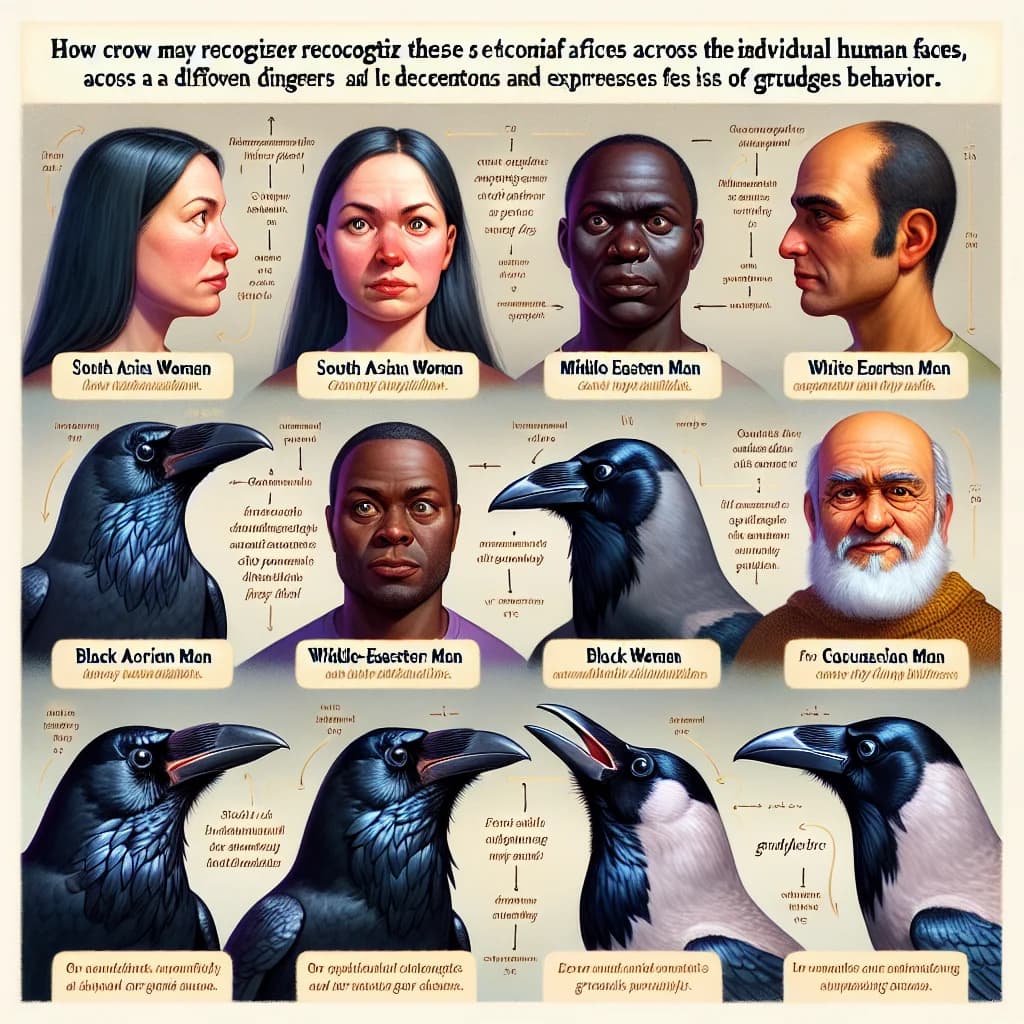
If you’ve ever crossed a crow, be warned: they aren't just watching you, they’re memorizing your face for a vendetta that can last a lifetime. Discover the startling science behind how these birds recognize their enemies and even teach their entire flock to never forget a betrayal.

Too Long; Didn't Read
Crows use advanced facial recognition and social learning to identify threats and ensure survival. By remembering specific human faces and sharing that information with their flock, they maintain long-term grudges to avoid dangerous individuals for years.
The Grudge of the Crow: Why Do Wild Crows Recognize Individual Human Faces and Hold Onto Grudges for Many Years?
Imagine walking through a local park when suddenly, a crow begins to dive-bomb your head, "scolding" you with loud, aggressive caws. You haven't interacted with this bird today, but it clearly remembers you—or perhaps it remembers what you did years ago. This isn't a scene from a thriller; it is a scientifically documented reality of avian behavior. Crows possess an uncanny ability to distinguish between individual people based solely on their facial features. But why do wild crows recognize individual human faces and hold onto grudges for many years? Understanding this behavior requires looking into the complex social structures and high-level neurological functions of these remarkable birds. This blog post explores the evolutionary necessity and biological mechanisms that turn crows into the most observant neighbors in the animal kingdom.
The Science of the "Crow Grudge"
The most famous exploration of this phenomenon was conducted by Dr. John Marzluff at the University of Washington. In a landmark study, researchers wore specific masks while capturing and banding wild crows. One mask was a "dangerous" caveman face, while the other was a "neutral" mask of a well-known politician.
The findings were startling:
- Facial Specificity: The crows didn't just react to humans in general; they specifically targeted the individuals wearing the "dangerous" mask, even when those people were walking in a crowd of others.
- Long-Term Retention: Years after the initial encounter, the crows continued to scold the dangerous mask, even if the person wearing it wasn't the one who had originally captured them.
- Generational Knowledge: Perhaps most surprisingly, crows that were never even present during the initial banding started scolding the mask. The original crows had "told" their offspring and peers about the threat.
The Biological Powerhouse: Inside the Crow's Brain
Why are crows so much better at this than other animals? It comes down to their brain structure. While a crow’s brain is small, it is incredibly dense with neurons. Research published in Science suggests that crows have a high number of neurons in the nidopallium, an area of the brain responsible for high-level cognitive functions, similar to the prefrontal cortex in primates.
When a crow sees a human face, its brain processes the information using pathways similar to those in humans. Using PET scans on crows, researchers found that when a bird views a "threatening" face, the regions of the brain associated with memory and fear light up significantly. This indicates that their "grudges" are not just instinctual reactions but are rooted in a sophisticated system of facial recognition and emotional memory.
Evolutionary Advantages of Social Learning
Crows are highly social creatures that live in complex family groups. From an evolutionary perspective, the ability to recognize individual humans is a survival mechanism. In urban environments, humans represent both a primary source of food and a primary source of danger.
Threat Assessment
By identifying which specific humans are "friends" (those who provide food) and which are "foes" (those who throw rocks or disturb nests), crows can navigate human-dominated landscapes with minimal risk.
Information Sharing
Holding onto a grudge for years and passing that information to the flock ensures the colony’s safety. If a specific human is known to be dangerous, the entire community benefits from that knowledge. This "horizontal" and "vertical" transmission of information allows a single bad interaction to color the reputation of a human for an entire generation of birds.
Conclusion
The question of why do wild crows recognize individual human faces and hold onto grudges for many years reveals a deep complexity in avian intelligence. Through a combination of dense neural pathways, sophisticated social learning, and an evolutionary need to navigate human environments, crows have become masters of observation. They do not see us as a generic species; they see us as individuals with distinct intentions.
Recognizing the depth of crow intelligence serves as a reminder of the intricate lives happening right above our heads. The next time you see a crow watching you from a telephone wire, remember: they aren't just looking at you—they are remembering you. If you want to stay on their good side, a few unsalted peanuts might be a wise investment for your long-term reputation in the neighborhood.


