
Why do your fingers prune in water to create specialized high-grip treads similar to a rain tire
Think those pruney bath-time fingers are just a sign of soggy skin? Discover the fascinating biological engineering that transforms your hands into high-performance "rain tires" for ultimate underwater grip.

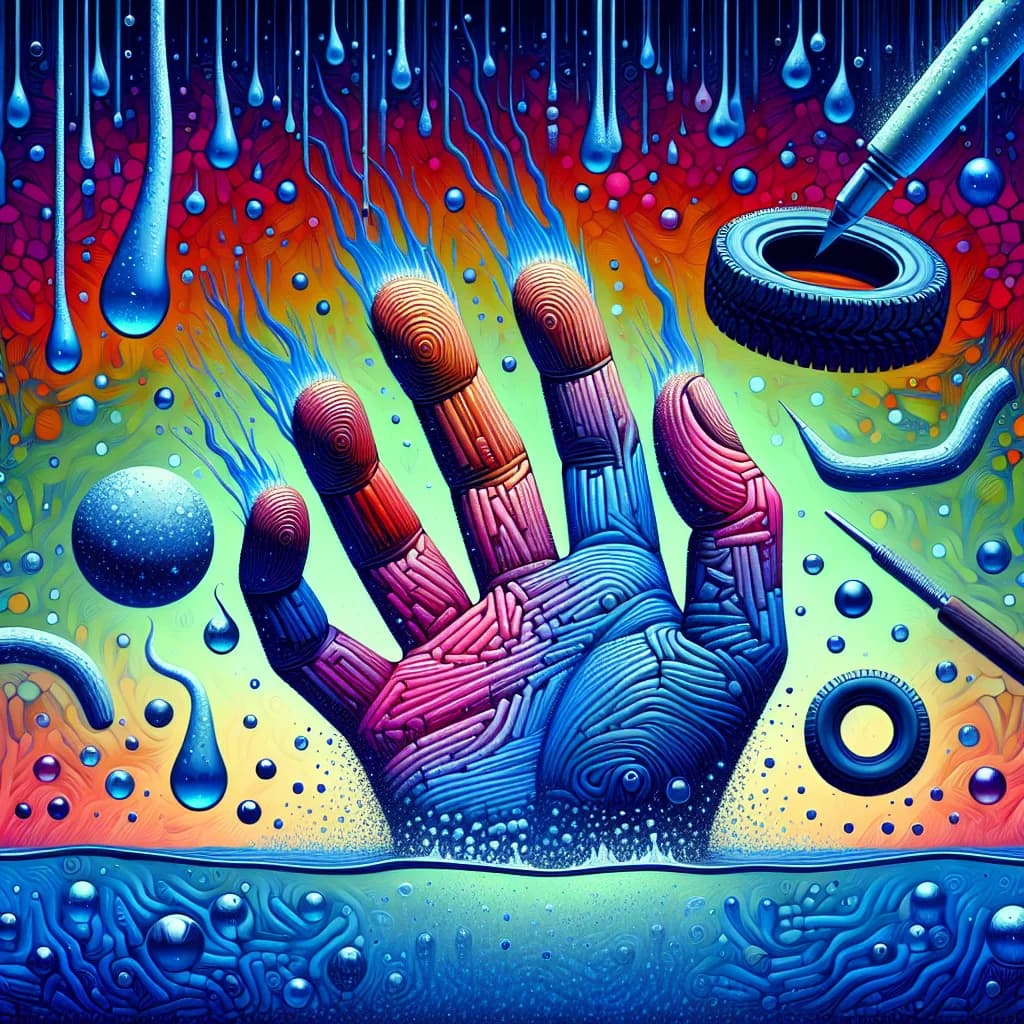
Too Long; Didn't Read
Fingers wrinkle in water because of an evolutionary adaptation controlled by the nervous system rather than simple water absorption. These ridges act like specialized treads on rain tires, channeling water away from the skin to improve grip and stability when handling wet objects.
Nature’s Rain Tires: Why Do Your Fingers Prune in Water to Create Specialized High-Grip Treads?
Have you ever stepped out of a long bath or a refreshing swim only to find your fingertips looking like shriveled raisins? For decades, most of us assumed this was simply a result of osmosis—water soaking into the outer layer of our skin and making it swell. However, if that were the case, why doesn't the rest of our body wrinkle in the same way?
The truth is far more fascinating. This "pruning" is not an accidental side effect of biology; it is a sophisticated, active response controlled by our autonomic nervous system. Scientists now believe that this phenomenon is an evolutionary adaptation. Essentially, your body is transforming your hands and feet into specialized tools. But why do your fingers prune in water to create specialized high-grip treads similar to a rain tire? This biological transformation provides a significant mechanical advantage, ensuring we maintain our footing and our grasp even in the slickest environments.
The Science Behind the Wrinkle
The long-standing belief that wrinkling was caused by water entering the skin was debunked when surgeons noticed that if certain nerves in the fingers were severed, the skin no longer wrinkled in water. This discovery proved that the process is an active command from the brain.
When your skin remains submerged for several minutes, your nervous system triggers the blood vessels in your fingertips and toes to constrict. As these blood vessels shrink, the volume of the underlying tissue decreases, pulling the skin inward to create the characteristic ridges and valleys.
The Rain Tire Analogy: Engineering in Biology
The most compelling explanation for why we possess this trait involves fluid dynamics. When a surface is wet, a thin film of water can act as a lubricant, making it incredibly difficult to create friction. This is the same challenge faced by automotive engineers when designing tires for wet weather.
How Rain Tires Work
A smooth tire (a "slick") provides the most surface area on dry pavement. However, on a wet road, that same tire would "hydroplane," sliding across the top of the water. Rain tires are designed with deep grooves—treads—specifically to channel water away from the point of contact, allowing the rubber to grip the road directly.
The Biological Tread
Our fingers follow this exact same principle. Research led by evolutionary neurobiologist Mark Changizi suggests that the pattern of wrinkles on our fingers is optimized for drainage.
- Water Channels: The wrinkles act as tiny drainage pipes. When you press your finger against a wet object, the wrinkles channel the water out from between the finger and the object.
- Increased Friction: By removing the water "lubricant," your skin makes better contact with the surface, significantly increasing friction and grip.
- Pressure Distribution: The ridges help distribute pressure more effectively, allowing for a more secure hold on slippery items like stones or submerged food.
Evidence from the Lab: The Newcastle Study
To test the "high-grip tread" hypothesis, researchers at Newcastle University conducted a study in 2013. Participants were asked to pick up submerged marbles and weights of different sizes using both dry, smooth hands and wet, wrinkled hands.
The results were definitive: participants with "pruned" fingers moved the wet objects significantly faster than those with dry fingers. Interestingly, the wrinkles provided no advantage when handling dry objects, suggesting that this trait is a highly specialized adaptation specifically for aquatic or damp environments.
Evolutionary Advantages
Why would our ancestors need built-in rain tires? From an evolutionary perspective, the ability to maintain a grip in wet conditions was likely a matter of survival.
- Foraging: Our ancestors likely gathered food from wet vegetation, tide pools, or slippery riverbeds. Pruned fingers would have made it easier to catch fish or harvest shellfish.
- Locomotion: Wrinkled toes provided better traction when running or walking through wet grass and muddy terrain, reducing the risk of injury from falls.
Conclusion
The next time you notice your hands wrinkling after a swim, you are seeing a million-year-old survival mechanism in action. Your body is not simply "getting wet"; it is actively re-engineering itself to better interact with its environment. By understanding why your fingers prune in water to create specialized high-grip treads similar to a rain tire, we gain a deeper appreciation for the human body’s incredible ability to adapt. We are equipped with built-in safety features that rival modern engineering, proving that nature is often the most innovative designer of all. Whether it was for catching a meal in a stream or safely navigating a rain-slicked path, our "raisin fingers" remain a testament to our ancestral journey and our biological resilience.


