
Why do your fingers wrinkle in the bath to act as natural treads for better underwater grip
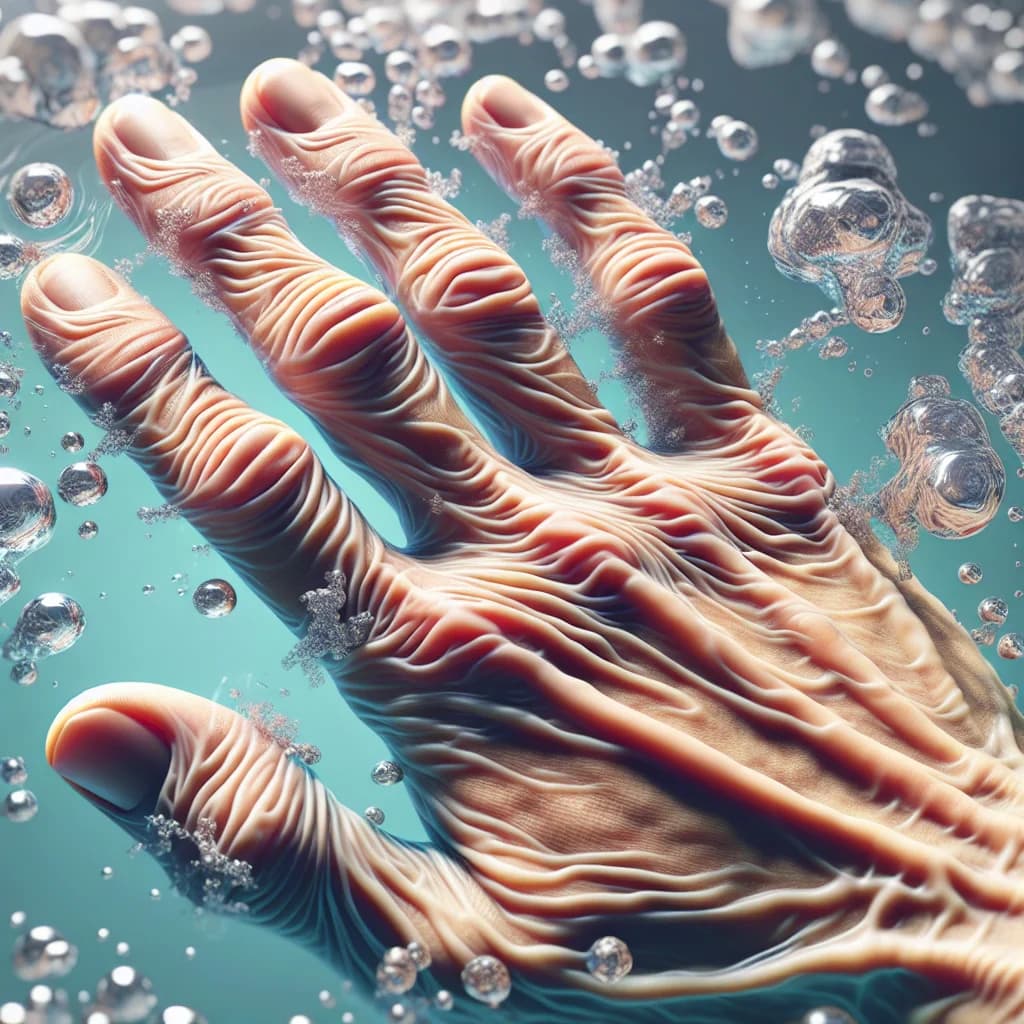
Ever wondered why your fingers transform into "prunes" after a long soak? It’s not just water absorption—it’s a sophisticated biological hack that turns your skin into high-traction rain tires for the ultimate underwater grip.

Too Long; Didn't Read
Finger wrinkling is an active evolutionary response triggered by the nervous system to improve underwater grip. Much like tire treads, these ridges channel water away from the fingertips, allowing for better traction and more efficient handling of wet objects.
Nature’s Rain Tires: Why Do Your Fingers Wrinkle in the Bath to Act as Natural Treads for Better Underwater Grip?
Have you ever spent a little too long soaking in a warm tub only to look down and find your once-smooth fingertips transformed into a shriveled, raisin-like landscape? For decades, the common consensus was that this "pruning" was simply the result of water soaking into the outer layer of the skin, causing it to swell through osmosis. However, scientists have discovered that this transformation is far more sophisticated than a simple soak. It is actually a deliberate, controlled reaction by our nervous system. This brings us to a fascinating evolutionary question: Why do your fingers wrinkle in the bath to act as natural treads for better underwater grip? Far from being a random side effect of hygiene, these ridges serve a specific biological purpose, functioning as a high-tech adaptation that likely helped our ancestors survive in wet environments.
The Biology Behind the Ridges: It’s Not Osmosis
For a long time, the "osmosis theory" dominated. It suggested that water entered the skin’s dead keratin cells, causing them to bloat and fold. However, doctors as far back as the 1930s noticed a strange phenomenon: if the nerves in a patient's finger were damaged, that finger would never wrinkle, no matter how long it stayed in the water.
This discovery proved that wrinkling is an active process controlled by the autonomic nervous system—the same system that regulates heart rate and breathing. When your hands are submerged, your nervous system sends a signal to the blood vessels beneath the skin to constrict. As these vessels shrink, the volume of the fingertip decreases, pulling the overlying skin inward to create a series of deep folds and valleys.
The "Rain Tire" Theory: Enhancing Friction
If the body is spending energy to change the shape of its skin, there must be a benefit. In 2011, evolutionary biologist Mark Changizi suggested that the pattern of these wrinkles looks suspiciously like the treads on a tire. This led to the hypothesis that our fingers wrinkle to act as natural treads for better underwater grip.
Much like the grooves on a vehicle’s tire are designed to channel water away from the contact patch to prevent hydroplaning, the wrinkles on our fingers provide several key advantages:
- Water Drainage: The channels between the wrinkles allow water to be squeezed out from between the finger and the object being held.
- Increased Surface Area: While it seems counterintuitive, the ridges allow for better "interlocking" with uneven surfaces underwater.
- Pressure Distribution: The wrinkled skin can conform more easily to the shape of a wet object, increasing the total friction.
Scientific Evidence: The Newcastle Study
In 2013, researchers at Newcastle University put this theory to the test. They asked participants to pick up submerged objects—such as marbles and fishing weights—of various sizes using either smooth (dry) hands or wrinkled (soaked) hands.
The results, published in the journal Biology Letters, were definitive. Participants with wrinkled fingers were significantly faster at moving the wet objects than those with smooth fingers. Interestingly, the wrinkles provided no advantage (or disadvantage) when handling dry objects. This suggests that the trait is a specialized "wet weather" mode triggered only when necessary.
Evolutionary Context: Why Did We Need This?
From an evolutionary perspective, the ability to maintain a firm grip in the rain or while submerged would have been a massive advantage. Our ancestors may have relied on this trait for:
- Foraging: Gathering shellfish, slippery aquatic plants, or submerged roots in rivers and tide pools.
- Mobility: Navigating wet rocks or damp vegetation without slipping while hunting or escaping predators.
- Tool Use: Maintaining a hold on wooden spears or stone tools during heavy rainfall.
While we now use this trait mostly to play with bath toys or wash dishes, it remains a vestige of a time when a slippery grip could mean the difference between a meal and hunger.
Conclusion
The transformation of our skin in water is a remarkable example of human engineering. Rather than a passive reaction to moisture, the process is a calculated response by the nervous system. Understanding why do your fingers wrinkle in the bath to act as natural treads for better underwater grip allows us to appreciate the subtle ways our bodies have adapted to the physical world.
These "natural rain tires" highlight the incredible efficiency of evolution, providing us with specialized tools exactly when we need them and reverting to a smooth state once the task is done. The next time you notice your hands pruning in the shower, remember that you are witnessing an ancient survival mechanism—one that helped our ancestors conquer the wet and wild edges of the world.


