
Why does a felt-tip marker make that signature squeaking sound
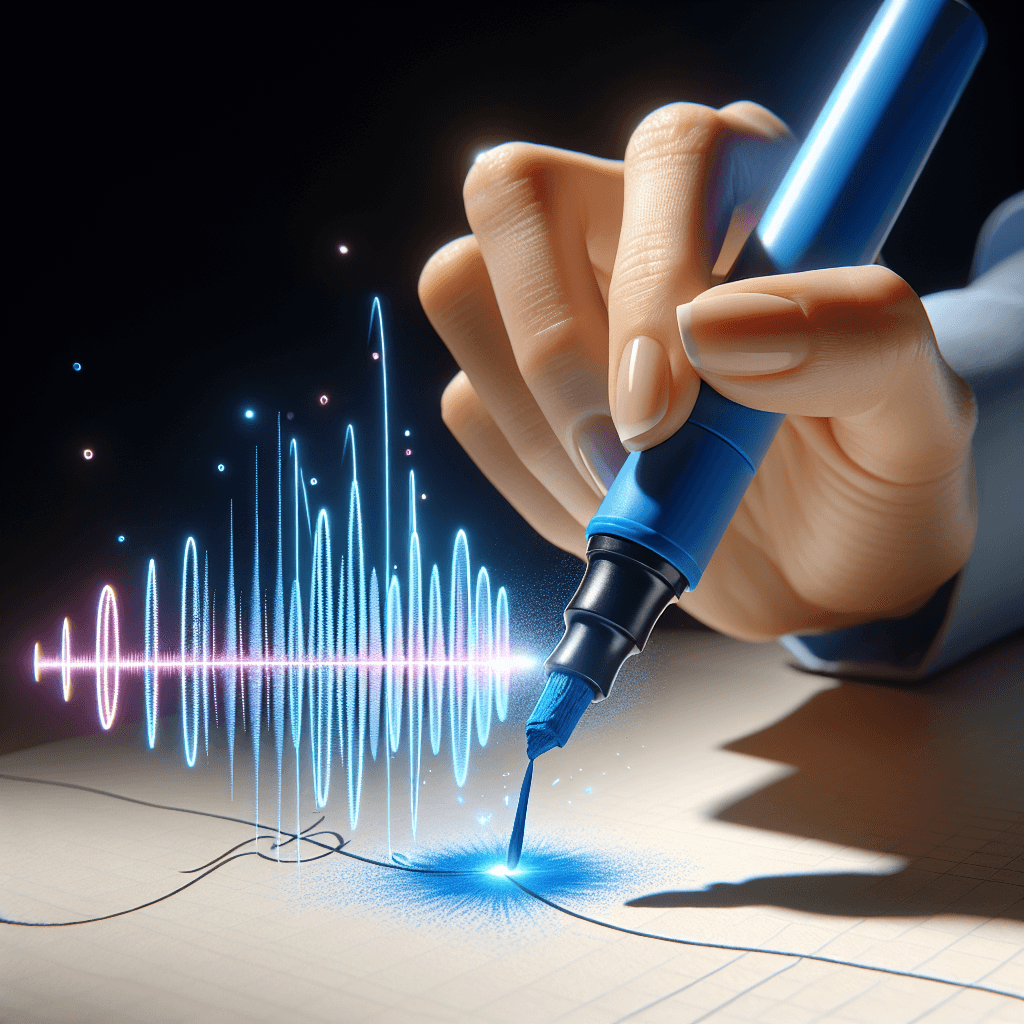
That signature squeak isn't just the sound of a marker on paper—it's a microscopic battle where the felt tip sticks and slips thousands of times per second.

Too Long; Didn't Read
TLDR: The squeak is the sound of stick-slip friction. The marker's felt tip rapidly catches and releases on the paper's surface, creating high-frequency vibrations we hear as that signature sound.
The Science of Squeak: Why Does a Felt-Tip Marker Make That Signature Sound?
It’s a sound instantly recognizable in classrooms, boardrooms, and art studios everywhere: the high-pitched squeak of a felt-tip marker gliding across a whiteboard or a fresh sheet of paper. We’ve all heard it, and many of us have even caused it. But have you ever paused mid-sentence to wonder what’s actually happening to produce that specific noise? It’s not just a random annoyance; it's a fascinating display of physics at work. This post will pull back the curtain on this common acoustic phenomenon, exploring the science behind why your favorite marker sings, squeals, and squeaks.
The Primary Culprit: Stick-Slip Friction
The secret behind the marker’s squeak lies in a physical concept known as stick-slip friction. While it sounds complex, the idea is quite simple and can be seen in many everyday situations, from the screech of car tires to the sound of a violin bow on a string.
Essentially, stick-slip is what happens when two surfaces alternate between sticking together and sliding over each other due to friction. Instead of a smooth, continuous glide, the motion occurs in a series of tiny, rapid jerks.
Here’s how the process unfolds with your marker in a fraction of a second:
- Stick: As you press the marker to the surface, the porous polyester tip momentarily grips the surface. Static friction, the force that prevents stationary objects from moving, holds it in place.
- Build: You continue to push the marker forward. The flexible tip bends slightly, like a tiny spring, storing up potential energy.
- Slip: Eventually, the force of your push overcomes the static friction. The tip suddenly slips forward, releasing the stored energy in a quick burst.
- Repeat: Almost instantly, the tip comes to a rest and "sticks" to a new spot on the surface, and the entire cycle begins again.
This stick-slip cycle can happen thousands of times per second, creating a high-frequency vibration at the marker's tip.
The Perfect Storm: Ingredients for a Squeak
Not every marker on every surface will produce a squeak. The sound depends on a perfect combination of factors, creating an ideal environment for the stick-slip phenomenon to occur.
The Marker Tip and The Writing Surface
The relationship between the marker's tip and the writing surface is crucial.
- The Tip: The felt-like material of the marker tip is both pliable and textured, giving it the perfect properties to bend, store energy, and grip the surface.
- The Surface: Smooth, non-porous surfaces like whiteboards, glass, or glossy paper are the main stages for this acoustic performance. They provide just the right amount of friction for the tip to effectively stick and then release. In contrast, a rougher surface like standard copy paper tends to have more texture, which can disrupt the smooth repetition of the stick-slip cycle and dampen the vibrations.
The Role of Ink, Speed, and Pressure
Other variables also influence the sound. The ink itself acts as a lubricant. A brand-new, juicy marker might glide silently because the ink reduces friction, while a marker that’s beginning to dry out might squeak more as the friction between the tip and the surface increases. The speed and angle at which you write also change the frequency of the vibrations, which is why the pitch of the squeak can change as you draw a line.
Turning Vibrations into Sound Waves
The tiny vibrations at the marker’s tip are only the beginning of the story. On their own, they are too quiet to hear. So, how do they become the audible squeak we all know?
The marker’s body acts as a resonator. The vibrations travel from the tip up through the hollow plastic barrel of the marker. This barrel amplifies the vibrations, much like the wooden body of a guitar or a violin amplifies the vibrations of its strings. These amplified vibrations disturb the surrounding air molecules, creating the sound waves that travel to our ears. The result is that signature, high-pitched squeak.
In conclusion, the seemingly simple squeak of a marker is anything but. It is a complex interplay of friction, energy, and acoustics. It’s the sound of the rapid-fire stick-slip phenomenon occurring at the microscopic level, with the vibrations being amplified by the marker’s own body to create an audible noise. So, the next time you’re brainstorming on a whiteboard and your marker starts to sing, you can appreciate the tiny concert of physics you’re conducting. It’s a reminder that fascinating science is at work all around us, even in the most ordinary of sounds.


