
Why does an unpeeled banana float while a peeled one sinks
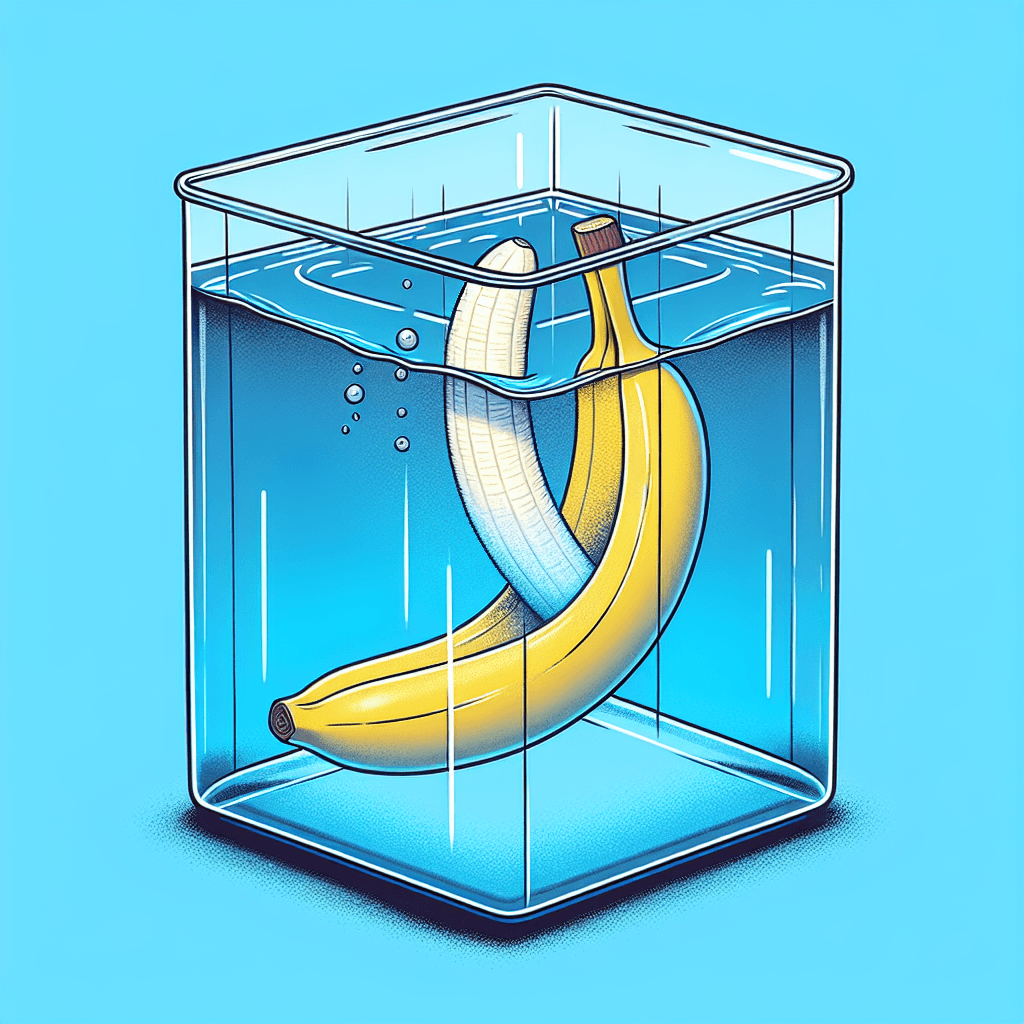
It’s a kitchen paradox that defies logic: the heavier, unpeeled banana floats, while the lighter, peeled one sinks. Discover the surprisingly simple science behind the banana's buoyant magic trick.

Too Long; Didn't Read
TLDR: A banana peel is full of tiny air pockets, making the unpeeled banana less dense than water, so it floats. The banana fruit itself is denser than water and sinks once its natural floaty is removed.
The Floating Fruit Paradox: Why Does an Unpeeled Banana Float While a Peeled One Sinks?
Have you ever accidentally dropped a banana into a sink full of water? If so, you might have witnessed a peculiar bit of kitchen science. An unpeeled, whole banana bobs on the surface, but if you peel it and drop the fruit in, it sinks straight to the bottom. It’s a simple observation that sparks a fascinating question: how can the simple act of removing a peel completely change whether an object floats or sinks? This isn't a magic trick; it's a perfect, everyday demonstration of fundamental physics. This post will peel back the layers on this fruity phenomenon, exploring the core scientific principles of density and buoyancy that explain why a banana needs its peel to stay afloat.
The Core Principle: It's All About Density
Before we can solve the banana mystery, we need to understand the basic rule of why things float or sink. It all comes down to a property called density. In simple terms, density is the amount of "stuff" (mass) packed into a certain amount of space (volume).
Water has a density of about 1 gram per cubic centimeter (g/cm³). According to Archimedes' principle, an object placed in water will:
- Float if its average density is less than water's density.
- Sink if its average density is greater than water's density.
With this rule in mind, let's look at our two banana scenarios.
Why the Peeled Banana Sinks
Let’s start with the sunken banana. The fruit of the banana itself—the part we eat—is a dense package of starches, sugars, fiber, and water. When you combine all this mass into the relatively compact volume of the banana fruit, its overall density ends up being slightly greater than that of water. When you place the peeled fruit in a bowl of water, its higher density means it cannot displace enough water to support its own weight, and it promptly sinks to the bottom. There's no secret here; it's simply heavier than the volume of water it pushes aside.
The Peel's Floating Power
So, if the fruit itself is a sinker, the peel must be the key to flotation. And it is. The banana peel is the fruit's very own natural life jacket, and its secret lies in its structure.
The Magic of Tiny Air Pockets
If you were to look at a banana peel under a microscope, you would see that it is not a solid material. It's a porous, spongy structure filled with countless microscopic air pockets. This plant tissue, known as aerenchyma, is designed to facilitate gas exchange within the plant.
These tiny pockets of air are the game-changer. Air is incredibly light and has a very low density. By incorporating all this air, the peel significantly increases the total volume of the unpeeled banana without adding much mass.
Think of it this way:
- Peeled Banana: Dense fruit (sinks).
- Unpeeled Banana: Dense fruit + a large, lightweight, air-filled peel.
When you calculate the average density of the entire unpeeled banana (the mass of the fruit and peel combined, divided by their total volume), the result is a number that is less than the density of water. The buoyant peel does more than enough to counteract the dense fruit inside, allowing the whole package to float.
Conclusion: A Tale of Two Densities
The mystery of the floating banana is a beautiful illustration of how average density dictates an object's fate in water. The banana fruit itself is too dense to float, but it comes equipped with a buoyant peel that acts as a flotation device. This peel is filled with tiny air pockets that lower the overall density of the unpeeled banana to a point where it becomes lighter than the water it displaces. So, the next time you see this phenomenon, you'll know it’s not a paradox at all. It’s simply a clever piece of natural engineering, proving that fascinating science lessons can often be found right in your fruit bowl.


