
Why does moon dust smell like spent gunpowder according to the Apollo astronauts who walked on the surface
When Apollo astronauts returned to their lunar module, they were startled by a sharp, metallic scent that shouldn’t exist in a vacuum: the smell of spent gunpowder. Discover the explosive chemistry behind this lunar mystery and why the "scent of the moon" famously vanishes the moment it reaches Earth.

Too Long; Didn't Read
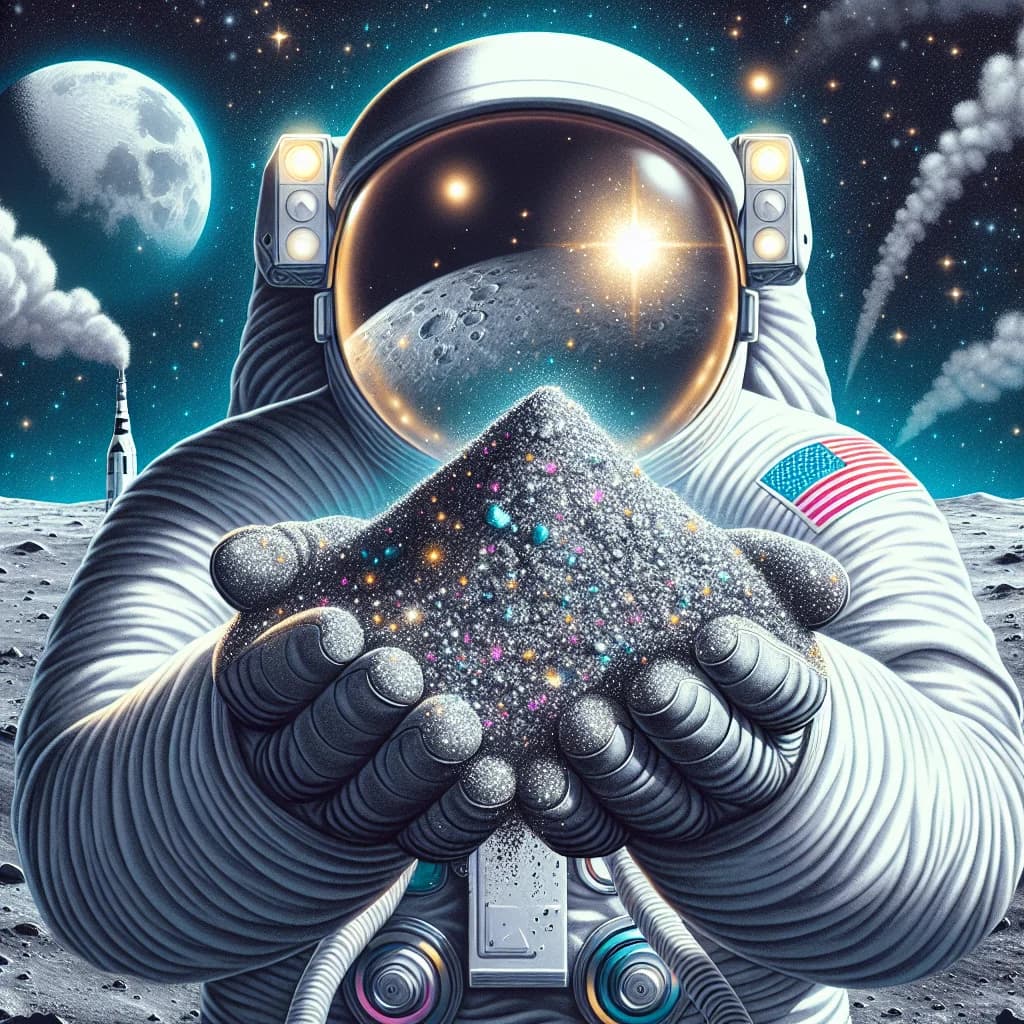
Moon dust smells like spent gunpowder because its jagged particles are chemically reactive from constant solar radiation and meteorite impacts. When these particles transition from the vacuum of space into the oxygen-rich, humid lunar module, they undergo a rapid oxidation process that releases the distinct metallic scent.
The Scent of Space: Why Does Moon Dust Smell Like Spent Gunpowder According to the Apollo Astronauts Who Walked on the Surface?
Imagine stepping out of your lunar module and onto a world where no human has ever breathed. After hours of exploring the desolate, gray landscape of the Moon, you repressurize your cabin and remove your helmet. Suddenly, your senses are hit by an unexpected and pungent aroma. To the surprise of nearly every moonwalker, the lunar surface doesn't smell like empty space or sterile rock; it smells like a battlefield. This peculiar sensory detail has fascinated scientists for decades. But why does moon dust smell like spent gunpowder according to the Apollo astronauts who walked on the surface? Understanding this mystery requires a deep dive into chemistry, solar radiation, and the volatile nature of the lunar regolith.
The Astronauts’ Olfactory Reports
While space itself is a vacuum and therefore odorless, moon dust—or regolith—clung to the suits, boots, and tools of the Apollo crews. When they returned to the Lunar Module and repressurized the cabin, the dust reacted with the indoor atmosphere.
- Apollo 11: Buzz Aldrin was the first to describe the scent as "pungent" and "like burnt charcoal."
- Apollo 17: Harrison "Jack" Schmitt, a geologist and the only scientist to walk on the Moon, noted that it smelled like "spent gunpowder."
- Gene Cernan: The last man on the Moon confirmed this, stating it was a very strong, metallic smell that reminded him of a discharged firearm.
Interestingly, once these samples were returned to Earth and exposed to the atmosphere for longer periods, the smell vanished entirely. This suggests that the scent is a fleeting chemical reaction rather than an inherent property of the dust itself.
The Chemistry of Moon Dust vs. Gunpowder
To solve the mystery, we must first look at what moon dust actually is. Unlike Earth’s soil, which is organic and weathered by wind and water, lunar regolith is composed of:
- Silicon Dioxide: Created by volcanic activity and meteorite impacts.
- Glass: Created by the intense heat of micrometeorite bombardment.
- Iron, Magnesium, and Calcium: Trapped within the mineral structure.
Modern smokeless gunpowder consists of nitrocellulose and nitroglycerin. Clearly, moon dust and gunpowder share almost no chemical ingredients. Therefore, the smell isn't coming from the materials themselves, but likely from a specific chemical reaction occurring the moment the dust enters the spacecraft.
Leading Scientific Theories
Researchers at NASA and various geological institutions have proposed several theories to explain why this inorganic material mimics the scent of an explosion.
1. The "Dangling Bond" Theory
The Moon is a harsh environment bombarded by solar wind and high-energy particles. This constant radiation breaks the chemical bonds within the silicate and glass structures of the dust. According to NASA researchers, this creates "dangling bonds"—unpaired electrons that are highly reactive. When astronauts brought this "activated" dust into the oxygen-rich, humid environment of the Lunar Module, the dust underwent rapid oxidation. This quick chemical "burning" process likely released the acrid, metallic odor perceived as gunpowder.
2. The "Desert Rain" Effect
On Earth, dry soil often releases a pleasant scent (petrichor) when it rains. Some scientists suggest a similar mechanism on the Moon. The moon dust is bone-dry and has been for billions of years. When it is suddenly introduced to the moisture-laden air of a human-occupied cabin, it may release trapped gases or undergo a hydration reaction that produces a sharp, ozone-like or sulfurous smell.
3. Solar Wind Ion Trapping
The Moon is constantly hit by ions from the sun, such as hydrogen and helium. These ions can become trapped within the lattice structure of the regolith. When heated or exposed to the cabin's atmosphere, these ions may be released, interacting with oxygen to create a variety of odors.
Conclusion
The mystery of why moon dust smells like spent gunpowder according to the Apollo astronauts who walked on the surface highlights how little we still know about our closest celestial neighbor. The "spent gunpowder" aroma is likely a temporary chemical ghost—a reaction between a chemically "raw" surface and the life-sustaining atmosphere humans carry with them.
As NASA prepares for the Artemis missions to return humans to the lunar south pole, understanding the properties of regolith remains a top priority. Not only is the dust a sensory curiosity, but its abrasive and reactive nature also poses challenges for machinery and human health. This lingering scent of the lunar surface serves as a potent reminder that space exploration is a sensory experience that continues to surprise us even fifty years later.


