
Why does the King of Hearts lack a mustache in a standard deck because of historical printing errors
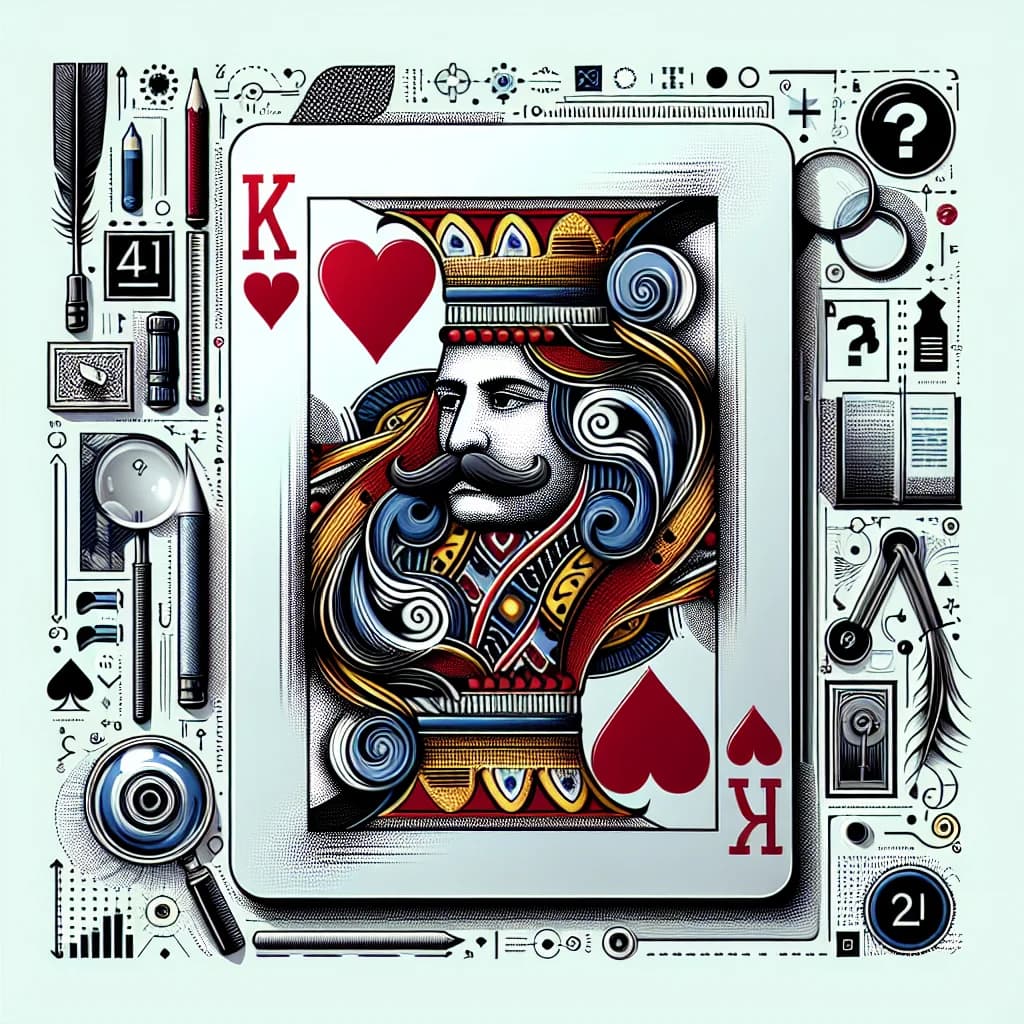
Ever wondered why the King of Hearts is the only monarch in the deck missing his mustache? Discover the fascinating printing blunders that accidentally gave this royal a permanent "shave" and changed the face of playing cards forever.

Too Long; Didn't Read
The King of Hearts originally featured a mustache and a battle axe in early French card designs. Over centuries of mass-production and copying, printing errors and woodblock degradation caused the mustache to disappear and the axe to morph into a sword.
The Mystery of the Shaven Monarch: Why Does the King of Hearts Lack a Mustache Due to Historical Printing Errors?
If you pick up a standard deck of cards and line up the four kings, you will notice a curious anomaly. The Kings of Diamonds, Clubs, and Spades all sport majestic facial hair, typically including both a beard and a mustache. However, the King of Hearts stands alone as the only clean-shaven monarch in the deck. While some might assume this was a deliberate design choice to make the "King of Hearts" appear more romantic or gentle, the truth is far more accidental. The missing mustache is the result of centuries of cumulative printing errors, lazy re-copying, and the gradual degradation of woodblock designs. Understanding why the King of Hearts lack a mustache in a standard deck because of historical printing errors requires a journey back to the workshops of 16th-century French card makers.
The Origin of the Four Kings
To understand the error, we must first look at the source. Modern playing cards are largely derived from the "Parisian" pattern established in France during the 15th and 16th centuries. Historically, the four kings were meant to represent specific legendary leaders:
- Spades: David (the Biblical King)
- Diamonds: Julius Caesar
- Clubs: Alexander the Great
- Hearts: Charlemagne (Charles)
In the earliest versions of these French decks, the King of Hearts (Charlemagne) was depicted with a full mustache and beard, brandishing an axe as his weapon of choice. He was a formidable figure, indistinguishable in grooming habits from his royal counterparts. However, as playing card production moved from hand-painted luxury items to mass-produced goods, the integrity of the design began to suffer.
The Decay of the Woodblock
Before the advent of modern offset printing, cards were produced using woodblock printing. Craftsmen would carve the card designs into blocks of wood, which were then inked and pressed onto paper. Wood, however, is a delicate medium. Over time and repeated use, the fine lines of a woodblock would wear down, chip, or bridge together.
When a woodblock became too worn to use, a new one had to be carved. Rather than referring back to an original masterpiece, carvers often used a print from the failing block as their template. This led to a "generational loss" of detail, similar to a photocopy of a photocopy. In the case of the King of Hearts, the thin lines representing his mustache gradually blurred into the lines of his lip or disappeared entirely. By the time English printers began copying French designs in the 17th century, the mustache had vanished from the templates they were using.
The Transformation of the Axe
The mustache wasn't the only casualty of these historical printing errors. The King of Hearts is also known as the "Suicide King" because he appears to be sticking a sword into his own head. This, too, is a result of poor copying:
- Weapon Swap: Originally, the King of Hearts held a battle-axe.
- Edge Loss: As woodblocks wore down at the edges, the head of the axe was cut off or became unrecognizable.
- The Sword Emerges: Successive carvers misinterpreted the remaining shaft of the axe as a sword.
- Awkward Positioning: Because the king was originally designed to hold an axe aloft, the transition to a sword made the weapon appear to be disappearing behind—or into—his head.
Standardization and the British Influence
By the time card production became standardized in England and later the United States, these errors were no longer seen as mistakes; they were seen as the "standard." When Thomas De La Rue and other major manufacturers began mass-producing cards in the 19th century, they codified the hairless, sword-wielding King of Hearts.
The lack of a mustache became a distinguishing feature that helped players identify the card at a glance. What began as a series of technical failures by overworked woodcarvers eventually became an iconic element of global popular culture.
Conclusion
The King of Hearts stands as a fascinating example of how history is often shaped by accident rather than intent. The reason why the King of Hearts lacks a mustache in a standard deck because of historical printing errors is a testament to the transition from artisanal craft to industrial mass production. From the degradation of woodblocks to the misinterpretation of blurred lines, the "Charles" of the deck lost his facial hair and his axe through centuries of human error. Today, these quirks are cherished hallmarks of the standard deck, proving that even in the world of high-stakes gaming, mistakes can eventually become tradition. Next time you hold a King of Hearts, you aren't just holding a card; you are holding five hundred years of printing history.


