
Why does the wind sometimes roll giant snowballs all by itself
It's not a winter fairytale: discover the bizarre and precise weather conditions that allow nature to create giant, hollow "snow donuts" that seem to roll themselves.

Too Long; Didn't Read
TLDR: Called snow rollers, these form under perfect conditions when strong winds push a chunk of a thin, wet, sticky top layer of snow across a powdery or icy base it won't stick to, causing it to roll and grow larger like a jelly roll.
Nature's Snowmen: Why Does the Wind Sometimes Roll Giant Snowballs All By Itself?
Have you ever imagined waking up to a field dotted with giant, naturally formed snowballs, as if a playful giant had been rolling them in the night? This isn't a scene from a fantasy novel; it's a real, albeit rare, meteorological phenomenon. These bizarre and beautiful formations, often called "snow rollers," "snow bales," or "snow donuts," are one of nature's most whimsical creations. They appear without human intervention, seemingly sculpted by an invisible hand. But this isn't magic—it's a fascinating intersection of physics and weather. This post will unravel the mystery behind these natural sculptures, explaining the precise and delicate conditions required for the wind to roll giant snowballs all by itself.
What Exactly Are Snow Rollers?
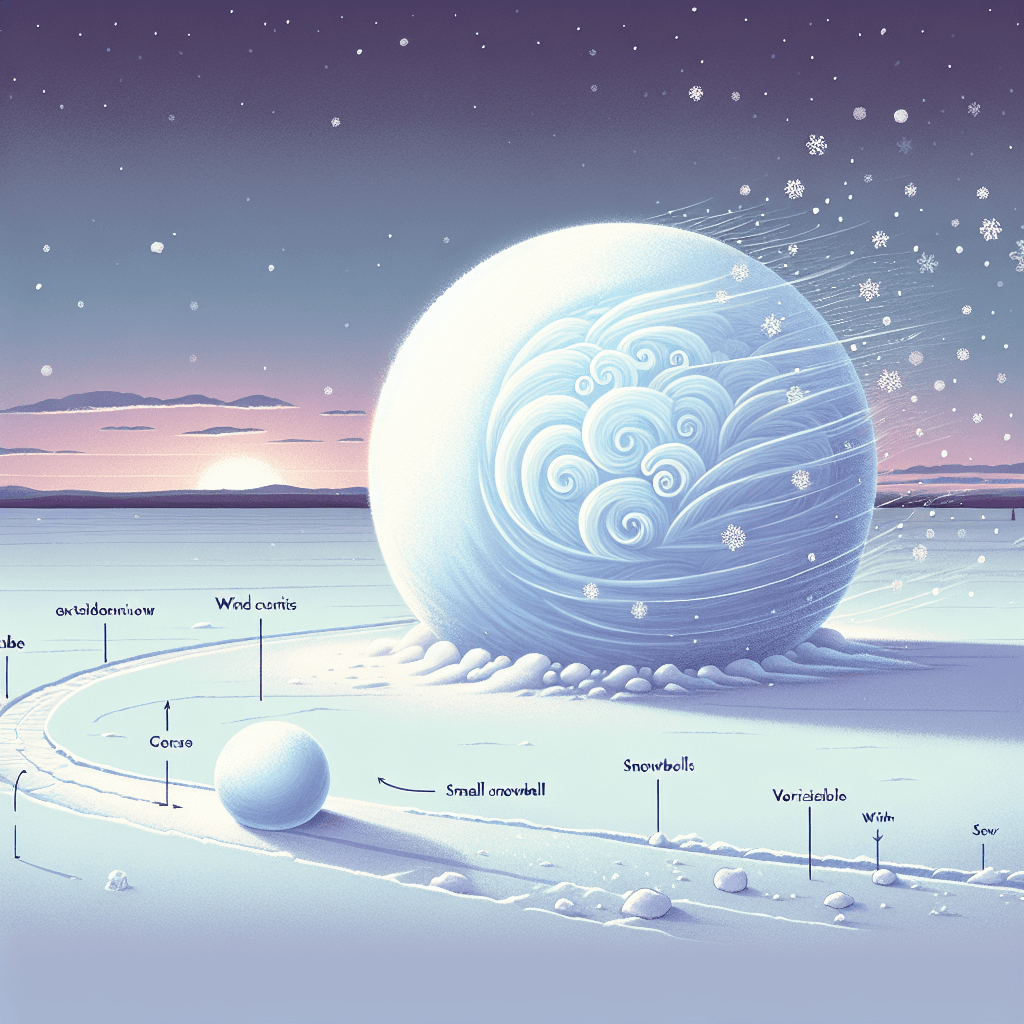
A snow roller is a naturally occurring ball of snow that is formed when wind blows a chunk of snow along the ground, which then gradually accumulates more snow as it moves. They can vary dramatically in size, from as small as a tennis ball to as large as a hay bale, sometimes weighing over 50 pounds.
What makes them particularly strange is their appearance. They are often cylindrical and, more curiously, can be hollow in the middle, resembling a giant, snowy donut. As they roll across a field, they leave a distinct track behind them, marking their path from a small clump to a large, sculpted form. Spotting them is a rare treat, as their formation requires a perfect storm of environmental factors to align.
The Goldilocks Conditions: A Perfect Recipe for Snow Rollers
The reason snow rollers are so rare is that they require a very specific set of "Goldilocks" conditions—everything must be just right. If even one element is off, they simply won't form.
Here is the essential recipe for nature to create a snow roller:
- A Non-Stick Base: The ground cannot be bare. It needs an existing layer of ice or hard, crusted snow. This acts like a non-stick pan, preventing the new layer of snow from adhering to the ground and allowing it to be moved freely.
- A Sticky Top Layer: On top of the icy base, there must be a light, fresh layer of wet, loose snow. This snow needs to have the perfect consistency for packing—sticky enough to cling to itself as it rolls, but not so heavy that the wind can't move it.
- Near-Freezing Temperatures: The air temperature must be hovering right around the freezing point (32°F or 0°C). If it’s too cold, the snow will be too dry and powdery to stick together. If it's too warm, the snow will become too slushy or melt.
- The Right Kind of Wind: The wind is the crucial ingredient. It must be strong enough to lift or push a small clump of snow to get it started, but not so powerful that it blows the delicate formation apart. A sustained, gusty wind is often the perfect catalyst.
- Open, Gently Sloping Terrain: Snow rollers are most common in open areas like fields or prairies where the wind is unobstructed. A gentle slope is also a major help, as gravity can assist the wind in pushing the growing snowball downhill.
The Step-by-Step Formation
When all the conditions above are met, the process can begin:
- Initiation: A small fragment of snow is dislodged. This might happen when a gust of wind scoops up a piece, or when a small clump of snow falls from a tree branch onto the perfectly prepared surface.
- Rolling and Growing: The wind catches this initial piece and begins pushing it along the non-stick base. As it rolls, the sticky top layer of snow adheres to the moving clump, causing it to grow larger and heavier, much like how you would roll the base for a snowman.
- Hollowing Out: The characteristic hollow center often forms because the initial, inner layers are more fragile and loosely packed. As the roller grows larger and heavier, these weaker inner layers can disintegrate or be blown out by the wind, creating the famous "snow donut" shape.
- The Final Stop: The snow roller continues to travel and grow until it becomes too heavy for the wind to push, encounters an obstacle like a fence or dense vegetation, or rolls onto a surface where the conditions are no longer ideal.
Conclusion
Snow rollers are a perfect testament to the intricate and often surprising beauty of the natural world. They are not the work of pranksters or mythical creatures, but the result of a precise and delicate dance between temperature, terrain, snow consistency, and wind. The exacting requirements for their formation mean that seeing one is a truly special experience. So, the next time there's a fresh snowfall on a windy day with temperatures hovering near freezing, take a look outside at any open fields. You might just be lucky enough to witness one of nature’s most fascinating and fleeting works of art.


