
Why does touching your nose with crossed fingers make it feel like you have two noses
This simple trick reveals a stunning glitch in your perception, proving just how easily your brain can be fooled into feeling a nose that isn't there.

Too Long; Didn't Read
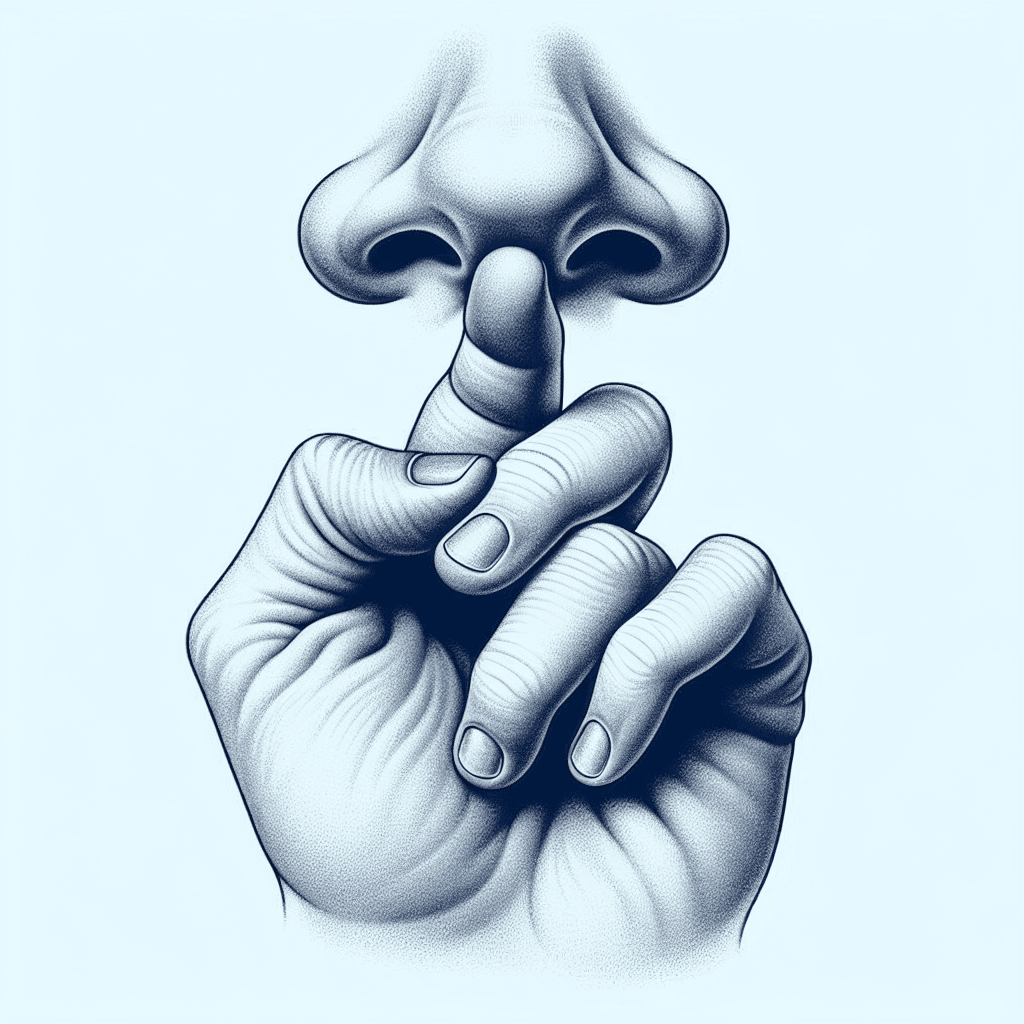
When you cross your fingers, two parts of your skin that are normally far apart touch your nose at the same time. Your brain gets confused by this sensory conflict and interprets the single nose as two separate objects to make sense of the two distinct touch points.
Aristotle's Illusion: Why Does Touching Your Nose With Crossed Fingers Make It Feel Like You Have Two Noses?
Try this quick experiment. Cross your middle finger over your index finger. Now, with your eyes closed, gently touch the tip of your nose with the tips of both crossed fingers. What do you feel? If you’re like most people, you’ll experience a strange and distinct sensation: it feels like you're touching two separate noses. This bizarre sensory glitch isn't magic; it's a well-documented phenomenon known as Aristotle's Illusion. First described by the Greek philosopher over 2,000 years ago, this simple party trick reveals a fascinating secret about how your brain constructs your reality from sensory input. This post will explore the neuroscience behind why your brain gets so easily tricked into doubling your nose.
The Brain's Body Map: The Somatosensory Cortex
To understand this illusion, we first need to visit the part of your brain responsible for processing touch: the somatosensory cortex. Think of this area as a detailed, living map of your entire body. Every part of your skin, from your toes to your tongue, has a corresponding location on this map. When a part of your body is touched, nerve signals travel to its specific spot in the somatosensory cortex, telling you exactly where the sensation is coming from.
However, this map isn't drawn to scale. More sensitive areas, like your fingertips and lips, take up a disproportionately large amount of space on the map because they have a higher density of nerve endings. This is why you can feel fine details with your fingers that you would miss with the skin on your back. Your brain dedicates more processing power to these critical sensory areas.
Aristotle's Illusion: When Your Brain's Expectations Clash With Reality
Aristotle’s Illusion works by creating a conflict between your brain's established body map and an unusual sensory experience. Throughout your entire life, your brain has learned a fundamental rule about your hands: the right side of your index finger and the left side of your middle finger (the sides that face each other) often touch the same object simultaneously. Your brain is used to interpreting simultaneous signals from these two surfaces as "one object."
When you cross your fingers, you flip this rule on its head. Now, the left side of your index finger and the right side of your middle finger—two surfaces that are normally far apart and rarely touch the same object at the same time—are making contact with your nose.
Breaking Down the Neurological Glitch
The brain, being a creature of habit, gets confused by this new arrangement. Here’s a step-by-step breakdown of why the two-nose sensation occurs:
- Learned Associations: Your brain operates on a lifetime of data. Its experience dictates that when two outer finger surfaces are stimulated, they must be touching two different objects.
- Conflicting Sensory Map: The locations on the somatosensory cortex that correspond to the outer edges of your index and middle fingers are not neighbors. They are mapped relatively far apart. When these two distant points on the brain map are activated at the same time by a single object (your nose), the brain struggles to reconcile the information.
- The Brain's 'Best Guess': Faced with conflicting data—one object in reality, but two distinct and normally separate touch points being stimulated—your brain makes its best guess. It defaults to its long-held rule. The most logical conclusion, based on a lifetime of uncrossed-finger experience, is that there must be two separate objects. And since you're touching your nose, it concludes there must be two noses.
A Window Into Perception
This illusion isn't just a fun trick; it's a powerful demonstration that our perception of reality is not a direct recording of the world. Instead, our brain actively constructs our experience by interpreting sensory data through the lens of past experiences and expectations. The feeling of two noses is a momentary "glitch" in this construction process, revealing the predictive and pattern-based nature of our minds. It shows that what we feel is often a blend of what is actually there and what our brain expects to be there.
The next time you try Aristotle's Illusion on a friend, you'll be able to explain exactly why their brain is being so cleverly deceived. It’s a simple, tangible reminder of the complex and often surprising neurological processes that create our sense of self and the world around us. So go ahead, feel your two noses, and appreciate the incredible predictive power of your own brain.


