
Why does walking through a doorway often cause your brain to suddenly forget what you were just doing
Ever walk into a room and instantly forget why you’re there? It’s not a random memory glitch—it’s a psychological phenomenon known as the "Doorway Effect," and the science behind it is fascinatingly strange.

Too Long; Didn't Read
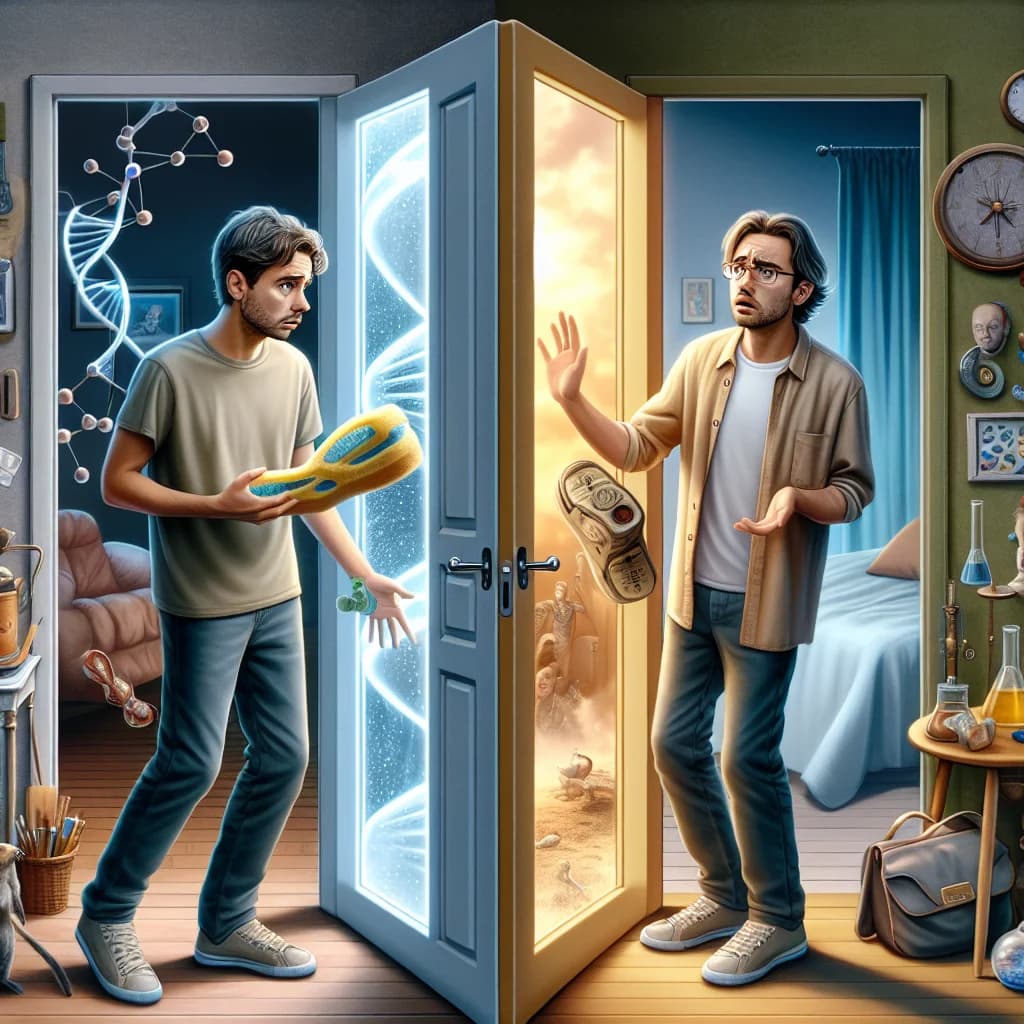
Walking through a doorway triggers an event boundary in the brain, signaling that one task is over and a new context has begun. This mental reset causes the brain to archive recent thoughts to make room for new information, resulting in temporary forgetfulness.
The Science of the Doorway Effect: Why Does Walking Through a Doorway Often Cause Your Brain to Suddenly Forget What You Were Just Doing?
Have you ever marched purposefully into the kitchen, only to stop dead in your tracks because you have absolutely no idea what you went in there for? You aren’t losing your mind, nor is it an early sign of cognitive decline. Instead, you are experiencing a documented psychological phenomenon known as the "Doorway Effect." This curious mental glitch happens to almost everyone, regardless of age or intelligence. While it feels like a failure of memory, it is actually a byproduct of how our brains organize and process information as we move through the world. This blog post explores the scientific mechanisms behind why walking through a doorway can wipe your short-term memory and how your brain manages environmental transitions.
Understanding the "Event Boundary"
The primary scientific explanation for why we forget things when moving between rooms is known as the "Event Boundary Theory." According to research led by Gabriel Radvansky and his colleagues at the University of Notre Dame, the brain perceives a doorway as an "event boundary."
Our brains do not record our lives as one continuous, uninterrupted stream of data. Instead, they segment our experiences into distinct "chapters" or event models. When you move from one room to another, your brain identifies the physical threshold—the doorway—as the end of one episode and the beginning of another. To make room for new incoming information from the new environment, the brain "archives" the information from the previous room.
How Event Models Work
- Segmenting Reality: The brain creates boundaries to make sense of a complex world.
- Updating Information: When you cross a threshold, the brain decides that the previous "event model" is no longer relevant to your current survival or goals.
- Purging Short-Term Storage: This transition triggers a mental "refresh," which can unfortunately lead to the deletion of the very thought you were trying to hold onto.
The Role of Working Memory and Context
To understand why this happens, we must look at the limitations of our working memory. Unlike long-term memory, which can store vast amounts of information for decades, working memory is a "scratchpad" with very limited capacity. It can typically only hold a few pieces of information at a time.
When you are in the living room and decide you need a pair of scissors from the kitchen, your working memory holds that goal: "find scissors." However, as you walk through the doorway, your brain is suddenly flooded with new sensory data—the smell of the kitchen, the light from the window, and the physical layout of the new room. According to a study published in the Quarterly Journal of Experimental Psychology, the brain prioritizes this new environmental context. Because the goal "find scissors" was linked to the "living room event model," it often gets discarded during the transition to the "kitchen event model."
Research Insights: Beyond Physical Doors
Interestingly, the Doorway Effect isn't limited to physical wood-and-mortar frames. Research conducted at Bond University found that the effect can also occur in virtual environments. Participants in a study moved through virtual buildings and experienced the same memory lapses when passing through digital doors.
However, the Bond University study also noted that the complexity of the task matters. If the person is deeply focused on a single, high-priority thought, they are less likely to forget it. The Doorway Effect is most potent when we are performing "automatic" or low-stakes tasks, where our brain feels it is safe to reset its focus.
How to Minimize the Doorway Effect
While you cannot entirely rewire how your brain segments events, you can use specific strategies to keep your goals "top of mind":
- Vocalization: Say your goal out loud as you walk. "I am going to get the scissors."
- Physical Cues: Carry an object related to the task or use a hand gesture (like crossing your fingers) to serve as a tactile reminder.
- Reconstruct the Context: If you forget why you entered a room, walking back into the original room can often trigger the memory. By returning to the previous "event model," your brain can re-access the archived information.
Conclusion
The next time you find yourself staring blankly into a refrigerator, wondering why you opened it, remember that your brain is actually working exactly as it should. The Doorway Effect is a fascinating example of how our minds prioritize current surroundings over past thoughts to keep us present and alert. By treating doorways as "event boundaries," our brains maintain an organized filing system of our lives, even if that means occasionally losing a thought in the transition. While these lapses are a minor inconvenience, they are a small price to pay for a cognitive system that efficiently manages the overwhelming amount of data we encounter every day. Understanding this process allows us to be more patient with ourselves and utilize simple tricks to keep our memories intact as we move through the world.


