
Why is a large crowd often less helpful than a single person
Discover the terrifying psychological reason why a hundred witnesses are less likely to save you than a single stranger.

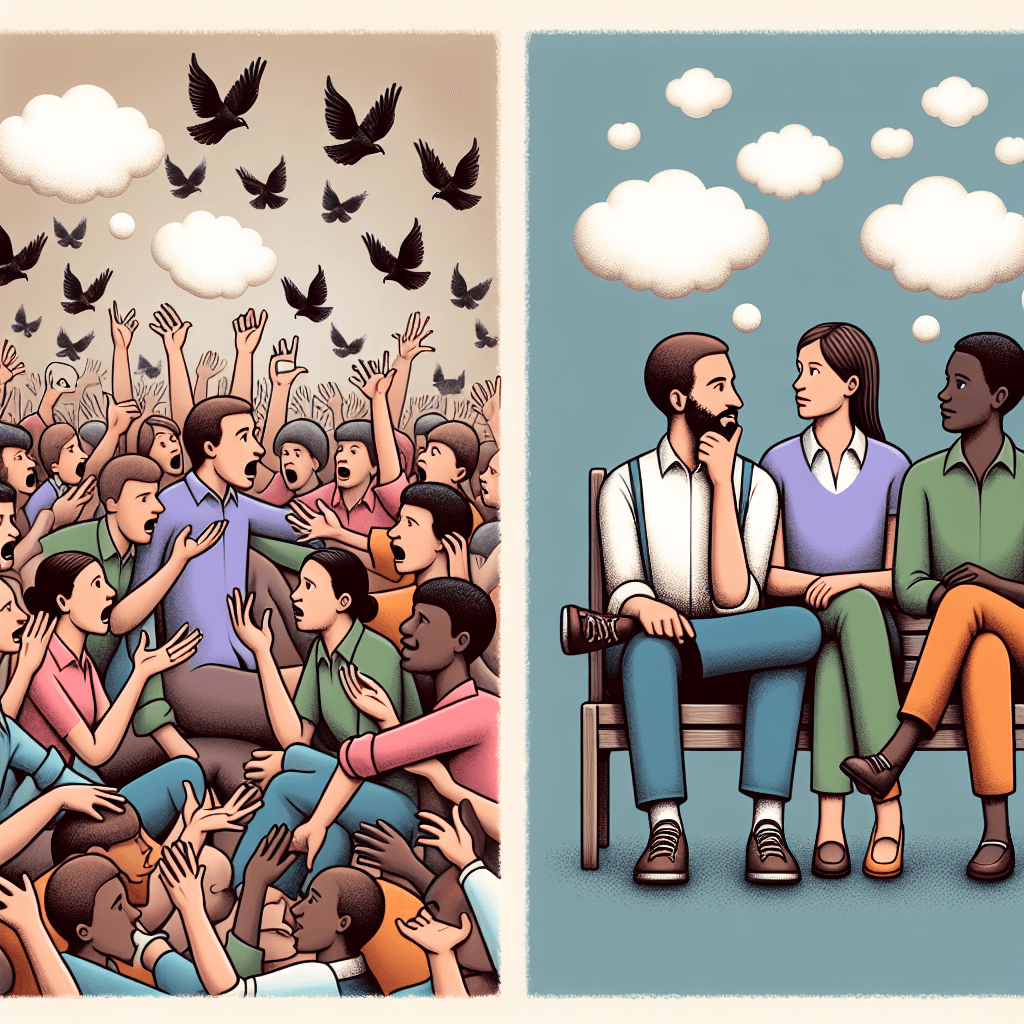
Too Long; Didn't Read
TLDR: A large crowd is less helpful because of the bystander effect; everyone assumes someone else will take responsibility, so often nobody does.
The Bystander Effect: Why is a large crowd often less helpful than a single person?
Have you ever witnessed a minor emergency in a public place—someone tripping, dropping their groceries, or a car stalled in traffic—and hesitated to help? You might have glanced around, seen dozens of other people doing the same, and assumed someone else would eventually step in. This common, yet counterintuitive, human behavior is a well-documented psychological phenomenon. It raises a critical question that challenges our assumptions about safety in numbers.
This post will explore the surprising reasons why a large crowd is often less helpful than a single individual. We'll delve into the psychology behind this inaction, breaking down the key factors that prevent us from intervening and offering insight into how we can overcome this powerful social reflex.
The Psychology Behind Inaction: The Bystander Effect
The core concept that explains this paradox is known as the bystander effect. First identified by social psychologists John Darley and Bibb Latané in the 1960s, the bystander effect states that the likelihood of an individual helping someone in distress is inversely related to the number of other people present. In simpler terms, the more people who witness an emergency, the less likely it is that any one of them will help.
Darley and Latané were inspired to research this phenomenon after the widely reported 1964 murder of Kitty Genovese in New York City, where initial newspaper accounts claimed that dozens of neighbors heard her screams but failed to intervene. While the specifics of that case have been debated over the years, it sparked groundbreaking research that revealed several powerful psychological mechanisms at play.
Key Factors That Drive Inaction
The bystander effect isn't caused by apathy or cruelty. Instead, it’s the result of specific social and psychological pressures that influence our behavior in a group setting.
Diffusion of Responsibility
This is the primary driver of the bystander effect. When you are the only witness to an emergency, 100% of the responsibility to act rests on your shoulders. However, when you are part of a crowd of 20 people, you may feel you only have 5% of the responsibility.
- The internal dialogue: A person in a crowd assumes someone else is more qualified, closer, or has already called for help.
- The result: This diffusion of responsibility creates a collective paralysis where everyone waits for someone else to make the first move. The larger the crowd, the more this responsibility is diluted, making it easier for each individual to justify their inaction.
Social Proof and Pluralistic Ignorance
In an ambiguous situation, we instinctively look to others for cues on how to behave. This is known as social proof. If you see someone lying on a sidewalk, you might not be sure if they are having a heart attack or are simply asleep. You will look at the reactions of others passing by. If no one else appears concerned or is stopping to help, you interpret their inaction as a sign that it’s not a real emergency.
This leads to a state of pluralistic ignorance, where everyone in a group privately disagrees with a norm but incorrectly assumes that everyone else accepts it. In an emergency, no one is helping, so everyone concludes that help is not needed, even if their gut tells them otherwise.
Evaluation Apprehension
The fear of social judgment also plays a significant role. People worry about misinterpreting the situation and looking foolish by overreacting. What if the person on the ground doesn't need help? What if you try to perform CPR incorrectly? This evaluation apprehension—the fear of being judged by others—can be powerful enough to prevent someone from offering assistance, especially when they feel unsure of the correct course of action.
Overcoming the Bystander Effect
Understanding these psychological forces is the first step toward overcoming them. Studies have shown that simply being aware of the bystander effect makes a person more likely to intervene in an emergency. By recognizing the powerful pull of social inaction, you can consciously choose a different path.
In conclusion, the presence of a crowd creates a potent cocktail of psychological pressures that can suppress our natural instinct to help. The diffusion of responsibility, our reliance on social cues, and the fear of judgment combine to make a group less effective than a single, decisive individual. The key takeaway is not that people are inherently unhelpful, but that the social context of an emergency matters immensely. The next time you find yourself in a crowd during a critical moment, remember that your individual action could be the one that breaks the cycle of inaction and makes all the difference.


