
Why is it impossible to see your own eyes move when you look in a mirror
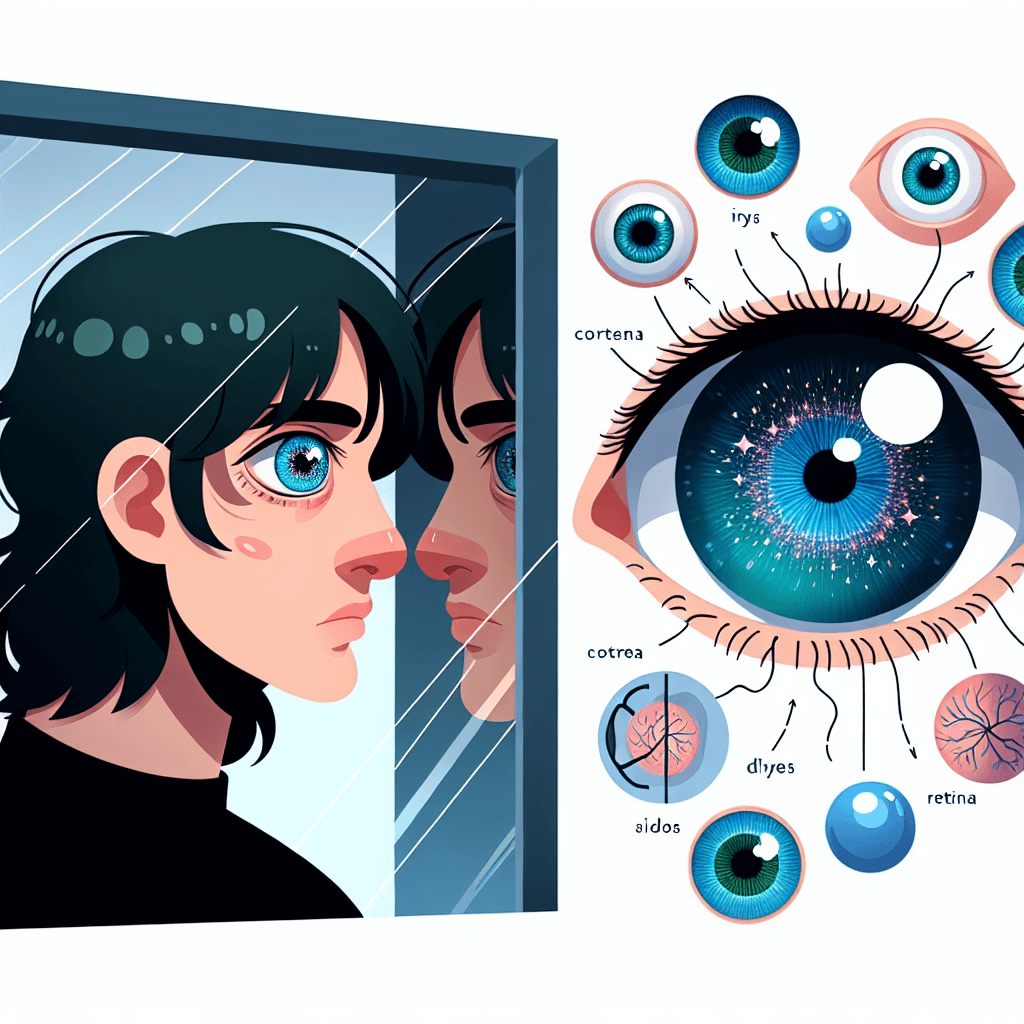
Ever wonder why you can never catch your own eyes darting in a mirror, no matter how fast you look? Discover the eerie biological "glitch" that allows your brain to secretly edit your reality in real-time.

Too Long; Didn't Read
You cannot see your eyes move in a mirror because of a phenomenon called saccadic masking. To prevent motion blur, your brain temporarily shuts off visual processing while your eyes are in motion, effectively editing out the movement from your perception.
The Science of Saccadic Masking: Why is it impossible to see your own eyes move when you look in a mirror?
Have you ever stood before a mirror and tried to catch your eyes in motion? You focus on your left eye, then quickly dart your gaze to the right, yet you never actually see the movement occur. Your eyes appear to magically teleport from one position to the other, leaving a blank space where the transition should be. This phenomenon is not a flaw in your vision or a trick of the light; it is a sophisticated neurological "edit" performed by your brain. Understanding why is it impossible to see your own eyes move when you look in a mirror requires a deep dive into the way our brains process visual information to create a stable, coherent reality.
The Mechanics of the Saccade
To understand why this happens, we must first define the movement itself. These rapid, jerky movements of the eyes as they shift between fixation points are called saccades.
Saccades are among the fastest movements the human body can produce. According to research in sensory physiology, a typical saccade can reach speeds of up to 900 degrees per second. We perform thousands of these movements every day—while reading, scanning a room, or looking at a face. If our brains processed the visual input during these high-speed movements, the world would look like a constant, nauseating smear of motion blur, much like a shaky handheld camera.
Saccadic Masking: The Brain’s "Delete" Button
The primary reason you cannot see your eyes move is a biological process known as saccadic masking (or saccadic suppression).
During a saccade, the brain temporarily "shuts off" its processing of visual input. It essentially stops the transmission of image data from the retina to the visual cortex for a fraction of a second. This suppression begins just before the eye starts moving and ends just after it arrives at its new target.
Why Does the Brain Do This?
- To Prevent Motion Blur: Without masking, every eye movement would result in a dizzying streak of visual noise.
- To Maintain Stability: By cutting out the movement, the brain allows us to perceive the world as a series of stable, clear images rather than a chaotic stream of motion.
- Efficiency: The brain prioritizes useful information. The blurry "in-between" footage of a saccade offers no survival or navigational value.
Chronostasis and the "Stopped-Clock Illusion"
You might wonder why, if the brain is "turning off" the vision, we don't see a flicker of blackness when we move our eyes. This is where a fascinating psychological phenomenon called chronostasis comes into play.
When a saccade is finished, the brain doesn't just resume the feed; it "backfills" the missing time. It takes the new, clear image you are looking at and projects it backward in time to cover the gap caused by the masking. This is often called the "stopped-clock illusion." If you look quickly at a clock with a ticking second hand, the first second often seems to last longer than the subsequent ones because your brain has extended the perception of that first clear image to hide the preceding saccade.
Why Others Can See Your Eyes Move
While you are biologically incapable of seeing your own eyes move in a mirror, an observer standing next to you will see the movement perfectly. This is because their brain is not performing a saccade at the same moment yours is.
- The Observer’s Perspective: Their eyes are fixed on you. Since their retinas are receiving a steady stream of data, they see your eyes transit from point A to point B.
- The Subject’s Perspective: Your brain is actively suppressing the input because your own hardware (the eyes) is in motion.
Interestingly, you can "hack" this phenomenon using technology. If you record yourself with a smartphone camera and watch the video later, you will see your eyes move. In this scenario, your eyes are fixed on the screen while the movement happens on the "recorded" version of you, allowing your brain to process the motion without triggering saccadic suppression.
Conclusion
The mystery of why is it impossible to see your own eyes move when you look in a mirror reveals the incredible complexity of the human mind. Our perception of reality is not a live, unedited broadcast; rather, it is a highly curated production. Through saccadic masking and chronostasis, the brain acts as a master film editor, cutting out the blurry, useless footage of eye transitions and stitching together a seamless, stable view of the world.
Next time you look in the mirror and fail to catch your eyes in motion, remember that you are witnessing a fundamental survival mechanism in action. Your brain is working behind the scenes to protect you from visual chaos, ensuring that your experience of the world remains clear and focused. For those interested in the limits of human perception, this phenomenon serves as a powerful reminder that what we "see" is often just as important as what our brains choose to hide.


