
Why is it impossible to tickle yourself no matter how hard you try
Your brain is secretly one step ahead of you, muting the sensation before your fingers even touch your skin. Discover the fascinating neurological trick that makes it impossible to surprise your own body—and why you are hardwired to never win this battle.

Too Long; Didn't Read
You cannot tickle yourself because your brain predicts the movement and resulting sensation in advance. The cerebellum monitors your own actions and suppresses the sensory response before it occurs, removing the element of surprise necessary to trigger a tickle.
The Science of Self-Sensation: Why Is It Impossible to Tickle Yourself No Matter How Hard You Try?
Have you ever wondered why you can’t make yourself double over in laughter by poking your own ribs, yet a friend doing the exact same thing sends you into a fit of giggles? It is a curious biological quirk that almost every human experiences. Despite our best efforts to mimic the motions and pressure of a tickle, our bodies simply refuse to respond. This phenomenon isn't a failure of our nerves; rather, it is a testament to the incredible efficiency of the human brain. To understand why is it impossible to tickle yourself no matter how hard you try, we must look into the sophisticated predictive processing that occurs within our central nervous system every second of the day.
Understanding the Two Types of Tickling
Before diving into the neurology, it is important to distinguish between the two different sensations we often categorize as "tickling." Scientists have identified two distinct types:
- Knismesis: This is the light, feather-like sensation that often causes an itch or a shiver rather than laughter. Think of a crawling insect or a blade of grass. You actually can produce this sensation on yourself to some degree.
- Gargalesis: This is the more intense, "heavy" tickling that leads to involuntary laughter and squirming. This response is usually concentrated in sensitive areas like the armpits, ribs, and soles of the feet. This is the type of tickling that is impossible to self-induce.
The Role of the Cerebellum: The Brain’s Predictor
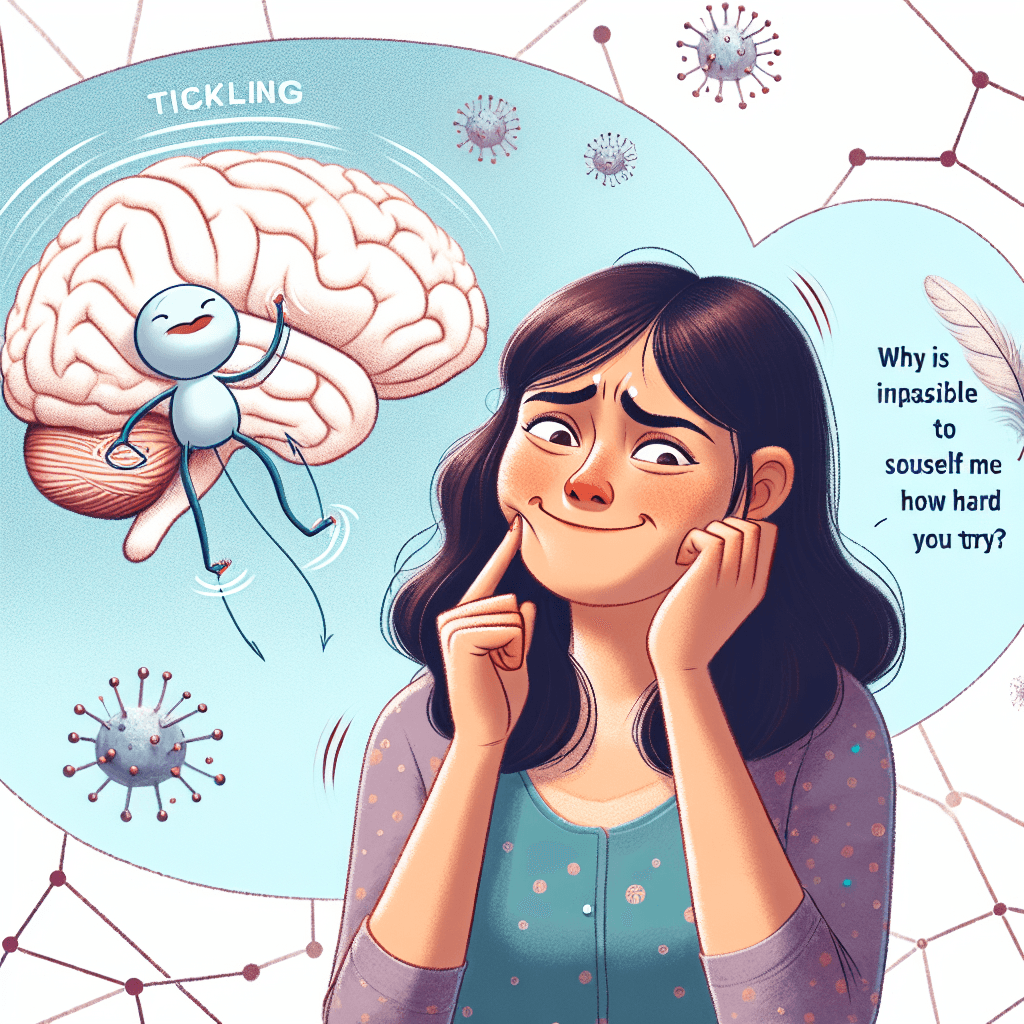
The primary reason you cannot tickle yourself lies in a part of the brain called the cerebellum. Located at the base of the brain, the cerebellum is responsible for monitoring our movements and predicting the sensory consequences of those actions.
According to research led by neuroscientists at University College London, the cerebellum sends out a "second signal" whenever you move. When you reach out to tickle your own ribs, your motor cortex sends a command to your arm, but the cerebellum simultaneously predicts exactly where that hand will land and what the sensation will feel like. Because the brain knows exactly what is coming, it de-emphasizes the sensory input. This process is known as sensory attenuation.
Sensory Attenuation: Filtering the Noise
Sensory attenuation is an evolutionary necessity. If our brains treated every self-generated touch with the same intensity as an external touch, we would be overwhelmed by sensory data. Imagine if you felt the sensation of your clothes rubbing against your skin or your feet hitting the pavement with the same intensity as someone tapping you on the shoulder.
When someone else tickles you, the element of surprise is paramount. Your brain cannot accurately predict the timing, location, or intensity of the touch. This "prediction error" results in a heightened response from the somatosensory cortex (which processes touch) and the anterior cingulate cortex (which processes pleasant information), leading to the frantic, laughing reaction of gargalesis.
Can the System Be Tricked?
Interestingly, researchers have found very specific scenarios where self-tickling might become possible, further proving the cerebellum's role:
- Robotic Delays: In studies involving robotic arms, participants were asked to move a joystick that controlled a tickling rod. When there was no delay, they felt nothing. However, when researchers introduced a delay of even a fraction of a second between the person’s movement and the rod's touch, the subjects began to feel the tickle. The delay broke the brain’s ability to predict the sensation.
- Neurological Differences: Research published in journals such as Cognitive Neuropsychology suggests that individuals with certain neurological conditions, such as schizophrenia, may sometimes be able to tickle themselves. This is often attributed to a breakdown in the brain’s ability to distinguish between self-generated and external sensory events.
Conclusion
The mystery of why is it impossible to tickle yourself no matter how hard you try reveals the hidden genius of our internal wiring. It is not a lack of sensitivity, but rather a highly advanced filtering system managed by the cerebellum. By predicting our own movements and silencing the resulting sensations, our brains allow us to focus on the unpredictable—and potentially more important—stimuli in our environment.
Understanding this mechanism helps us appreciate how the brain maintains a clear boundary between the self and the external world. While it might be disappointing that we cannot induce a laughing fit on command, it is a small price to pay for a brain that can efficiently navigate the complexities of daily life without being distracted by its own touch.


