
Why is it technically illegal to be buried in the remote Norwegian town of Longyearbyen
In the remote Arctic town of Longyearbyen, dying is technically against the law, but the reason isn’t a strange superstition—it’s a chilling scientific necessity. Discover why the permafrost refuses to let the dead rest in peace and what terrifying secrets are preserved beneath the ice.

Too Long; Didn't Read
Burial is prohibited in Longyearbyen because the Arctic permafrost prevents bodies from decomposing. This preservation keeps diseases and viruses, such as the 1918 Spanish Flu, active within the remains indefinitely. To protect the community, terminally ill residents are flown to mainland Norway for their final arrangements.
The Town Where You Can’t Die: Why Is It Technically Illegal to be Buried in the Remote Norwegian Town of Longyearbyen?
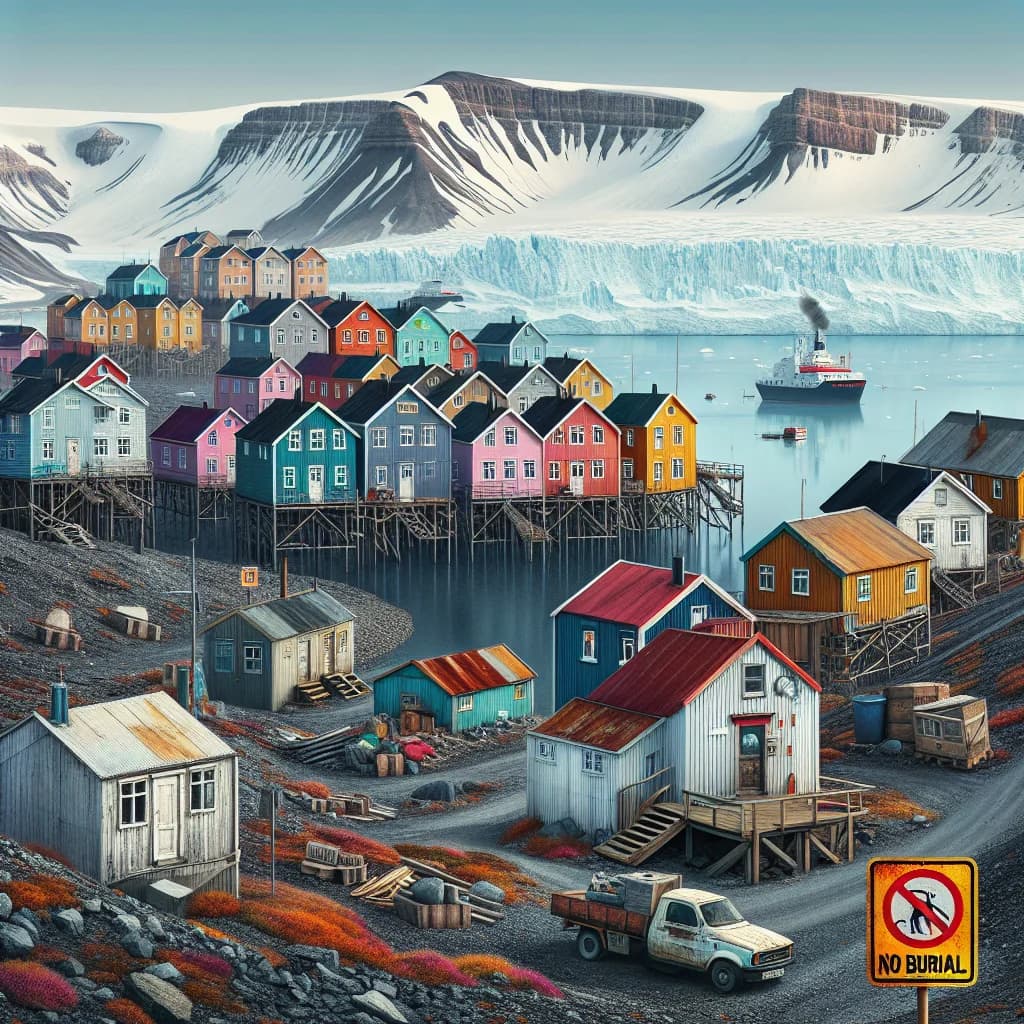
Imagine living in a place where the sun vanishes for four months a year, polar bears roam the outskirts of town, and it is technically against the law to be buried. This is the reality in Longyearbyen, the world’s northernmost permanent settlement located on the Norwegian archipelago of Svalbard. While the phrase "it's illegal to die" has become a popular travel anecdote, the truth is rooted in a fascinating blend of biology, geology, and public safety. In this remote Arctic outpost, the environment is so extreme that the natural cycle of life and decay simply stops. This blog post explores the scientific and historical reasons why Longyearbyen has maintained a prohibition on burials for over 70 years, transforming a logistical necessity into one of the world's most unique legal curiosities.
The Problem with Permafrost
The primary reason burials are prohibited in Longyearbyen is the ground itself. The town sits atop permafrost—soil, rock, or sediment that remains frozen for at least two consecutive years. In Svalbard, this frozen layer can reach depths of hundreds of meters.
When bodies were buried in the local cemetery during the early 20th century, residents noticed a disturbing phenomenon: the graves were not staying put. Because the ground freezes and thaws slightly at the surface (the "active layer"), it creates a process known as frost heaving. This physical movement effectively pushes buried objects upward, occasionally surfacing coffins. More importantly, because the internal temperature of the permafrost remains well below freezing, bodies do not decompose. They are essentially cryogenically preserved by the earth.
The 1918 Spanish Flu Discovery
The decision to officially halt burials in 1950 was not merely due to the lack of decomposition, but a significant concern for public health. The catalyst for this realization was the 1918 Spanish Flu pandemic, which claimed several lives in the small mining community.
- Pathogen Preservation: In the late 1990s, scientists exhumed several bodies of men who had died from the 1918 flu in Longyearbyen.
- Active Virus Samples: Researchers discovered that because the bodies had never decomposed, the virus was still remarkably well-preserved. According to reports from the Emerging Infectious Diseases journal, this allowed scientists to recover genetic fragments of the deadly virus.
- The Risk Factor: The local government realized that if bodies containing extinct or highly contagious diseases do not decay, the cemetery becomes a permanent reservoir for pathogens. If the permafrost were to melt or a coffin were to surface, it could theoretically reintroduce ancient diseases into the modern population.
Modern Procedures and Logistics
So, what happens when a resident of Longyearbyen reaches the end of their life? The "ban on death" is actually a ban on local interment. The town follows a specific set of procedures to manage terminal illness and sudden passing:
- Medical Evacuation: When a resident becomes terminally ill or requires advanced geriatric care, they are typically flown to mainland Norway. Longyearbyen’s small hospital is equipped for emergencies but not for long-term end-of-life care.
- Repatriation of Remains: If a person dies unexpectedly in the town, their body is immediately transported by plane to the mainland for burial.
- Cremation Exceptions: While traditional burials are strictly forbidden, the local authorities may occasionally grant permission for the interment of cremated remains in the town’s cemetery. However, this requires a rigorous state permit and is rarely utilized due to the logistical challenges and the nomadic nature of the town’s population.
A Town of the Living
The unique legal status of Longyearbyen reflects its status as a "frontier" town. Most residents are temporary, staying for an average of seven years to work in mining, research, or tourism. Since there is no nursing home and no facility to handle the deceased, Longyearbyen has effectively become a community exclusively for those who are healthy enough to work and live in the High Arctic.
Conclusion
The "illegal" status of burial in Longyearbyen is far more than a quirky headline; it is a vital adaptation to one of the most inhospitable climates on Earth. By acknowledging that the permafrost prevents the natural return of dust to dust, the Norwegian authorities have protected the town from potential biological hazards and the physical realities of shifting ice. Longyearbyen serves as a powerful reminder of how human laws must sometimes bend to accommodate the uncompromising laws of nature. Whether you are a scientist or a curious traveler, the story of this Arctic town highlights the delicate balance between human civilization and the frozen wilderness. For those looking to learn more about Arctic governance, the Svalbard Treaty remains an essential document for understanding this unique corner of the globe.


