Why is the 57 on a Heinz bottle strategically placed where you should tap to make ketchup flow
Stop pounding the bottom of the bottle and start aiming for the "57." Discover the hidden engineering secret behind Heinz’s iconic label that guarantees a perfect pour every single time.

Too Long; Didn't Read
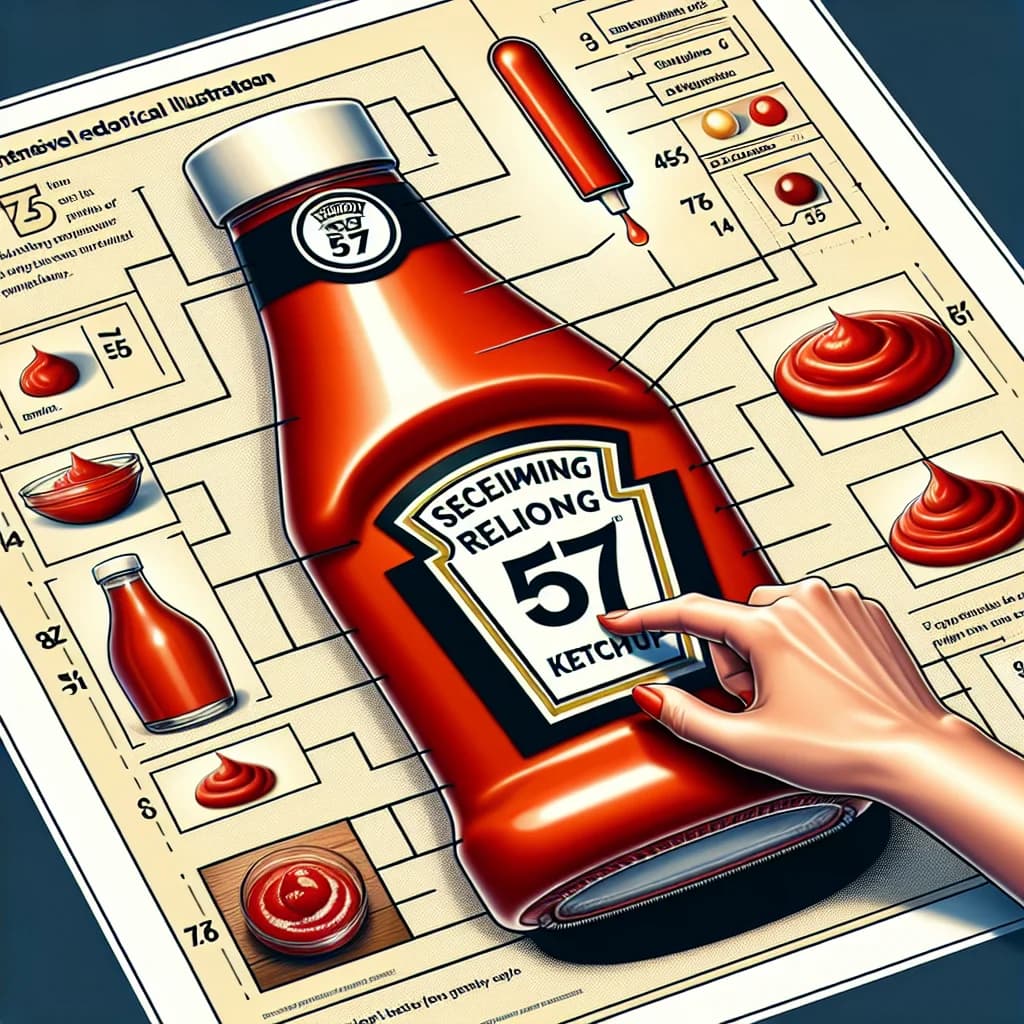
The 57 on a Heinz glass bottle marks the sweet spot for tapping. Because ketchup is a non-Newtonian fluid, hitting this specific area creates the ideal vibration to thin the sauce and make it flow smoothly, which is much more effective than thumping the bottom of the bottle.
The Science of the Pour: Why is the 57 on a Heinz Bottle Strategically Placed Where You Should Tap to Make Ketchup Flow?
Have you ever found yourself at a diner, vigorously shaking a glass bottle of ketchup while your fries grow cold, only for the condiment to remain stubbornly stuck—or worse, suddenly explode across your plate? It is a common culinary frustration, yet the solution has been hidden in plain sight for over a century. While most people instinctively pound the bottom of the bottle, the manufacturers actually designed a "sweet spot" to solve this exact problem. That embossed "57" on the neck of the iconic glass bottle is not just a piece of branding history; it is a functional engineering feature. This blog post will explore the history behind the "57" and the physics of non-Newtonian fluids to explain why tapping this specific spot is the most efficient way to get your ketchup moving.
The History Behind the "57 Varieties"
Before understanding the physics of the tap, it is important to understand what the "57" represents. The number has been a cornerstone of the Heinz brand since 1896. Interestingly, the number was never an accurate count of the products the company offered.
According to company history, founder Henry J. Heinz was riding a train in New York City when he saw an advertisement for "21 styles of shoes." He found the phrasing memorable and decided his own company needed a similar slogan. Although Heinz was already producing more than 60 different products at the time, he felt that the number "57" was lucky and had a certain "psychological pull." He began using the slogan "57 Varieties," and it eventually found its permanent home embossed on the neck of the glass bottle.
The Physics of Ketchup: A Non-Newtonian Fluid
To understand why you should tap the 57, you must first understand the substance inside the bottle. Ketchup is what physicists call a non-Newtonian fluid. Specifically, it is a "shear-thinning" or thixotropic fluid.
Unlike water, which flows at a constant rate regardless of how hard it is pushed, the viscosity (thickness) of ketchup changes depending on the force applied to it.
- At rest: Ketchup particles are clumped together, making it behave almost like a solid.
- Under force: When you apply the right amount of vibration or "shear" force, the particles align and the fluid becomes thinner, allowing it to flow easily.
Because ketchup is so thick, it often gets stuck in the narrow neck of the glass bottle. Gravity alone isn't enough to break the internal friction of the sauce.
Why the "57" is the Strategic Sweet Spot
While many diners instinctively hit the bottom of the bottle, this is actually counterproductive. Tapping the base can compress the air at the top, creating a vacuum effect or causes the ketchup at the bottom to move forward while the ketchup in the neck remains a solid "plug," leading to a sudden, messy discharge.
The "57" is strategically placed on the shoulder of the bottle—the point where the wide body narrows into the neck. Here is why tapping this spot works:
- Targeted Vibration: Applying a firm tap with the side of your hand on the embossed 57 sends a shockwave directly into the "plug" of ketchup sitting in the neck.
- Viscosity Breakdown: This specific vibration provides the "shear" force necessary to thin the ketchup exactly where it is most likely to be stuck.
- Air Flow: By tapping the side rather than the bottom, you allow air to enter the bottle around the flowing sauce, preventing the vacuum effect that often keeps the ketchup trapped.
According to Heinz’s own consumer guides, only about 11% of people are aware of this trick. The company has confirmed that the "57" was intentionally placed at the center of gravity and the narrowing point of the bottle to act as the perfect strike zone for the "firm tap" method.
Step-by-Step: The Perfect Pour
If you want to master the art of the ketchup pour, follow these steps:
- Tilt the bottle: Hold the bottle at roughly a 45-degree angle toward your plate.
- Locate the 57: Find the embossed "57" on the glass neck.
- The "Firm Tap": Use the heel of your palm or the side of your hand to give a few firm, steady taps to the 57.
- Patience: The ketchup will thin and begin to flow smoothly without the need for aggressive shaking.
Conclusion
The placement of the "57" on a Heinz bottle is a rare example of marketing and physics working in perfect harmony. While the number itself was chosen for its catchiness and perceived luck, its physical location on the glass bottle provides a functional solution to the unique challenges of non-Newtonian fluids. By understanding that ketchup requires a specific type of force to change its viscosity, you can avoid the mess and frustration of a "stuck" bottle. Next time you are at a restaurant, remember that you don't need to fight the bottle—you just need to know where to tap. Understanding this small detail turns a common kitchen struggle into a simple demonstration of fluid dynamics.