
Why is the fluffy cotton candy sold at amusement parks actually the invention of a professional dentist
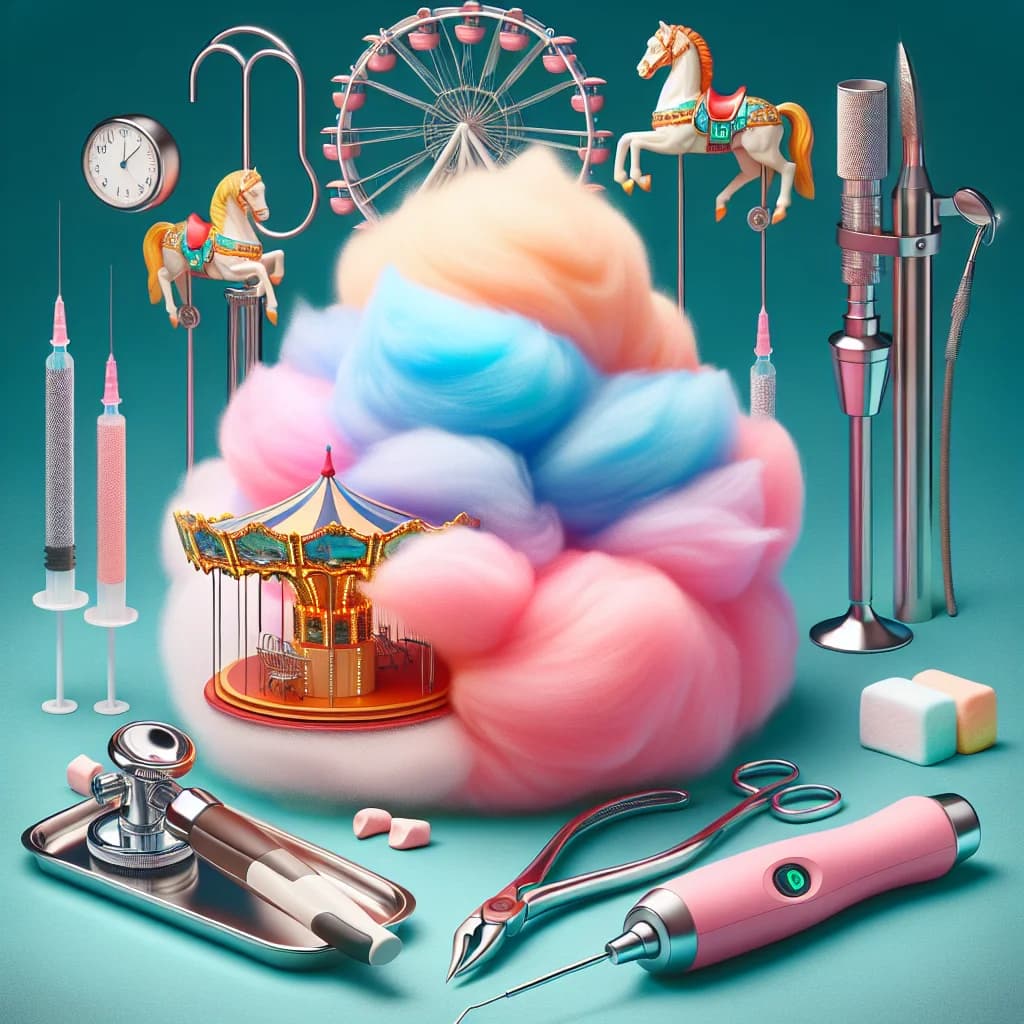
It sounds like the ultimate conflict of interest, but the world’s fluffiest carnival treat was actually patented by a prominent dentist. Discover the delicious irony behind how a man dedicated to oral health invented the very snack that keeps his profession in business.

Too Long; Didn't Read
Dentist William Morrison co-invented the first electric cotton candy machine in 1897, debuting the sugary treat as Fairy Floss at the 1904 World’s Fair. Despite his profession focusing on oral health, Morrison’s invention revolutionized the confectionery world by making spun sugar affordable and mass-produced for the public.
The Sweet Irony: Why Is the Fluffy Cotton Candy Sold at Amusement Parks Actually the Invention of a Professional Dentist?
When you think of a trip to a local amusement park or a summer fair, certain sensory experiences immediately come to mind: the mechanical whirl of the Ferris wheel, the cheers from the roller coaster, and the unmistakable, sticky-sweet aroma of cotton candy. It is a confection that seems to defy the laws of physics—a massive, cloud-like puff of sugar that dissolves the moment it touches your tongue. However, this quintessential treat hides a surprising historical paradox.
While it may seem like a dentist’s worst nightmare, the fluffy cotton candy sold at amusement parks is actually the invention of a professional dentist. This irony has fascinated historians and candy lovers alike for over a century. In this post, we will explore the origins of this sugary marvel, the mechanics behind its creation, and why a man dedicated to oral hygiene decided to revolutionize the world of sweets.
The Unlikely Partnership of 1897
The story of cotton candy begins in Nashville, Tennessee, in the late 19th century. In 1897, Dr. William Morrison, a prominent dentist and former president of the Tennessee State Dental Association, teamed up with an unlikely partner: John C. Wharton, a professional confectioner.
While it might seem counterintuitive for a dentist to spend his off-hours developing a candy-making device, Morrison was a man of diverse interests. Beyond his dental practice, he was a civic leader and an author who enjoyed tinkering with mechanical processes. Together, Morrison and Wharton designed and patented an "electric candy machine" that used centrifugal force to transform ordinary granulated sugar into delicate, thread-like strands.
From Spun Sugar to "Fairy Floss"
Before Morrison’s invention, "spun sugar" was a labor-intensive luxury reserved for the elite. Chefs would melt sugar and use forks to laboriously hand-draw thin strands over wooden sticks. It was time-consuming, expensive, and difficult to produce in large quantities.
Morrison and Wharton’s machine changed everything by automating the process through three key steps:
- Heating: The central bowl contained a heating element that melted the sugar into a liquid state.
- Spinning: The bowl spun at high speeds, using centrifugal force to push the liquid sugar through microscopic pores in the machine's head.
- Solidification: As the liquid sugar hit the air, it cooled instantly, solidifying into the fine, gossamer threads we recognize today.
The inventors originally named their creation "Fairy Floss." The name perfectly captured the ethereal, light-as-air quality of the product, which consisted of nearly 100% sugar and a great deal of air.
The Grand Debut: The 1904 St. Louis World’s Fair
Although the patent was filed in 1897, the world didn’t get its first real taste of Fairy Floss until the 1904 Louisiana Purchase Exposition, commonly known as the St. Louis World’s Fair. This event was a massive platform for innovation, also credited with popularizing the ice cream cone and iced tea.
Fairy Floss was an overnight sensation. Despite the high price tag of 25 cents per box—which was roughly half the cost of admission to the fair itself—Morrison and Wharton sold 68,655 boxes over the course of the seven-month exposition. By the end of the fair, the duo had earned over $17,000, a staggering sum for the early 1900s (equivalent to nearly $600,000 today).
Why Would a Dentist Do It?
The question remains: why would a dentist invent something so potentially damaging to teeth? While some jokingly suggest Morrison was looking for "job security," historical evidence suggests a more practical motivation.
At the time, Morrison was interested in the science of food and the efficiency of machines. He saw a complex, artisanal process—spinning sugar—and believed he could use modern technology to make it accessible to the masses. Furthermore, while cotton candy is high in sugar concentration, the actual volume of sugar in a single serving is relatively low. Because the treat is mostly air, a standard serving of cotton candy often contains less sugar than a typical 12-ounce can of soda.
The Evolution into "Cotton Candy"
The name "Fairy Floss" eventually faded in the United States, replaced by the term we use today. In 1921, another dentist named Dr. Josef Lasaux (continuing the strange dental trend) invented a similar machine and trademarked the name "Cotton Candy." He found that the name resonated more with American consumers who associated the texture with the cotton produced in the Southern states. Interestingly, the original name survived elsewhere; if you visit Australia today, you will still find it sold as Fairy Floss.
Conclusion
The history of cotton candy serves as a reminder that innovation often comes from the most unexpected places. The fact that the fluffy cotton candy sold at amusement parks is actually the invention of a professional dentist is a testament to the diverse interests of early inventors like Dr. William Morrison. He took a high-end delicacy and, through the application of mechanical engineering, turned it into a global phenomenon.
While the irony of a dentist creating a sugary treat will never fade, the legacy of his invention continues to bring joy to millions. The next time you find yourself at a fair, holding a cone of spun sugar, you can appreciate not just the sweetness, but the clever dental history behind every bite. Just remember: in honor of Dr. Morrison, be sure to brush your teeth afterward.


