
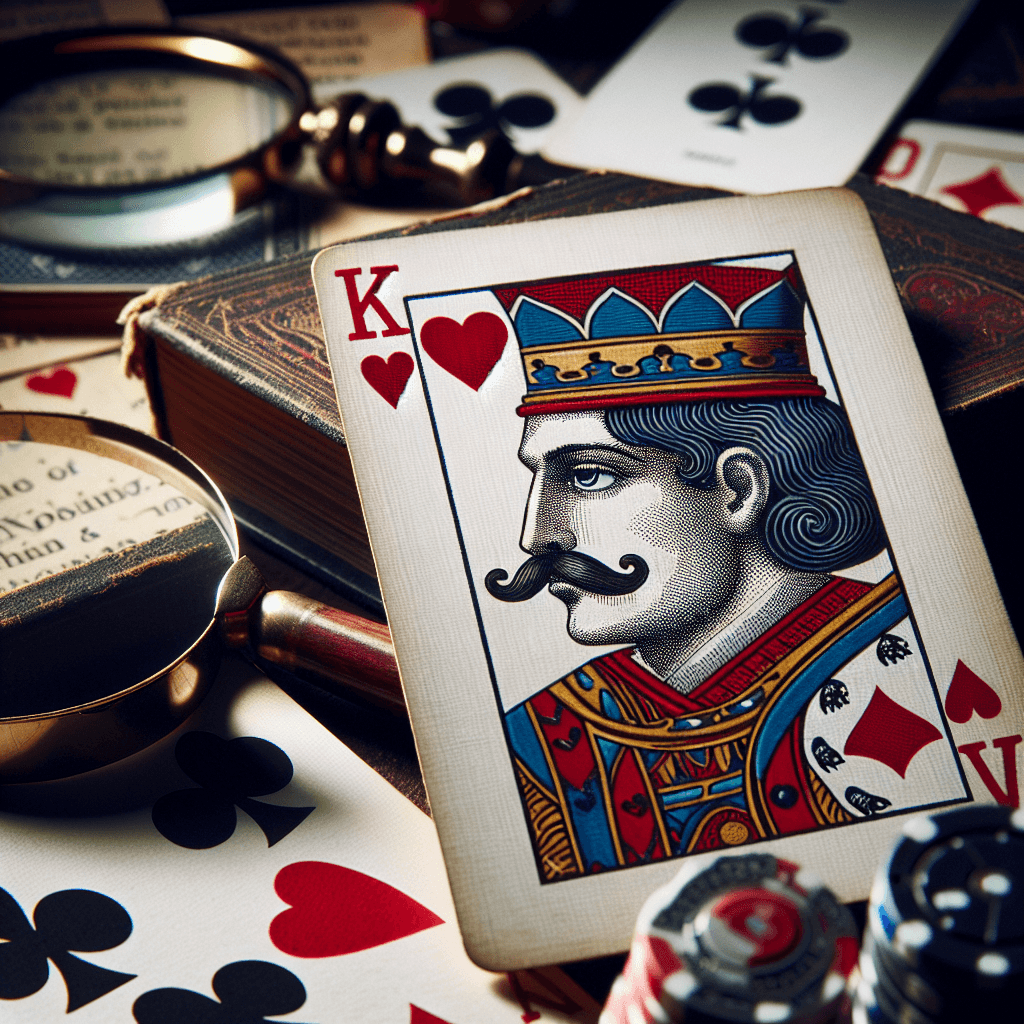
Why is the king of hearts the only king in a standard deck of cards without a mustache
Every king in the deck sports a regal mustache except one—but was it a deliberate choice or a centuries-old design blunder? Uncover the mysterious history of the "Suicide King" and why he lost his facial hair to the sands of time.

Too Long; Didn't Read
The King of Hearts originally had a mustache, but the detail was lost over centuries of printing errors and poor copying of original woodblock designs.
The Mystery of the Clean-Shaven Monarch: Why is the King of Hearts the Only King Without a Mustache?
Have you ever paused during a high-stakes game of poker or a relaxed round of Solitaire to really look at the faces staring back at you from the deck? If you examine the four kings in a standard 52-card English deck, you will notice a curious anomaly that has sparked centuries of urban legends and trivia questions. While the Kings of Diamonds, Clubs, and Spades all sport impressive facial hair, the King of Hearts stands alone as the only clean-shaven monarch. This peculiar detail is not a modern design choice or a commentary on royal grooming habits; rather, it is the result of a fascinating centuries-long journey involving historical shifts, printing errors, and the evolution of European art. Understanding why the King of Hearts lacks a mustache requires a deep dive into the history of playing card production.
The French Connection and Historical Origins
To understand the appearance of modern playing cards, we must look back to 16th-century France. During this period, French card makers standardized the suits we recognize today: hearts, diamonds, clubs, and spades. Unlike modern cards, which are largely anonymous, French decks traditionally assigned specific historical or mythical identities to the "court cards."
According to historical records of the "Paris pattern" (the design that most heavily influenced our modern deck), the four kings represented:
- King of Spades: David (the Biblical King)
- King of Clubs: Alexander the Great
- King of Diamonds: Julius Caesar
- King of Hearts: Charlemagne (the Holy Roman Emperor)
In early versions of these designs, Charlemagne—and thus the King of Hearts—was actually depicted with a mustache. The transition to his current clean-shaven look was not a deliberate stylistic change but a slow degradation of the original artwork through repetitive copying.
The Role of Woodblock Printing and Copying Errors
The primary reason for the missing mustache lies in the technical limitations of early printing. Before the advent of high-resolution lithography or digital printing, playing cards were produced using woodblocks. Craftsmen would carve the design into a block of wood, ink it, and press it onto paper.
Over decades and centuries, as original woodblocks wore out, card makers would carve new ones by copying the existing cards. This process functioned much like a game of "telephone" but with visual art. According to card historians and curators at institutions like the International Playing-Card Society, several things happened during these iterations:
- Detail Loss: Fine lines, such as the thin hairs of a mustache or the edge of a lip, were the first things to disappear when a carver was being hurried or lacked the skill of the original artist.
- The "Suicide King" Transformation: The King of Hearts also appears to be sticking a sword into his head. Originally, he was holding a raised battle-axe. Centuries of poor copying transformed the axe into a sword and moved it behind his head, leading to his modern nickname, the "Suicide King."
- Standardization of Error: Once a prominent English printer adopted a simplified, mustache-less version of the French design, it became the standardized template for the Anglo-American deck used globally today.
Myths vs. Reality: The "Suicide" Theory
It is a common misconception that the King of Hearts is mustache-less because he represents a specific "mad" king who took his own life. Some enthusiasts point to King Charles VII of France, who allegedly went mad, but there is no historical evidence linking his biography to the specific design of the card.
The "suicide" visual is purely a byproduct of the same printing degradation that removed the mustache. When the original axe was misplaced in the drawing, the king's arm was shortened, making it appear as though he is wielding the blade against himself. The lack of a mustache simply reinforces his distinct look, but it carries no hidden symbolic meaning regarding the king’s mental state or fate.
Conclusion
The King of Hearts remains a unique figure in the deck, serving as a silent witness to the history of mass production. His missing mustache is a testament to how easily information and art can be altered over time through human error and the limitations of technology. What began as a regal portrait of Charlemagne evolved through centuries of woodblock carving into the clean-shaven "Suicide King" we recognize today.
The next time you deal a hand, you can appreciate that the cards are more than just tools for a game; they are historical artifacts that have been reshaped by generations of craftsmen. Whether you are a casual player or a history buff, the mystery of the King of Hearts reminds us that even the most mundane objects often have a complex and surprising story to tell.


