
Why is there a desert full of giant rusting shipwrecks
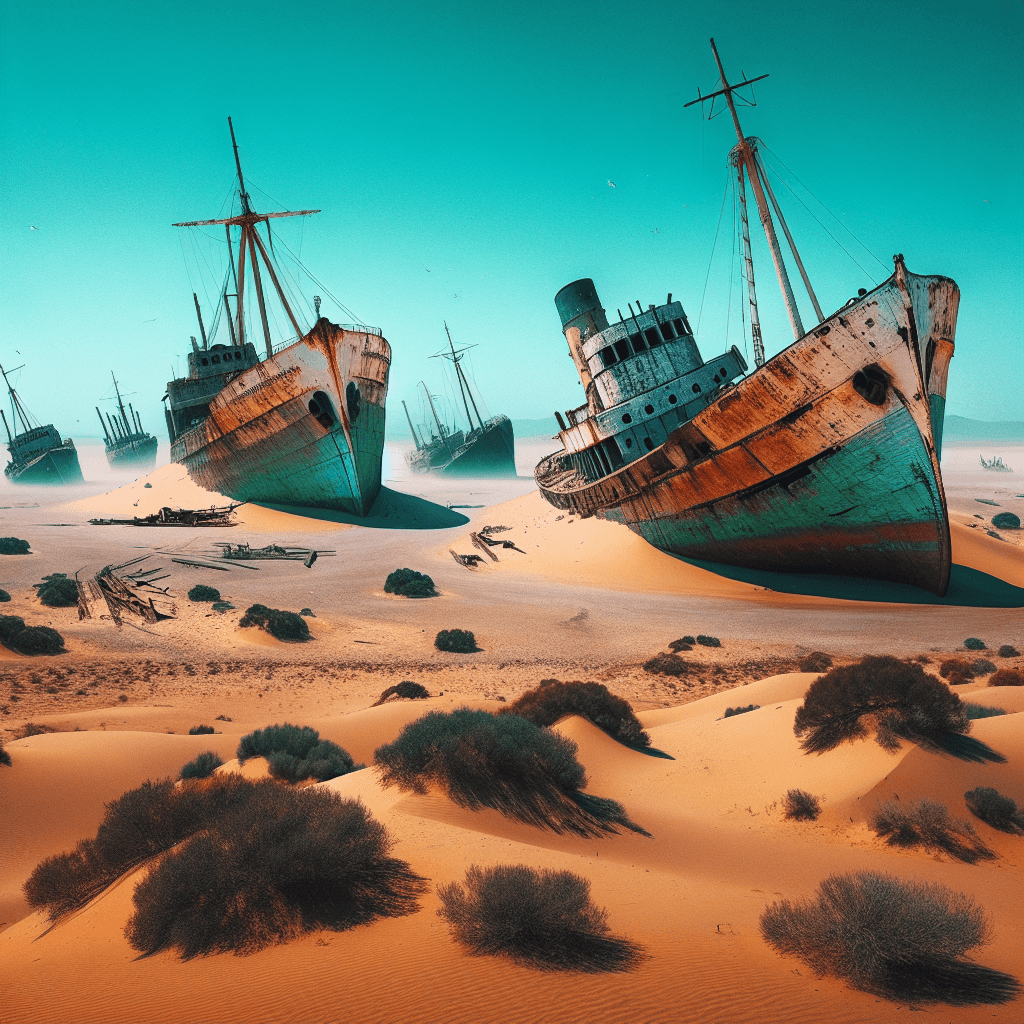
Deep in a vast, sun-scorched desert, a ghost fleet of giant ships lies rusting in the sand, miles from any ocean. This isn't a scene from a movie, but the shocking result of one of the worst environmental disasters in human history.

Too Long; Didn't Read
TLDR: The shipwrecks are in the former Aral Sea. In the 1960s, the Soviet Union diverted the rivers that fed the sea to irrigate cotton fields. The sea dried up, turning into a desert and leaving the entire fishing fleet stranded to rust on the new, dry land.
The Ghost Fleet of the Desert: Why is there a desert full of giant rusting shipwrecks?
Imagine walking through a vast, sun-scorched desert, the ground cracking under your feet. In the distance, you see not sand dunes or cacti, but the towering, skeletal remains of giant fishing trawlers and cargo ships, their hulls decaying under a relentless sun. This surreal landscape isn't a movie set; it's the former seabed of the Aral Sea in Central Asia. The haunting image of this ship graveyard begs a monumental question: how did an entire fleet of ships get stranded in the middle of a desert? This post will uncover the story behind one of the most shocking man-made environmental disasters in human history, explaining exactly how a sea vanished and left its ships behind.
The Sea That Was
It’s difficult to look at the arid wasteland today and believe that, within living memory, the Aral Sea was the fourth-largest lake on Earth. Spanning between Kazakhstan and Uzbekistan, it was a vibrant oasis in an otherwise dry region. The sea covered an area of about 68,000 square kilometers (26,300 square miles)—larger than the entire country of Sri Lanka.
For decades, the Aral Sea supported a bustling fishing industry that employed tens of thousands of people. Port cities like Moynaq in Uzbekistan were centers of commerce, with canneries processing a bountiful catch that was shipped across the Soviet Union. The sea was a thriving ecosystem and the lifeblood of the communities along its shores. So, where did all the water go?
A Fatal Diversion
The tragedy of the Aral Sea began in the 1960s. At the time, Soviet planners embarked on an ambitious and ultimately catastrophic irrigation project. The goal was to transform the arid plains of Central Asia into a major agricultural hub, primarily for growing water-thirsty crops like cotton and rice. To achieve this, engineers made a fateful decision: they began diverting the two major rivers that fed the Aral Sea, the Amu Darya and the Syr Darya.
Vast, and often inefficient, canals were built to channel the river water hundreds of kilometers to the new farmlands. A significant portion of this diverted water was lost to evaporation and leakage before it ever reached the crops. The rivers, which had nourished the Aral Sea for millennia, were reduced to a trickle. The sea was cut off from its life source.
The Devastating Aftermath: From Water to Wasteland
The consequences of severing the sea's water supply were swift and devastating. The Aral Sea began to shrink at an astonishing rate. By the late 1980s, it had split into two separate bodies of water—the North Aral and the South Aral. Today, it is less than 10% of its original size.
As the shoreline receded, it left behind what is now known as the Aralkum Desert. The fishing fleets that once sailed its waters were left high and dry, literally stranded in the middle of a new desert. The former port of Moynaq now lies more than 150 kilometers (over 90 miles) from the water's edge. The rusting ships are all that remain of its prosperous past.
The environmental fallout extended far beyond the stranded ships:
- Extreme Salinity: As the water volume decreased, the concentration of salt skyrocketed, killing off nearly all the native fish species and collapsing the fishing industry.
- Toxic Dust Storms: The exposed seabed is a toxic wasteland covered with salt, pesticides, and chemical runoff from the agricultural fields. Strong winds whip this contaminated dust into the air, causing severe respiratory illnesses and other health problems for the local population.
- Climate Disruption: The massive body of water once moderated the region's climate. Its absence has led to hotter, drier summers and colder, longer winters.
A Cautionary Tale
The desert ship graveyard of the Aral Sea is a powerful and somber monument to a man-made ecological disaster. It stands as a stark warning about the unforeseen consequences of large-scale environmental engineering and the dangers of unsustainable water management. While some small-scale restoration projects, like the Kok-Aral Dam in the North Aral, have brought back a glimmer of hope to certain areas, the ghost fleet remains. It serves as a permanent, rusting reminder of a sea that was sacrificed for agricultural ambition, leaving behind only sand and silence.


