
Why Movie Theater Seats Are Red: The Scientific Reason They Fade Away in the Dark
Discover the fascinating science of the Purkinje effect and why movie theaters use red seats to make the room disappear as soon as the lights dim.

Too Long; Didn't Read
Movie theater seats are red because of the Purkinje effect, which causes the color red to become invisible to the human eye first as light levels drop, minimizing peripheral distractions during the film.
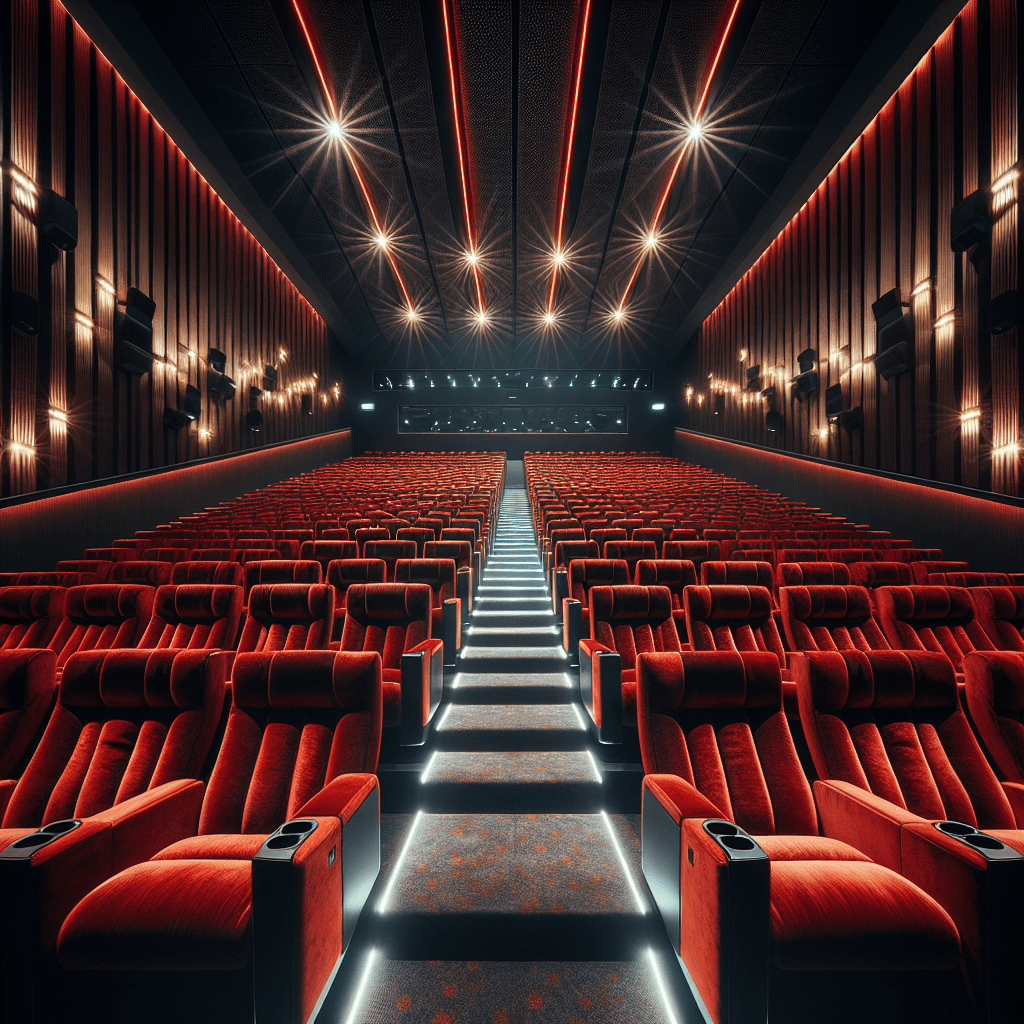
Have you ever settled into a plush, crimson chair at your local multiplex and wondered why almost every theater in the world seems to share the same color palette? Whether it is a historic opera house or a cutting-edge IMAX theater, red remains the undisputed king of cinema decor. While it might seem like a mere nod to tradition or a choice based on aesthetic luxury, the decision to use red seating is actually rooted in complex human biology and the physics of light.
The ubiquity of red seats is not an accident of interior design. Instead, it is a calculated choice designed to optimize the viewing experience. By understanding how the human eye processes different wavelengths of light as brightness levels drop, theater designers can ensure that the environment around the screen literally "disappears" the moment the lights go down. This blog post explores the scientific phenomenon known as the Purkinje effect and why it makes red the perfect color for the silver screen.
The Purkinje Effect: The Science of Disappearing Colors
The primary scientific reason for red seating is a physiological phenomenon called the Purkinje effect. Discovered by Czech anatomist Johannes Evangelista Purkyně in 1819, this effect describes how the human eye's sensitivity to different colors shifts as light intensity changes.
The human retina contains two main types of photoreceptors:
- Cones: These function best in bright light (photopic vision) and allow us to perceive fine details and a full spectrum of colors.
- Rods: These are highly sensitive to low light (scotopic vision) but do not process color well and have lower spatial resolution.
In a brightly lit room, our eyes are most sensitive to the yellow-green part of the spectrum. However, as the theater lights dim and our vision transitions from cones to rods, our peak sensitivity shifts toward shorter wavelengths, specifically blues and greens. Because red has a much longer wavelength, it is the first color to lose its perceived intensity in low-light conditions. To our eyes, red becomes dark and desaturated faster than any other color, effectively allowing the seats to "fade away" into the shadows.
Maximizing Immersion and Reducing Distraction
The ultimate goal of any movie theater is to create an immersive environment where the audience’s entire focus is directed toward the screen. If theater seats were blue or green, they would remain visible to our peripheral vision even in a darkened room because our rods are more sensitive to those wavelengths. This would create a visual "haze" or distraction around the edges of the frame.
By choosing red, theater owners ensure that:
- Peripheral Distractions are Minimized: As soon as the film starts, the seats become virtually black to the human eye, preventing the audience from being distracted by the physical environment.
- Light Reflection is Controlled: Red light does not scatter as easily as blue light. This prevents light from the screen from bouncing off the seats and back into the eyes of the viewers, which helps maintain the high contrast and deep black levels of the projected image.
A Legacy of Luxury and Practicality
While science provides the functional justification, the choice of red also has historical and practical roots. Historically, red was the color of choice for Italian opera houses, which served as the blueprint for early movie palaces. Red was associated with royalty, prestige, and high art, signaling to patrons that they were entering a space of cultural importance.
From a maintenance perspective, red is also highly practical. In a high-traffic environment where snacks and drinks are consumed in the dark, red fabric is remarkably effective at masking stains, spills, and wear and tear. This durability, combined with the biological advantages of the Purkinje effect, has cemented red as the industry standard for over a century.
Conclusion
The next time you take your seat for a summer blockbuster, you can appreciate that the red upholstery is doing more than just providing a comfortable place to sit. It is a sophisticated application of visual science designed to trick your brain into ignoring the room around you. By leveraging the Purkinje effect, theaters ensure that the physical world fades into the darkness, allowing the story on the screen to take center stage. This marriage of 19th-century biological discovery and modern cinematic design remains one of the most effective, yet invisible, tools in the art of storytelling.


