
Why must a goat legally walk on the roof of some Italian buildings
It sounds like a forgotten fairy tale, but it’s an actual Italian law still on the books. Uncover the bizarre history that legally requires a goat to take a stroll on the rooftops of certain buildings.

Too Long; Didn't Read
TLDR: An archaic Italian law required a goat on certain rooftops to exploit a tax loophole, as animals not technically on the ground were not counted as taxable property.
Debunking a Quirky Myth: Why Must a Goat Legally Walk on Some Italian Roofs?
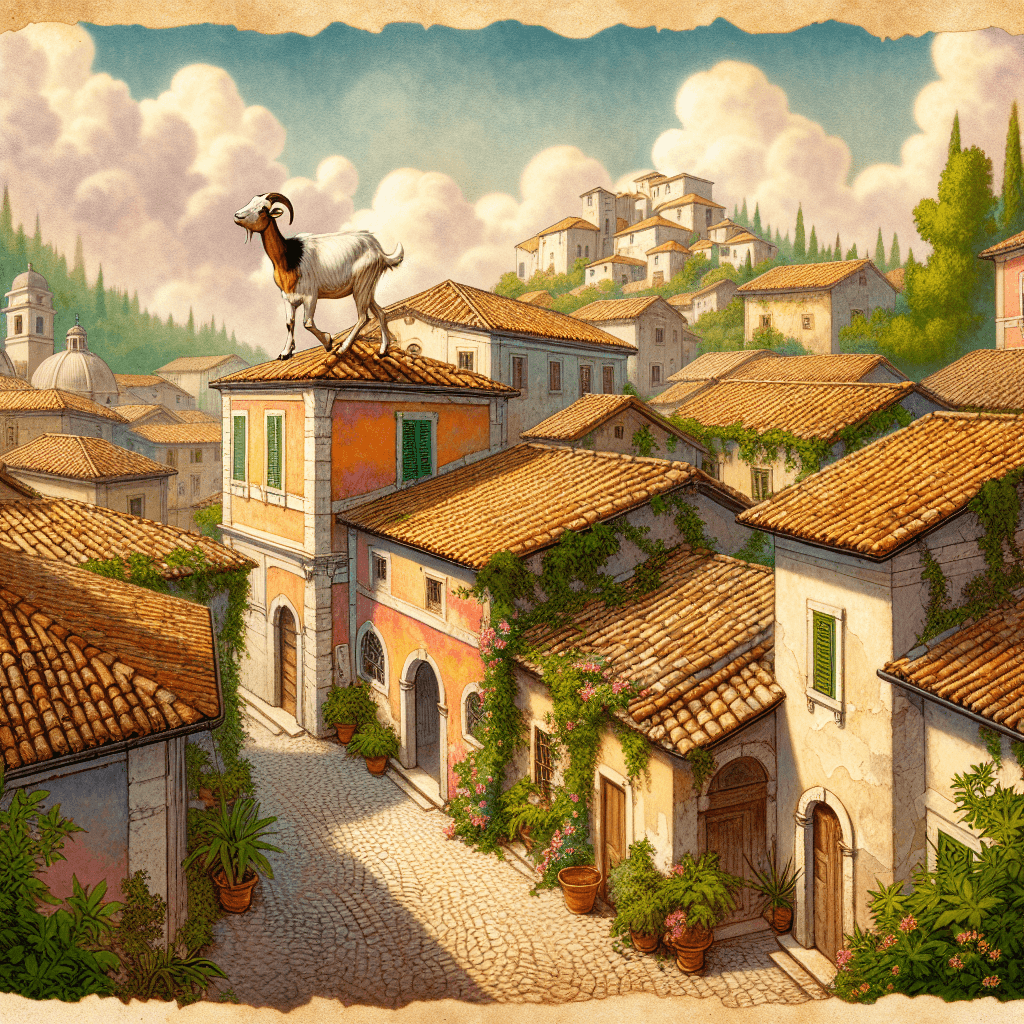
Imagine strolling through a picturesque Italian village, the scent of espresso in the air, when you glance up and see… a goat, contentedly perched on a terracotta roof. It’s a charming, if baffling, image. This scene is often accompanied by a fascinating piece of trivia: that an old Italian law requires at least one building in certain towns to have a goat walk on its roof. This claim has circulated on "weird laws" lists and travel blogs for years, capturing the imagination of many. But is there any truth to this bizarre-sounding legislation? This post will investigate the viral claim, separate historical fact from modern fiction, and uncover the real story behind Italy’s famous rooftop goats.
The Viral Claim: A Goat's Legal Duty
The legend typically states that in certain regions of Italy, an ancient law mandates that for a building to be considered "officially inhabited" or to comply with a historic charter, a goat must be led onto its roof at least once. The supposed reasons vary, from proving the roof's structural integrity to a superstitious ritual meant to ward off evil or ensure prosperity for the community. It’s a wonderfully eccentric story that paints a picture of Italy as a land steeped in quirky, ancient traditions. However, when one tries to find the actual statute, the trail runs cold.
The Search for the Statute: Fact vs. Fiction
Despite the story's persistence, a thorough search of the Italian legal code, or Codice Civile, as well as regional and municipal statutes, reveals no such law. Legal historians and Italian cultural experts have consistently debunked this claim as a myth. There is no existing legislation in Italy that legally obligates anyone to have a goat walk on their roof for any reason.
So, if it’s not a law, why is the story so widespread, and why are there actual photos of goats on Italian roofs? The reality is both simpler and, in some ways, more interesting than the myth. The truth lies not in law books, but in a combination of practical agriculture and the power of a good story.
Unraveling the Myth: Plausible Origins
While the law is fictional, the phenomenon of goats on roofs is very real in some parts of Italy, particularly in mountainous and rural areas like Sardinia and parts of the Alps. The myth likely stems from a misunderstanding of these traditional practices. Here are the most plausible origins:
-
The Original "Green" Roofer: For centuries, some traditional Italian buildings, especially in pastoral communities, were built with sod or "green" roofs. These roofs, made of earth and grass, provided excellent insulation. Over time, they would become overgrown with weeds and vegetation. What’s the most efficient, agile, and cost-effective way to clear this vegetation? A goat. Goats are natural climbers and browsers, making them perfect for this "rooftop landscaping" job. A practical necessity was likely witnessed by travelers and spun into a tale of legal obligation.
-
Agile Grazers: In hilly, rocky villages, space is at a premium. Goats are notoriously nimble creatures that can navigate steep and uneven terrain with ease. It's not uncommon for them to climb onto low-hanging or terraced roofs simply to find a better patch of sun or a tastier morsel of vegetation growing from a wall. What looks like a bizarre ritual is often just a goat being a goat.
-
The Power of a Good Story: The internet loves a "weird facts" list. Once a story like the rooftop goat law enters the digital ecosystem, it gets copied, shared, and re-posted across countless blogs and social media platforms, often without any fact-checking. Each share lends it a false sense of credibility, cementing a fun but fictional tale as accepted trivia.
Conclusion
So, must a goat legally walk on the roof of some Italian buildings? The definitive answer is no. The charming notion of a "municipal goat inspection" is a myth, a piece of folklore born from the very real and practical tradition of using goats as four-legged gardeners on green roofs. The story serves as a wonderful reminder of how easily practical customs can be romanticized into legend. While you won't find this requirement in any Italian law book, if you're lucky enough to wander through the right village, you might still see a goat on a roof—not because of a legal duty, but because it's the best "animal" for the job.


