
Why was a baboon officially employed as a railroad signal operator for nine years
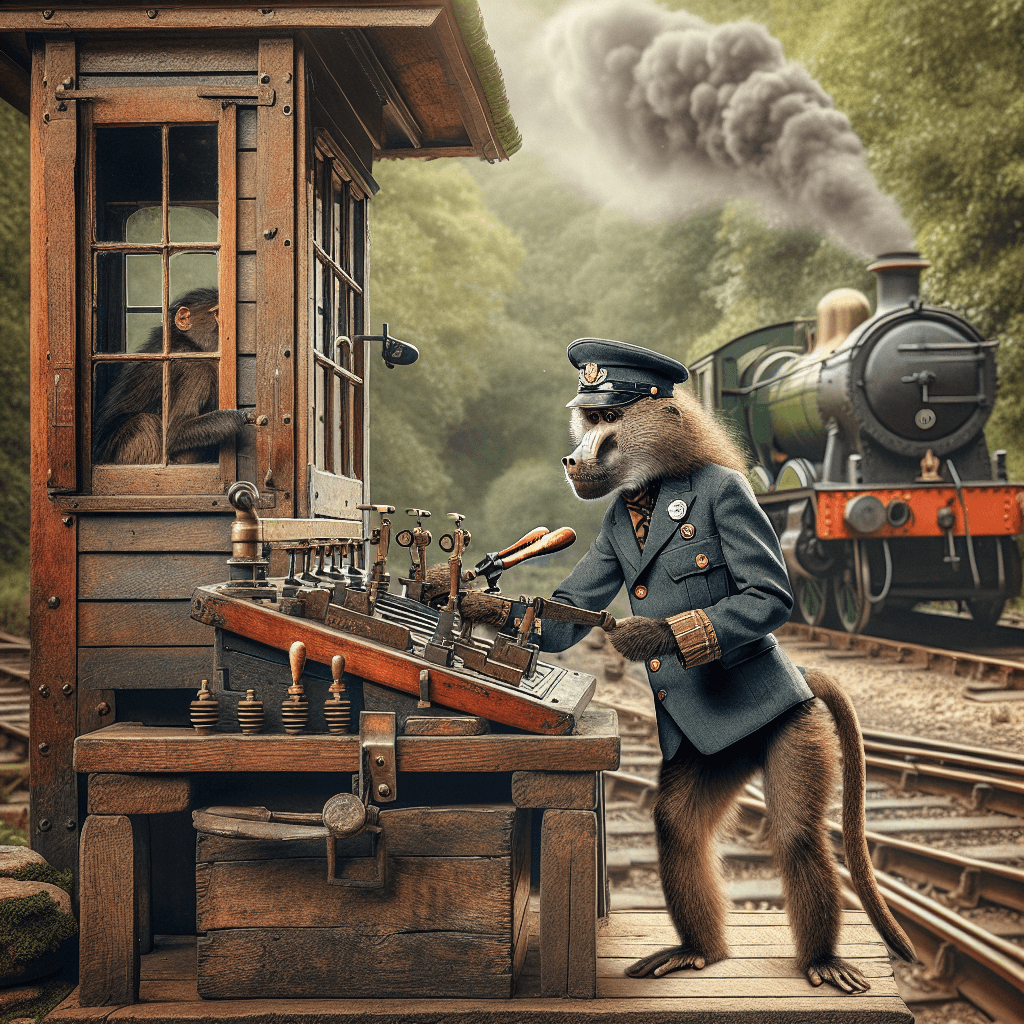
For nine years, a baboon named Jack worked as an official railroad signalman and reportedly never made a single mistake. This is the astonishing true story of how he got the job—and his unique paycheck.

Too Long; Didn't Read
TLDR: A double-amputee railroad worker in 1880s South Africa trained his pet baboon, Jack, to operate the signal levers for him. The baboon was so reliable and never made a mistake that the railway company officially hired him, and he worked the job for nine years.
The Primate Professional: Why Was a Baboon Officially Employed as a Railroad Signal Operator for Nine Years?
In the annals of employment history, few résumés stand out quite like that of Jack, a Chacma baboon who, in the late 19th century, held the official title of signal operator for a major railway. This isn't folklore or a tall tale; it's a documented case of one of the most unusual, yet remarkably successful, employees ever hired. How did a baboon end up in such a position of responsibility, and what does his story tell us about intelligence and partnership? This post delves into the incredible true story of Jack the Signalman, exploring the circumstances that led to a baboon becoming a trusted, salaried member of the Cape Town-Port Elizabeth Railway.
A Tragic Accident and an Unlikely Friendship
The story begins not with the baboon, but with his human companion, James "Jumper" Wide. Wide was a signalman for the railway in Uitenhage, South Africa, known for his agility in jumping between rail cars—a practice that ultimately led to a tragic accident in 1877. He fell and was run over by a train, resulting in the amputation of both of his legs below the knee.
Despite his disability, Wide was determined to keep his job. He fashioned a pair of wooden peg-legs and built a small trolley to help him get around. However, the physical demands of operating the signal levers and keys were immense. Realizing he needed assistance, Wide sought a helper, but his solution was far from conventional. In a local market, he observed a Chacma baboon skillfully leading an ox-wagon. Impressed by the animal's intelligence, Wide purchased the baboon, named him Jack, and brought him home.
From Pet to Protégé
Initially, Jack’s duties were domestic. He helped Wide by pumping water from a well and tending to the garden. Wide quickly recognized Jack's capacity for learning and began training him for more complex tasks. The most crucial of these was assisting with his railway duties. The signal box at Uitenhage station was located on a hill, a challenging commute for Wide. Jack learned to push Wide to work on his trolley and, eventually, to operate the signals himself.
The system they developed was based on sound and numbers:
- The Whistle System: The approaching train engineer would blow a specific number of short whistles to indicate which track they needed.
- Lever Operation: Upon hearing the signal, Wide would confirm the track and then hold up the corresponding number of fingers.
- Jack's Task: Jack would watch Wide, then pull the correct lever to change the signals for the designated track. He would also collect the key for the coal sheds from the locomotive engineer.
Jack learned the routine with astonishing speed and precision. He became Wide’s indispensable partner, performing his duties with an unwavering focus that soon attracted attention.
Making it Official: From Skepticism to Salary
As you might imagine, a baboon operating railway signals was not standard procedure. A concerned passenger reported seeing the primate at the levers, prompting an official investigation by the railway authorities. Initially deeply skeptical and ready to dismiss both man and baboon, the railway manager decided to conduct a formal test.
The superintendent ordered an engineer to sound the train whistle in a random, unpredictable sequence to try and trick the baboon. To everyone's astonishment, Jack performed flawlessly. He listened to the whistles, looked to Wide for confirmation, and pulled every lever correctly without hesitation. Impressed beyond measure, the railway system officially hired Jack. He was given an employee number and a salary of 20 cents a day, plus half a bottle of beer every Saturday as a weekend treat. For the next nine years, Jack the baboon worked as a signal operator. In all that time, he never once made a mistake.
Conclusion
Jack’s story is more than just a historical curiosity; it’s a powerful testament to animal intelligence, the depth of interspecies bonds, and the incredible adaptability of both humans and animals in the face of adversity. James Wide’s ingenuity and Jack’s remarkable cognitive abilities created a partnership that defied all expectations. The baboon signalman worked faithfully until his death from tuberculosis in 1890, leaving behind a flawless service record. His story reminds us to look beyond our preconceived notions, proving that dedication, skill, and reliability can be found in the most unexpected of employees.


