
Why was Play-Doh originally invented as a cleaning product to remove coal soot from wallpaper
Long before it became the colorful staple of every toy box, Play-Doh was a utilitarian household tool designed to scrub grimy coal soot off Depression-era wallpaper. Discover the fascinating story of how a failing cleaning product was accidentally transformed into one of the most iconic toys in history.

Too Long; Didn't Read
Play-Doh was originally invented in the 1930s as a pliable putty designed to lift coal soot off wallpaper. After home heating shifted from coal to cleaner sources, the struggling cleaning product was rebranded as a non-toxic modeling toy for children in the mid-1950s.
From Soot to Smiles: Why Was Play-Doh Originally Invented as a Cleaning Product to Remove Coal Soot From Wallpaper?
Have you ever opened a fresh can of Play-Doh and been instantly transported back to your childhood by 그 unique, salty-sweet scent? While it is now a staple of toy boxes worldwide, this iconic modeling compound did not begin its life in the toy aisle. In fact, for the first two decades of its existence, it was a utilitarian tool found in the cleaning cupboard. This blog post explores the fascinating history of this household staple and answers the question: Why was Play-Doh originally invented as a cleaning product to remove coal soot from wallpaper? We will dive into the environmental conditions of the 1930s, the chemical ingenuity of its creators, and the lucky break that saved the company from bankruptcy.
The Problem: Coal Heat and Delicate Walls
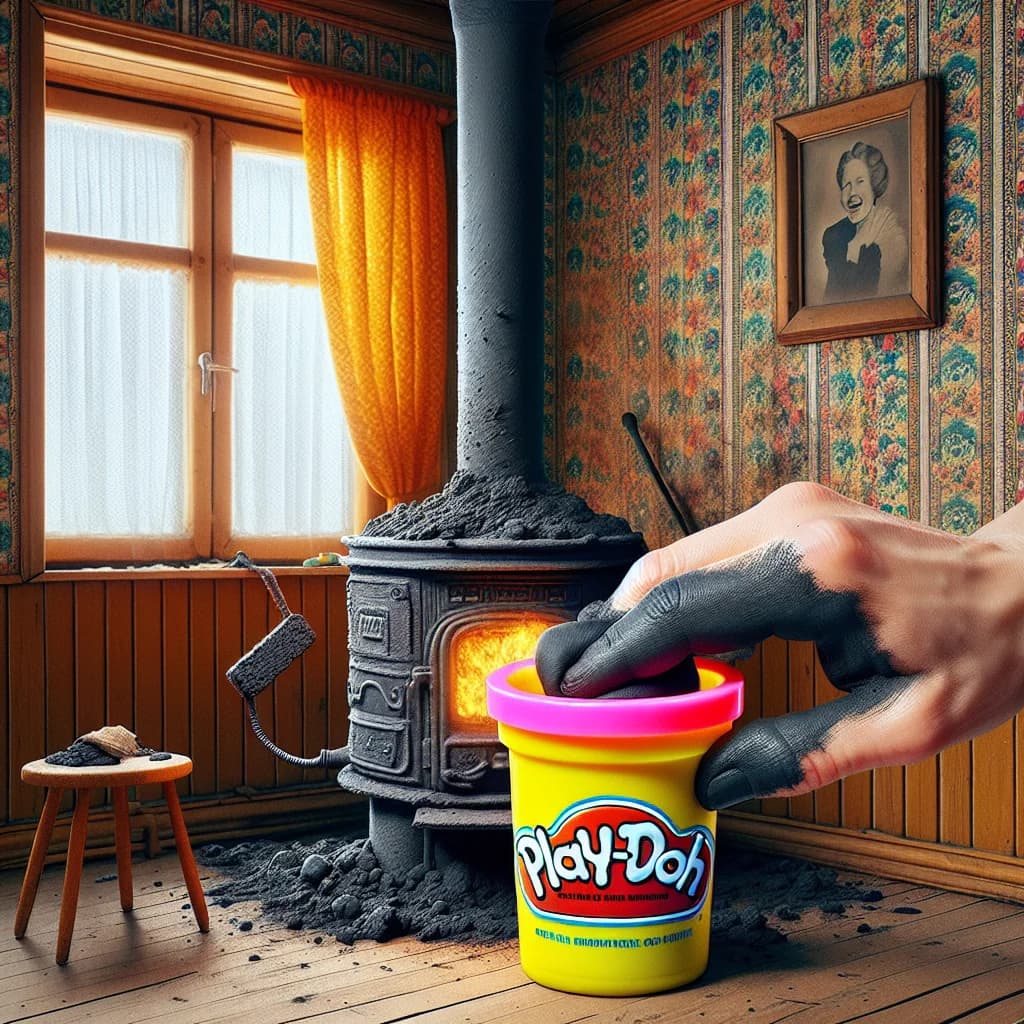
To understand why Play-Doh was invented, we must look at the domestic environment of the early 20th century. Before the widespread adoption of natural gas and electricity, the majority of American homes were heated by coal-burning furnaces. While effective at providing warmth, coal heating had a significant drawback: it produced a constant stream of fine, black soot.
This soot would settle on every surface, but it was particularly problematic for wallpaper. At the time, most wallpaper was made of paper or fabric fibers that were not water-resistant. If a homeowner tried to clean the soot with soap and water, the paper would tear, and the colors would bleed, effectively ruining the decor. There was a desperate need for a "dry" cleaner that could lift dirt without moisture.
The Solution: Kutol Products’ Wallpaper Cleaner
In the early 1930s, Noah McVicker of the Cincinnati-based soap company Kutol Products developed a solution. He created a putty-like substance that was non-toxic, malleable, and—most importantly—did not contain any abrasive chemicals that would damage delicate paper.
How the Original Product Worked
The original wallpaper cleaner was a simple dough made of flour, water, salt, boric acid, and mineral oil. Homeowners would use the product through a straightforward process:
- Wad the dough: A small chunk of the putty would be taken from the can.
- Roll and Lift: The user would roll the dough across the soot-covered wallpaper.
- Absorb: The dough’s sticky texture would lift the black coal residue off the wall and trap it within the compound.
- Refresh: Once the surface of the dough became too dirty, the user would simply knead the soot into the center of the ball to reveal a fresh, clean surface.
The Shift: Why the Cleaner Almost Went Extinct
By the late 1940s and early 1950s, the market for wallpaper cleaner began to vanish. Two major shifts in American technology caused this decline:
- The Rise of Natural Gas: Homeowners transitioned from coal to natural gas and oil heating, which were significantly cleaner and did not produce soot.
- Vinyl Wallpaper: Manufacturers began producing "washable" vinyl wallpaper. Unlike the older paper-based versions, these could be cleaned with a damp sponge, rendering McVicker’s dough obsolete.
Kutol Products was facing financial ruin until Noah’s nephew, Joe McVicker, stepped in. The turning point came from a suggestion by Joe’s sister-in-law, Kay Zufall, a nursery school teacher. She had read that kids could make art projects out of wallpaper cleaner and decided to try the Kutol dough in her classroom. The children loved it; it was easier to manipulate than traditional modeling clay and didn't leave a messy residue.
From Industrial Putty to Iconic Toy
Recognizing the potential, the McVickers pivoted their business model. To transform the cleaning product into a toy, they made a few key adjustments:
- Removing the Detergent: They stripped out the cleaning agents to ensure the product was even safer for children.
- Adding Color: Originally only available in off-white, they began adding red, blue, and yellow dyes.
- Scenting: They added the signature almond-like fragrance to mask the smell of the raw dough.
In 1956, they rebranded the product as "Play-Doh" and formed the Rainbow Crafts Company. By marketing the product to schools and securing a spot on the popular children's show Captain Kangaroo, Play-Doh became a national sensation, eventually being inducted into the National Toy Hall of Fame.
Conclusion
The story of Play-Doh is a classic example of how a failing product can find new life through observation and adaptation. Originally invented as a specialized cleaning product to remove coal soot from wallpaper, it solved a specific problem of the 1930s home. When technological progress made that problem disappear, the product's inherent qualities—its safety, texture, and ease of use—allowed it to transition from a cleaning chore to a creative catalyst. Today, Play-Doh stands as a testament to the idea that sometimes, the best way to move forward is to look at what you already have through a different lens. Whether you are a history buff or a parent, the next time you see that yellow can, you'll know it represents more than just fun—it represents a clever solution to a very messy past.


