
Why was the chainsaw originally invented as a surgical tool to assist doctors in difficult human childbirths
Before it became a lumberjack’s best friend, the chainsaw was a handheld surgical device designed to saw through human bone during grueling childbirths. Discover the chilling history of how this power tool transitioned from the maternity ward to the deep woods.

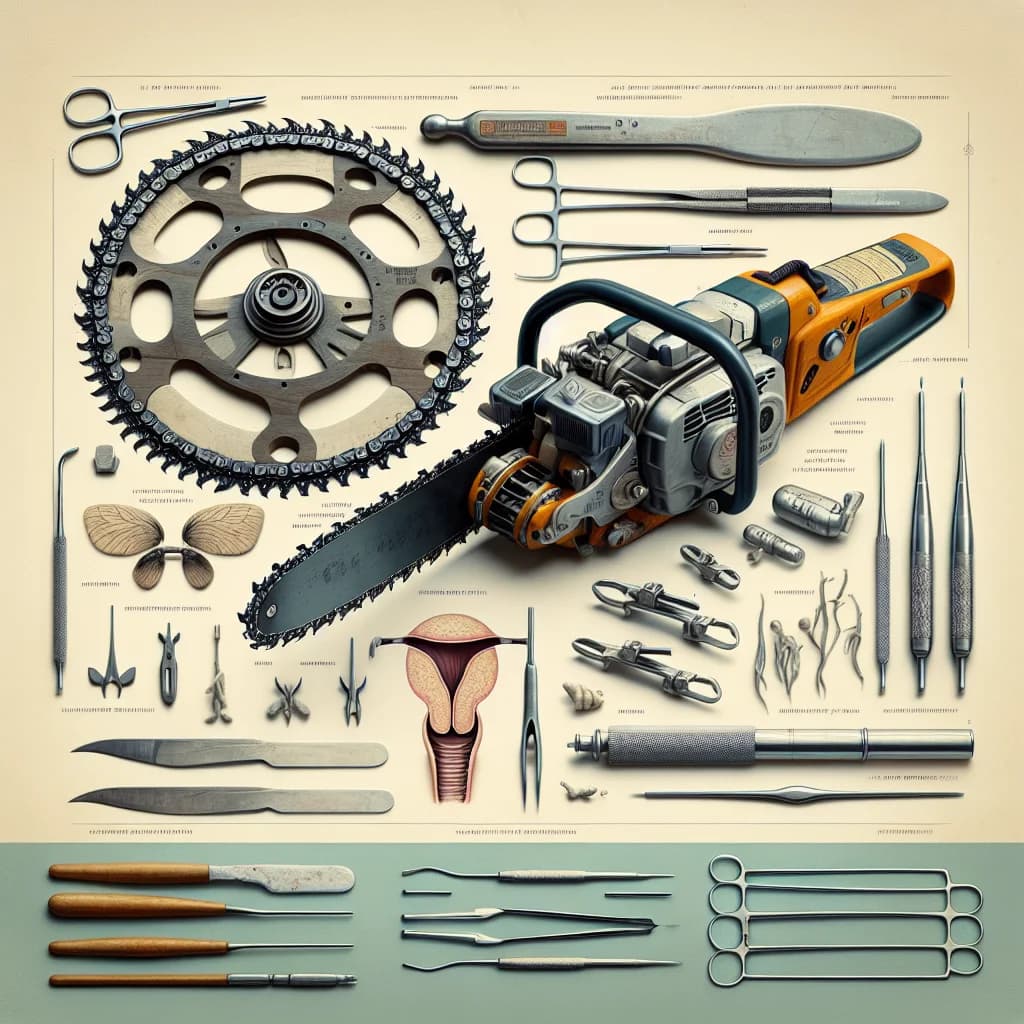
Too Long; Didn't Read
Chainsaws were invented in the late 18th century by two Scottish surgeons to assist in difficult births. The hand-cranked device was designed for symphysiotomies, a procedure where doctors cut through pelvic bone and cartilage to widen the birth canal during obstructed labor before C-sections became safe and common.
The Sharp Truth: Why Was the Chainsaw Originally Invented as a Surgical Tool to Assist Doctors in Difficult Human Childbirths?
Long before it became the signature tool of lumberjacks and a staple of horror cinema, the chainsaw resided in the sterile, high-stakes environment of the hospital delivery room. To the modern ear, the idea of using a chainsaw during childbirth sounds like a nightmare, yet in the late 18th century, it was considered a life-saving medical breakthrough. Before the advent of safe Cesarean sections and modern antibiotics, doctors faced the grim reality of obstructed labors, where both mother and child faced near-certain death. This blog post explores the surprising medical origins of the chainsaw, detailing how a tool designed for bone surgery eventually transitioned from the operating theater to the forest.
The Dire Necessity of 18th-Century Childbirth
To understand why the chainsaw was invented, one must first understand the medical limitations of the 1700s. When a baby was too large to pass through the birth canal—a condition known as obstructed labor—doctors had very few options. General anesthesia did not exist, and the Cesarean section was almost always fatal for the mother due to infection and hemorrhage.
To save the lives of both patients, doctors performed a procedure called a symphysiotomy. This involved manually cutting through the pubic symphysis (the cartilage connecting the pubic bones) to widen the birth canal. Before the chainsaw, this was done using a small medicinal knife and a saw. The process was:
- Excruciatingly slow and painful for the patient.
- Highly imprecise, often leading to unintended damage to surrounding tissue.
- Prone to causing long-term mobility issues or fatal infections.
The Inventors: Aitken, Jeffray, and the First Prototype
In the late 1780s, two Scottish doctors, John Aitken and James Jeffray, sought a more efficient way to cut through bone and cartilage during these difficult deliveries. Their goal was to minimize the time the patient spent in surgery and improve the precision of the cut.
According to medical historians, the result of their collaboration was the osteotome, the world’s first "chainsaw." Unlike the gas-powered giants we see today, this original tool was small, handheld, and powered by a hand-crank. Key features of this early medical chainsaw included:
- A Fine Serrated Chain: A flexible chain featuring small, sharp teeth.
- Hand-Crank Mechanism: The surgeon would turn a handle to move the chain around a guiding blade.
- Compact Design: It was designed to be used in tight spaces within the human body.
This tool allowed doctors to cut through the pelvic bone much faster than a traditional saw or knife, significantly reducing the duration of the trauma for the mother.
From Medicine to Industry: The Evolution of the Tool
The chainsaw remained a specialized surgical instrument for several decades. In the 1830s, German orthopedist Bernhard Heine improved the design with the "bone-cutter," adding a sprocket-driven chain. This version became a standard tool for various bone-cutting procedures beyond childbirth.
The transition from the human body to the timber industry was a matter of scaling. As the industrial revolution progressed, innovators realized that the mechanical principle of a continuous serrated chain could be applied to much tougher materials. By the early 20th century, the first patents for "endless chain" saws for woodcutting began to emerge.
- 1905: Samuel J. Bens of San Francisco patented an electric chainsaw intended for cutting giant redwoods.
- 1926: Andreas Stihl patented the first electric chainsaw for wood, followed by a gasoline-powered version in 1929.
As surgical techniques improved—specifically the safety and success rates of C-sections—the need for symphysiotomies declined. The chainsaw eventually exited the hospital entirely, finding a new, permanent home in the logging industry.
Conclusion
The history of the chainsaw serves as a fascinating, if somewhat grisly, reminder of the ingenuity born out of medical necessity. While it is difficult to reconcile the image of a modern industrial chainsaw with a tool used for childbirth, its invention was a genuine attempt to preserve life in an era of limited options. The "osteotome" paved the way for faster, more precise surgeries long before it ever touched a tree. Understanding why the chainsaw was originally invented as a surgical tool highlights how far modern medicine has come, moving away from traumatic bone-cutting procedures toward the safe, advanced obstetric care we rely on today. For those interested in the intersection of history and technology, the chainsaw remains one of the most unexpected examples of cross-industry evolution.


