
Why was the treadmill originally invented as a grueling form of punishment for nineteenth-century prisoners
Long before it became a fitness staple, the treadmill was a brutal instrument of Victorian torture designed to break the spirits of "idle" prisoners through relentless hard labor. Discover the chilling history of how your favorite cardio machine began as a grueling sentence known as the "everlasting staircase."

Too Long; Didn't Read
The treadmill was invented in 1818 by Sir William Cubitt as a grueling reformatory tool for British prisoners. It forced inmates to perform hours of exhausting physical labor, such as grinding grain or pumping water, to deter crime and eliminate idleness before eventually being banned as inhumane.
From Torture to Fitness: Why Was the Treadmill Originally Invented as a Grueling Form of Punishment for Nineteenth-Century Prisoners?
Today, the treadmill is a staple of modern fitness, found in nearly every gym across the globe. We use it to improve our cardiovascular health, lose weight, or train for marathons. However, if you feel like your workout is a form of torture, you are historically more accurate than you might realize. In the early 1800s, the treadmill was not a tool for wellness but a sophisticated device designed for penal discipline.
The invention was born from a desire to reform the British prison system through a combination of "hard labor, hard fare, and a hard bed." This blog post explores the dark history of the device and examines why the treadmill was originally invented as a grueling form of punishment for nineteenth-century prisoners, transitioning from a tool of industrial productivity to one of the most feared disciplinary measures in Victorian history.
The Architect of the "Everlasting Staircase"
In 1818, an English engineer named Sir William Cubitt observed the incarcerated population at Bury St. Edmunds gaol. He was struck by what he perceived as the "idleness" of the inmates. During this era, social reformers were moving away from the death penalty and corporal punishment for minor crimes, seeking instead a method of rehabilitation that would break the spirit of the "lazy" criminal class.
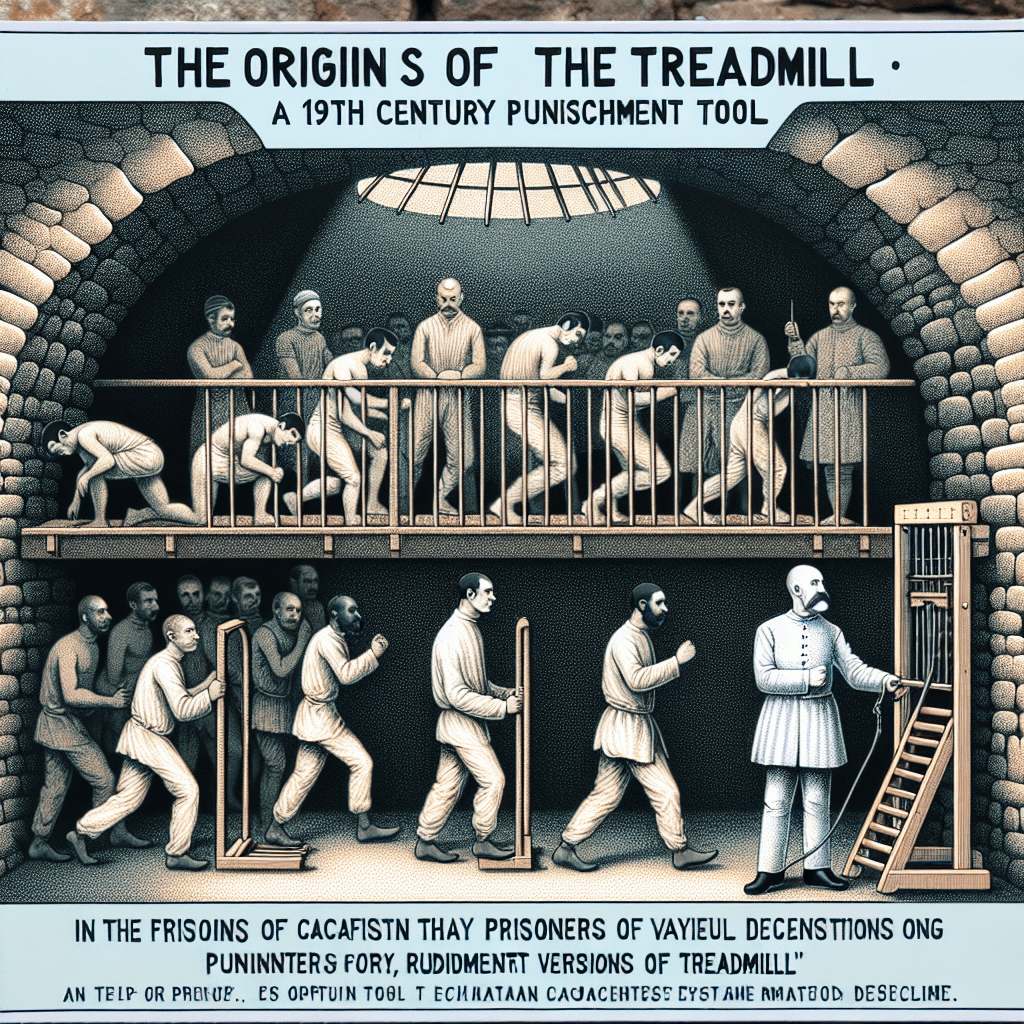
Cubitt’s solution was the "tread-wheel." Unlike the flat belts we use today, the original treadmill was a giant revolving cylinder with 24 steps built into its exterior. As the wheel turned under the weight of the prisoners, they were forced to keep stepping upward to avoid falling off—a literal "everlasting staircase."
The Logic of Victorian Reform: Punishment with Purpose
The primary reason the treadmill was invented was to solve two problems simultaneously: prisoner idleness and the need for industrial power. The Victorian penal system operated on the principle that labor should be "deterrent, but productive."
- Economic Utility: Cubitt designed the wheels to be connected to machinery. As prisoners climbed, the kinetic energy was used to grind corn, crush rocks, or pump water. This provided a way for prisons to offset their costs.
- The Silent System: Many prisons utilized the treadmill to enforce "the silent system." Inmates were often separated by wooden partitions so they could not see or speak to one another, spending hours in total isolation while performing backbreaking physical labor.
- Moral Reformation: It was believed that the sheer monotony and physical exhaustion of the wheel would instill a sense of discipline and "industrious habits" in those who had lived lives of crime.
The Brutal Physical Reality for Inmates
While the intent may have been reform, the reality was exceptionally cruel. The physical toll on nineteenth-century prisoners was immense, often leading to permanent injury or death from exhaustion.
According to historical records from the British Home Office, a typical shift on the treadmill lasted several hours. Prisoners would climb for segments of 15 to 20 minutes, followed by a brief rest, repeating this cycle throughout the day. In some facilities, such as the notorious Brixton Prison, inmates were forced to climb the equivalent of 12,000 to 14,000 vertical feet every single day. To put that in perspective, that is nearly half the height of Mount Everest, performed on a meager diet of bread and water.
The Decline of the Penal Treadmill
By the late 19th century, the perception of the treadmill began to shift. Medical professionals and humanitarian groups started to argue that the device was unnecessarily "cruel and unusual." Instead of reforming prisoners, it was breaking their bodies and leaving them unfit for society upon their release.
The use of the treadmill as a form of "hard labor" was eventually abolished in Great Britain under the Prison Act of 1898. The act recognized that labor should have a rehabilitative focus rather than being purely punitive. The device faded into obscurity for decades until it was reimagined in the 1960s by Dr. Kenneth Cooper and mechanical engineer William Staub as a tool for "aerobic" exercise—effectively rebranding a Victorian instrument of torture into a modern symbol of health.
Conclusion
Understanding why the treadmill was originally invented as a grueling form of punishment for nineteenth-century prisoners provides a fascinating glimpse into the evolution of social discipline. What began as Sir William Cubitt’s vision for industrial-scale prison reform became one of history’s most exhausting forms of manual labor. While we now step onto the treadmill by choice to improve our longevity, the device’s origins serve as a reminder of a time when "fitness" was forced, and the climb was designed to break the will rather than build the body. Next time you find yourself counting down the minutes on the gym floor, remember: you are participating in a legacy that once defined the very edge of human endurance.


