
Why was the treadmill originally invented as a grueling punishment device for nineteenth-century prisoners
Long before it became a gym staple, the treadmill was a brutal Victorian torture device designed to break the spirits of prisoners through hours of relentless, soul-crushing labor.

Too Long; Didn't Read
Originally created in 1818 by Sir William Cubitt, the treadmill was designed to reform British prisoners through grueling physical labor. Inmates climbed endless steps to grind grain or pump water, serving as both a source of power and a harsh deterrent until the practice was abolished for its cruelty in 1902.
The Dark History of Fitness: Why was the treadmill originally invented as a grueling punishment device for nineteenth-century prisoners?
For many modern fitness enthusiasts, thirty minutes on a treadmill can feel like a form of torture. While we use this phrase jokingly today, for thousands of inmates in the 1800s, the treadmill was exactly that: a relentless, soul-crushing disciplinary tool. Long before it became a staple of luxury gyms and home workouts, the treadmill was a sophisticated engine of "hard labor" designed to reform—or simply break—the spirits of Victorian criminals. This article explores the grim origins of this exercise machine, examining why was the treadmill originally invented as a grueling punishment device for nineteenth-century prisoners and how it eventually evolved into a tool for health.
The Engineer Behind the Agony: Sir William Cubitt
The treadmill, or "tread-wheel" as it was then known, was the brainchild of Sir William Cubitt, a civil engineer from an era preoccupied with prison reform. In 1818, Cubitt observed the inmates at Bury St. Edmunds Gaol lounging in idleness and decided they needed a more productive way to spend their sentences.
Cubitt’s philosophy aligned with the Victorian belief that "idleness is the devil’s workshop." He sought to create a device that would provide "hard labor, hard fare, and a hard bed." Unlike previous forms of prison labor that might involve learning a trade, the treadmill was designed to be monotonous, exhausting, and physically taxing. According to historical records from the British Library, Cubitt’s invention was quickly adopted across the United Kingdom and eventually made its way to the United States, as it provided a perfect solution for jailers who wanted to maintain order through sheer physical exhaustion.
How the Victorian Treadmill Functioned
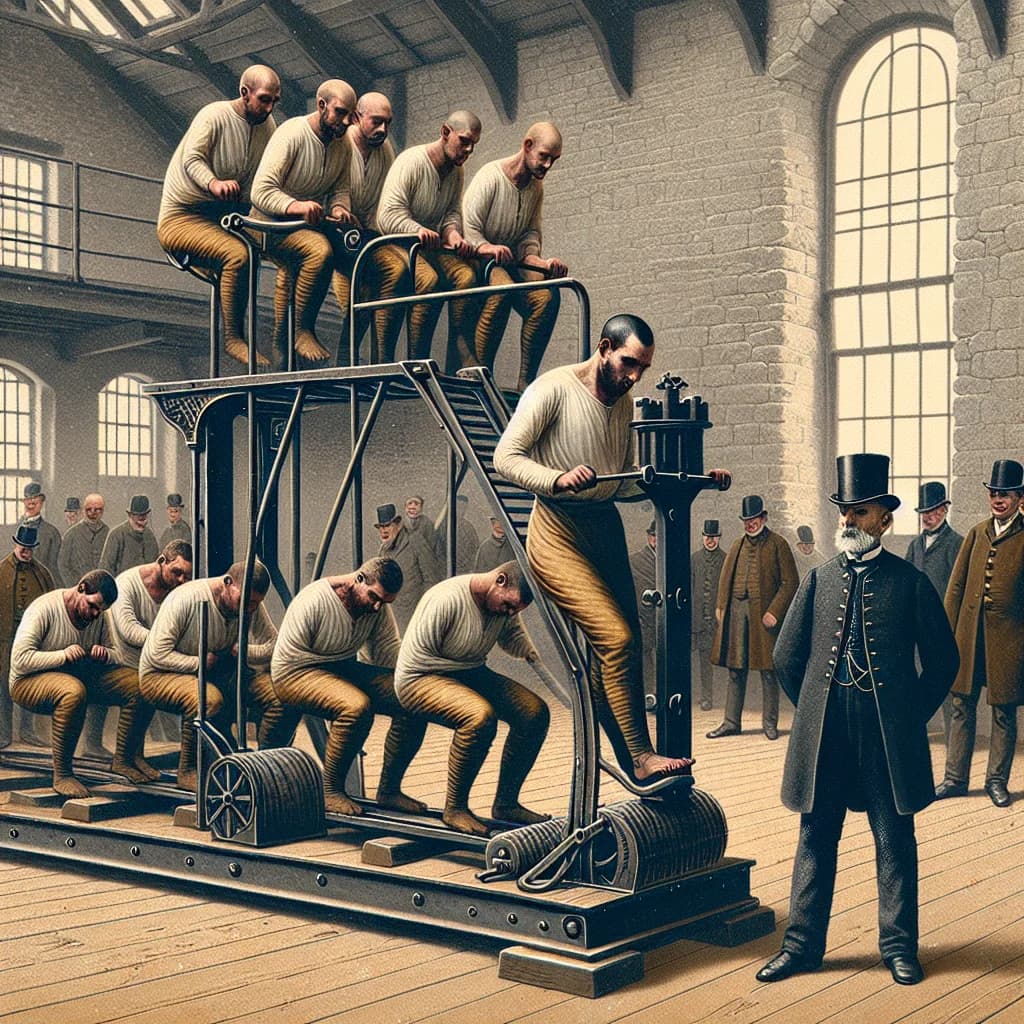
The nineteenth-century treadmill bore little resemblance to the sleek, motorized belts we see today. It was a massive, revolving wooden cylinder with steps built into its exterior, similar to a giant waterwheel.
- The Mechanism: Prisoners would hold onto a horizontal handrail and step onto the spokes of the wheel as it turned. To avoid falling off, they had to keep climbing—literally walking to nowhere for hours on end.
- The Output: While some tread-wheels were "silent" (designed purely for punishment), many were connected to machinery. These devices were used to grind corn, pump water, or power sugar mills. This is where the name "treadmill" originated, combining the act of treading with the function of a mill.
- The Intensity: On average, a prisoner might spend six to eight hours a day on the wheel. Historical analysis suggests that inmates often climbed the equivalent of 5,000 to 14,000 vertical feet daily. To put that into perspective, 14,000 feet is nearly half the height of Mount Everest, performed every single day on a meager diet of prison gruel.
The Physical and Psychological Toll
The reason why was the treadmill originally invented as a grueling punishment device for nineteenth-century prisoners was not just for economic output, but for psychological "reformation." The relentless pace and the lack of a finish line were intended to instill discipline and deter future crimes.
However, the reality was often brutal. Inmates suffered from chronic exhaustion, joint injuries, and "treadmill heart"—a form of cardiovascular strain. One of the most famous figures to suffer this punishment was the writer Oscar Wilde, who was sentenced to hard labor at Reading Gaol in 1895. His health never fully recovered from the experience, and he later wrote poignantly about the "iron heart" of the prison system.
The Shift from Punishment to Health
By the late nineteenth century, public sentiment began to turn against the extreme cruelty of the tread-wheel. Critics argued that the device was unnecessarily barbaric and did little to actually rehabilitate prisoners. The Prisons Act of 1898 effectively abolished the use of the treadmill for punishment in Britain, categorizing it as an "excessively cruel" practice.
The device languished in obscurity until the mid-20th century. In 1968, Dr. Kenneth Cooper published his book Aerobics, which popularized the idea of cardiovascular health. This paved the way for mechanical engineers to repurpose the concept of the treadmill into the motorized exercise machine we recognize today, focusing on voluntary health benefits rather than forced labor.
Conclusion
Understanding why was the treadmill originally invented as a grueling punishment device for nineteenth-century prisoners provides a sobering perspective on the history of both penal reform and modern fitness. What began as an engineer’s solution to prisoner idleness became a symbol of Victorian cruelty, designed to extract every ounce of energy from the human body.
Today, we step onto the treadmill by choice, using its mechanical precision to improve our longevity and well-being. However, the shadow of the "tread-wheel" remains a fascinating reminder of how society’s tools for discipline can be transformed into tools for self-improvement. The next time you find yourself counting the seconds until your workout ends, remember that for the Victorian prisoner, the wheel only stopped when the jailer said so.


