
Why was the very first vending machine invented to dispense holy water
Forget snacks and soda; the world's first vending machine was invented by a first-century mathematician to dispense something far more sacred. Discover the surprisingly clever reason why ancient temple-goers needed a coin-operated machine to receive their holy water.

Too Long; Didn't Read
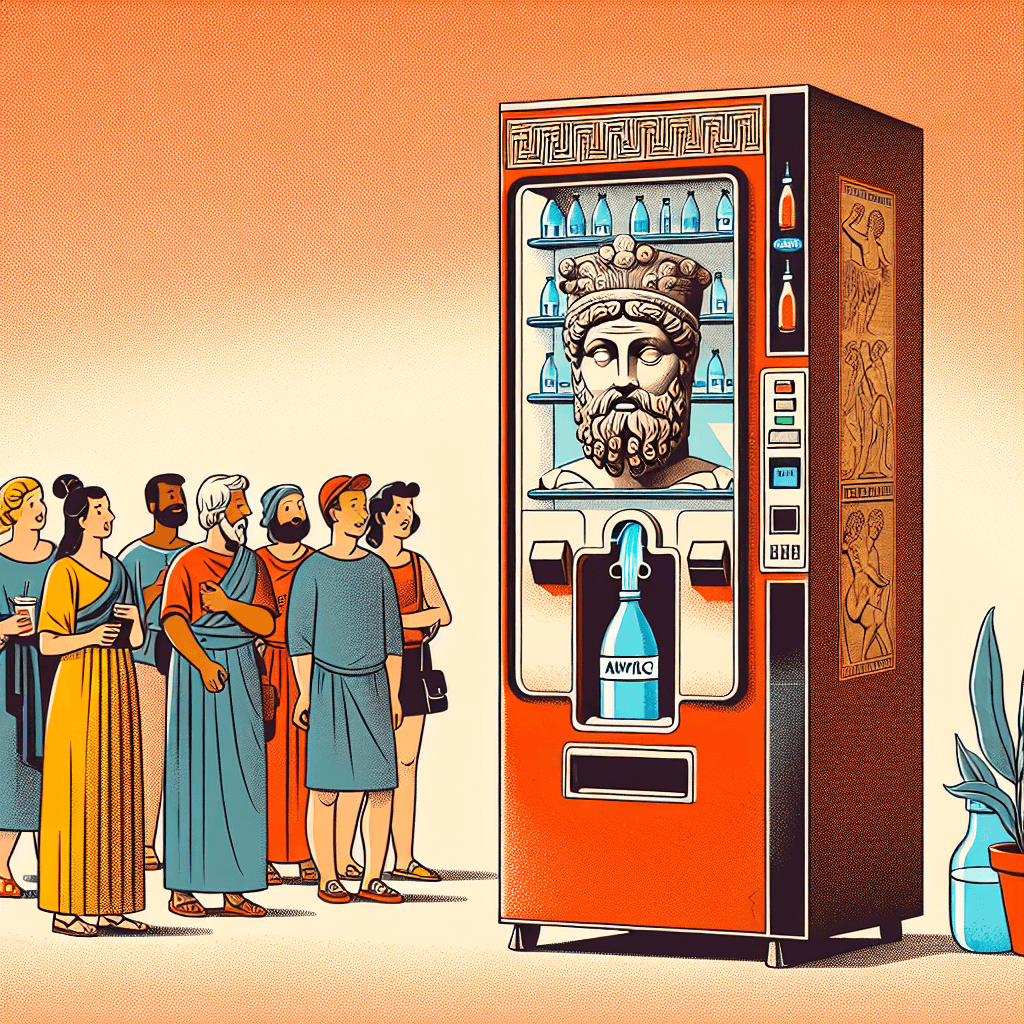
TLDR: The first vending machine was invented by an ancient Greek engineer to solve a problem in Egyptian temples. People were taking too much holy water, so he created a coin-operated device that would dispense a fixed, fair amount to each person, preventing waste.
Holy Water on Demand: Why Was the Very First Vending Machine Invented to Dispense Holy Water?
Imagine walking up to a machine, inserting a coin, and instead of a soda or a bag of chips, receiving a measure of blessed water. It sounds like a modern novelty, but this exact scenario describes the function of the world's very first vending machine. Long before they dispensed gumballs or coffee, these automated devices served a sacred purpose in the temples of ancient Egypt. This remarkable invention wasn't born from a desire for commercial convenience, but from a clever solution to a very human problem: fairness. This post will delve into the fascinating history of this ancient machine, exploring the genius inventor behind it and the unique religious context that sparked its creation.
The Inventor and His Era: Hero of Alexandria
The mastermind behind this ancient marvel was Hero of Alexandria (also known as Heron), a brilliant Greek mathematician and engineer who lived in the 1st century AD. Alexandria was a bustling epicenter of knowledge and innovation, and Hero was one of its brightest minds. He is credited with numerous inventions that were centuries ahead of their time, including a wind-powered organ, automated doors for temples, and even a primitive steam engine called the aeolipile. His work demonstrates a profound understanding of mechanics, pneumatics, and physics, which he applied to create devices that seemed almost magical to his contemporaries. His holy water dispenser was no exception; it was a practical application of his engineering genius to solve a daily challenge.
The Problem: An Unholy Amount of Holy Water
In ancient Egyptian temples, lustral water, or holy water, was a crucial part of purification rituals. Worshippers would use it to cleanse themselves before entering sacred spaces or participating in ceremonies. The process typically involved leaving a small offering to the temple gods in exchange for a portion of the water.
However, the temple priests faced a persistent issue. The system relied on an honor code, and some individuals were taking more than their allotted share of water or neglecting to leave an offering altogether. This not only depleted the temple’s supply but also disrupted the sanctity of the exchange. The priests needed a way to automate the process, ensuring that every worshipper made their offering and received a fair, standardized amount of water.
An Ingenious Solution: How the First Vending Machine Worked
Hero’s solution was a masterpiece of simple, effective engineering. He designed a sealed vase with a spout at the bottom, operated by a basic, yet brilliant, internal mechanism. The process was straightforward:
- Coin Insertion: A worshipper would drop a coin of a specific weight (historians believe it was a five-drachma coin) into a slot at the top of the device.
- The Lever Mechanism: The coin would fall onto a small pan attached to a horizontal lever. The weight of the coin would cause the pan to dip down.
- Opening the Valve: The other end of the lever was connected to a plug that sealed the spout. As the coin-pan end went down, the other end rose, lifting the plug and opening the valve.
- Dispensing the Water: A measured amount of holy water would then flow out of the spout for the worshipper to collect.
- Closing the Valve: The lever was precisely balanced so that as it tilted, the coin would eventually slide off the pan. Relieved of the weight, the lever would pivot back to its original position, causing the plug to drop and reseal the spout, cutting off the water flow until the next coin was inserted.
This invention effectively standardized the transaction, ensuring the temple's rules were followed without the need for constant human supervision. It was the perfect fusion of piety and physics.
Conclusion: From Sacred Dispenser to Snack Provider
The journey from Hero's holy water dispenser to the modern, high-tech vending machines we see today is a long one. While the concept of automated retail didn't truly take off until the late 19th century with machines selling postcards and chewing gum, its ancient origins are undeniable. The first vending machine wasn’t created for profit or convenience in the modern sense, but to maintain fairness and preserve the sanctity of a religious ritual. It stands as a powerful testament to human ingenuity and shows that even our most modern conveniences can have roots in the sacred practices of the ancient world. So, the next time you buy a drink from a machine, remember its ancestor: a clever device built to ensure a fair pour of holy water in a temple nearly two thousand years ago.


