
Why was the world's first vending machine designed to dispense holy water in ancient Egyptian temples
Discover how a 1st-century genius used a simple coin to solve a divine problem—and why the world’s very first vending machine was actually a high-tech tool for preventing holy water theft in ancient temples.

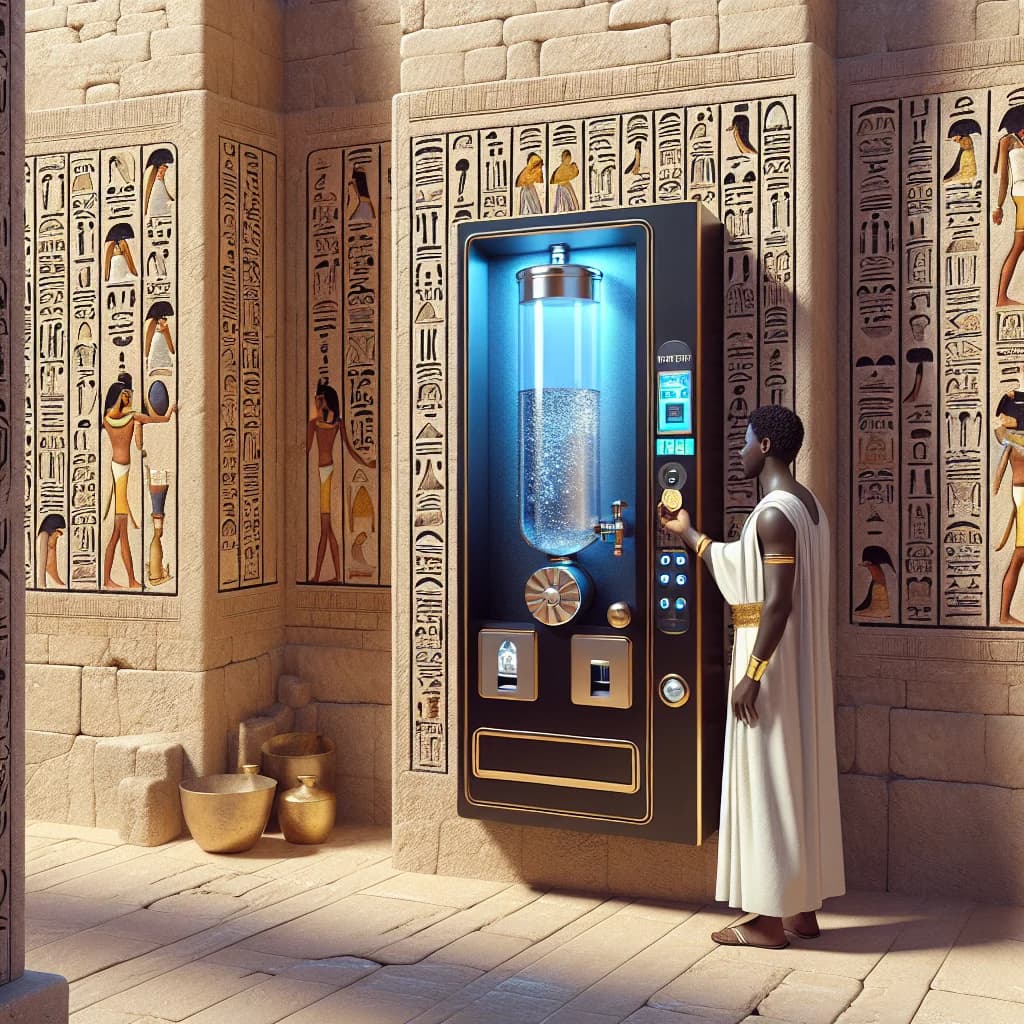
Too Long; Didn't Read
The first vending machine was invented by Hero of Alexandria to prevent people from taking more holy water than they paid for in Egyptian temples. By using a weight-triggered lever system, the machine dispensed a fixed amount of water once a coin was deposited, ensuring fair payment for sacred resources.
Divine Innovation: Why was the world's first vending machine designed to dispense holy water in ancient Egyptian temples?
When we think of vending machines, our minds often jump to refrigerated units in office hallways or train stations, stocked with sodas and snacks. However, the history of this "modern" convenience stretches back nearly 2,000 years to the bustling religious centers of Roman Egypt. Long before the advent of electricity or computerized sensors, ancient engineers had already mastered the art of automated retail. But this wasn’t about convenience or quick calories. The first vending machine was a sophisticated tool of social and religious management. This post explores why was the world's first vending machine designed to dispense holy water in ancient Egyptian temples and how it fundamentally changed the way people interacted with sacred spaces.
The Architect of Automation: Hero of Alexandria
To understand why this machine existed, we must first look at its creator. In the first century AD, a mathematician and engineer named Hero (or Heron) of Alexandria became one of the most prolific inventors of antiquity. Alexandria was then a melting pot of Greek and Egyptian culture under Roman rule, a place where science often met spirituality.
In his seminal work, Pneumatica, Hero described a wide array of mechanical wonders, including a steam-powered engine known as the aeolipile and automatic theater sets. However, his most practical application of physics was a device meant for the entryways of temples. According to historical records of his designs, Hero was commissioned to solve a very specific, recurring problem that temple priests were facing: the unequal distribution of sacred resources.
The Problem: Ritual Greed and Resource Management
Why was the world's first vending machine designed to dispense holy water in ancient Egyptian temples? The answer lies in the human tendency to take more than what is offered. In ancient Egyptian religious practice, washing one’s hands or face with "lustral water" (holy water) was a prerequisite for entering a sacred space. This water was expensive to procure, purify, and transport to the temple grounds.
Priests noticed several issues that threatened the sanctity and the budget of the temples:
- Excessive Consumption: Many worshippers would take significantly more water than was necessary for the ritual, leaving later arrivals with nothing.
- Theft: Without a monitor present, people would occasionally take large quantities of the water for private use.
- Labor Costs: Having a priest or guard stand by a basin all day to ensure fair distribution was an inefficient use of temple staff.
Hero’s solution was the first instance of a "pay-to-play" model applied to religion. By requiring a coin for every portion of water, the machine ensured that only those who contributed to the temple’s upkeep could access the purification ritual, and in strictly measured amounts.
How the First Vending Machine Worked
The brilliance of the machine lay in its simplicity and its reliance on the laws of physics. It didn't need a processor; it just needed gravity. Here is a step-by-step breakdown of the process as described in Hero’s blueprints:
- The Coin Slot: A worshipper would drop a five-drachma bronze coin into a slot at the top of a sealed vessel.
- The Weighted Lever: The coin would fall onto a small pan attached to a delicately balanced horizontal lever.
- Opening the Valve: The weight of the coin would tip the lever, which was connected to a plug or a valve in a water tank. As the lever tilted, it pulled the plug upward.
- Dispensing the Water: While the lever was tilted, holy water would flow out of a pipe to the waiting worshipper.
- The Reset: As the lever reached a certain angle, the coin would slide off the tilted pan and fall into a collection box. Without the weight of the coin, a counterweight would snap the lever back into its original position, reseating the plug and stopping the flow of water.
A "Silent Priest" for a Busy Era
Beyond the mechanical function, the vending machine served a psychological purpose. In the context of ancient Egyptian temples, these machines acted as a "silent priest." They provided a sense of divine order and mechanical fairness. By removing the human element, the temple avoided disputes between worshippers and guards.
Furthermore, this invention highlights the early intersection of technology and capital. It proved that automation could be used to monetize services that were previously managed by humans. While we view it as a curiosity today, for the priests of Alexandria, it was a vital tool for maintaining the "sacred economy" of their institutions.
Conclusion
The story of the first vending machine is a fascinating reminder that human needs—and human flaws—remain consistent throughout history. Why was the world's first vending machine designed to dispense holy water in ancient Egyptian temples? It was born from a need to regulate a precious resource, prevent theft, and optimize temple operations through the genius of Hero of Alexandria’s mechanical engineering.
This ancient device laid the groundwork for the automated world we live in today. It serves as a testament to the fact that innovation is often driven by the simplest of goals: fairness, efficiency, and the management of a crowded room. As we continue to automate our modern lives, we owe a small nod of thanks to the ancient worshippers of Alexandria and the bronze coins that first set the levers of automation in motion.


