
Why were high heels originally designed for male Persian soldiers to help them grip their stirrups
Long before they hit the runway, high heels were a lethal battlefield innovation designed to give Persian cavalry the ultimate edge in mounted combat. Discover how these iconic shoes transformed from a soldier’s tactical gear into a global fashion phenomenon.

Too Long; Didn't Read
High heels were originally developed for 10th-century Persian cavalry to provide stability during combat. The heel functioned as a tool to lock the soldiers' feet into their stirrups, allowing them to stand up and shoot arrows with greater accuracy while riding.
From Battlefields to Runways: Why Were High Heels Originally Designed for Male Persian Soldiers to Help Them Grip Their Stirrups?
When we think of high heels today, we typically envision red carpets, high-fashion runways, or professional office attire. However, the origin of this iconic footwear has nothing to do with aesthetics or height and everything to do with military efficiency. Centuries ago, the heel was a rugged piece of equipment used by some of the most formidable warriors in the East. To understand the evolution of fashion, we must look back to the 10th-century Persian Empire. This post explores the practical, martial beginnings of the shoe and answers the fascinating question: Why were high heels originally designed for male Persian soldiers to help them grip their stirrups?
The Tactical Advantage: High Heels as Military Hardware
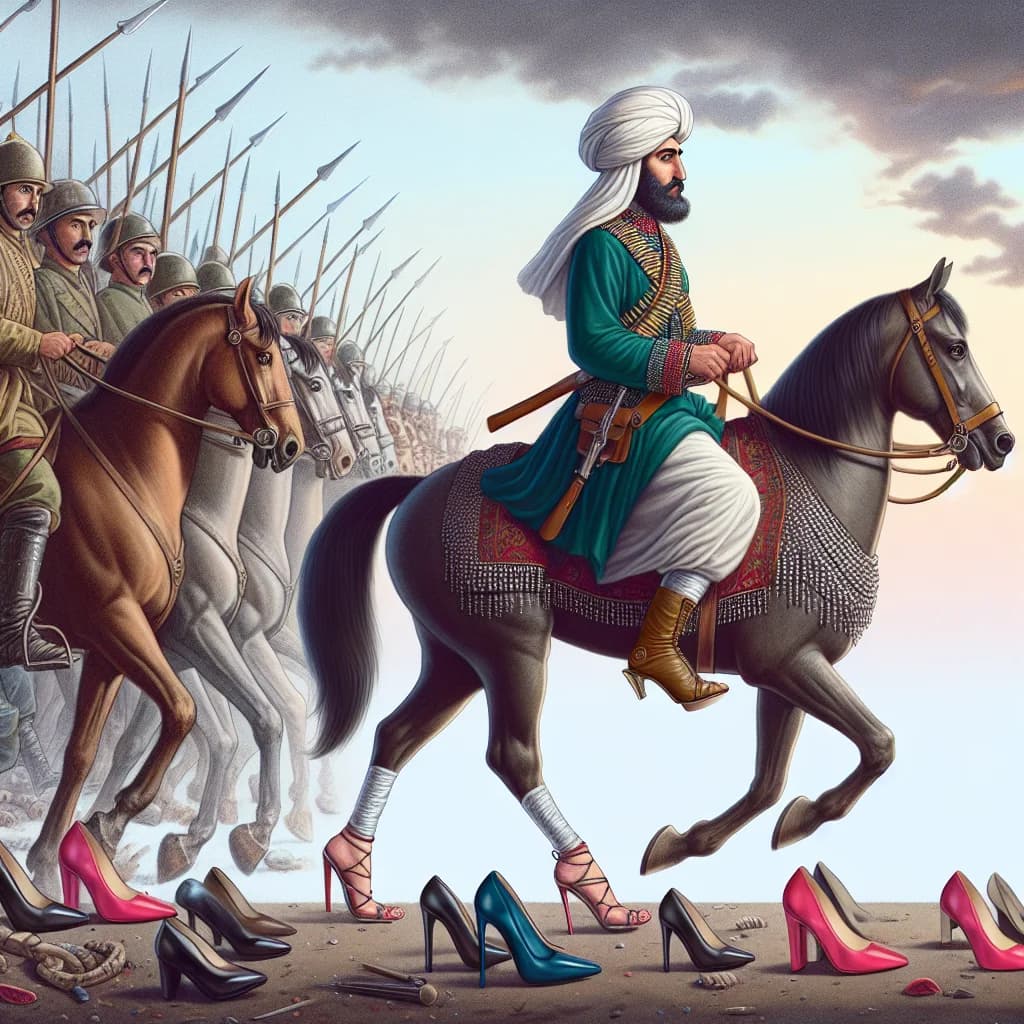
In the ancient and medieval world, the Persian cavalry was renowned for its archery skills. Unlike infantry, these soldiers fought on horseback, often at high speeds. This style of warfare required incredible stability. The high heel was developed as a functional solution to a specific problem: keeping a rider’s foot securely locked in place.
When a Persian archer stood up in his stirrups to aim his bow, he needed a way to ensure he wouldn't slip. The "heel" of the boot acted as a mechanical stop against the bar of the stirrup. This design provided several advantages:
- Stability: It allowed the soldier to stand higher and more securely.
- Precision: By securing the lower body, the archer could rotate his torso and shoot with greater accuracy.
- Safety: It prevented the foot from sliding through the stirrup during the chaos of a charge.
From the Middle East to the European Courts
For centuries, this functional footwear remained largely confined to Western and Central Asia. However, at the end of the 16th century, the geopolitical landscape changed. Shah Abbas I, the ruler of the Safavid Empire, sought to build alliances in Europe to help defeat the Ottoman Empire. In 1599, he sent a massive diplomatic mission to the courts of Russia, Germany, and Spain.
As these Persian diplomats traveled across Europe, they brought their culture, their textiles, and their footwear with them. European aristocrats, always eager for new symbols of status and exoticism, were quickly captivated by the Persian boots. They saw the heels as a symbol of masculinity, military prowess, and "Eastern" sophistication.
The Rise of the Status Symbol
By the early 1600s, the high heel had transitioned from a piece of military equipment to a symbol of high social standing. Because heels were notoriously difficult to walk in on uneven terrain, they signaled that the wearer did not have to perform manual labor or walk long distances. Notable figures like King Louis XIV of France further popularized the trend, famously wearing "Louis heels" with red-painted soles to signify his elite status—a precursor to the modern luxury designs we see today.
Why the Design Shifted Toward Fashion
While the question of why high heels were originally designed for male Persian soldiers to help them grip their stirrups is rooted in utility, their survival in history is rooted in social change. Over time, the heel underwent a "gender flip":
- The 1600s: Both men and women of high status wore heels.
- The Enlightenment: By the 18th century, a movement toward "rationality" in men’s fashion began. Men began to favor more practical, flat shoes, viewing ornate heels as "irrational" or effeminate.
- The Great Male Renunciation: This period saw men abandon colorful, high-heeled fashion in favor of the dark, sober suits that still influence men's professional wear today.
As men stepped down from their heels, women continued to wear them, eventually leading to the modern association of high heels with femininity and glamour.
Conclusion
The history of the high heel is a testament to how the most practical inventions can transform into cultural icons. Originally designed for male Persian soldiers to help them grip their stirrups, the heel was once a tool of war that provided stability and precision to horse-mounted archers. Its journey from the battlefields of Persia to the royal courts of Europe demonstrates the fluid nature of fashion and status symbols.
Understanding these origins reminds us that fashion is rarely just about looks; it is often a reflection of history, technology, and social hierarchy. The next time you see a pair of high heels, you can appreciate them not just as a fashion statement, but as a legacy of the ancient Persian cavalry. For those interested in the intersection of history and design, the story of the high heel offers a perfect example of how the tools of the past shape the styles of the present.


