
Why were medieval castle spiral staircases almost always built to curve in a clockwise direction
In the heat of a castle siege, a single turn of a staircase could mean the difference between life and death. Discover the lethal tactical secret hidden within the clockwise curves of these ancient stone fortresses.

Too Long; Didn't Read
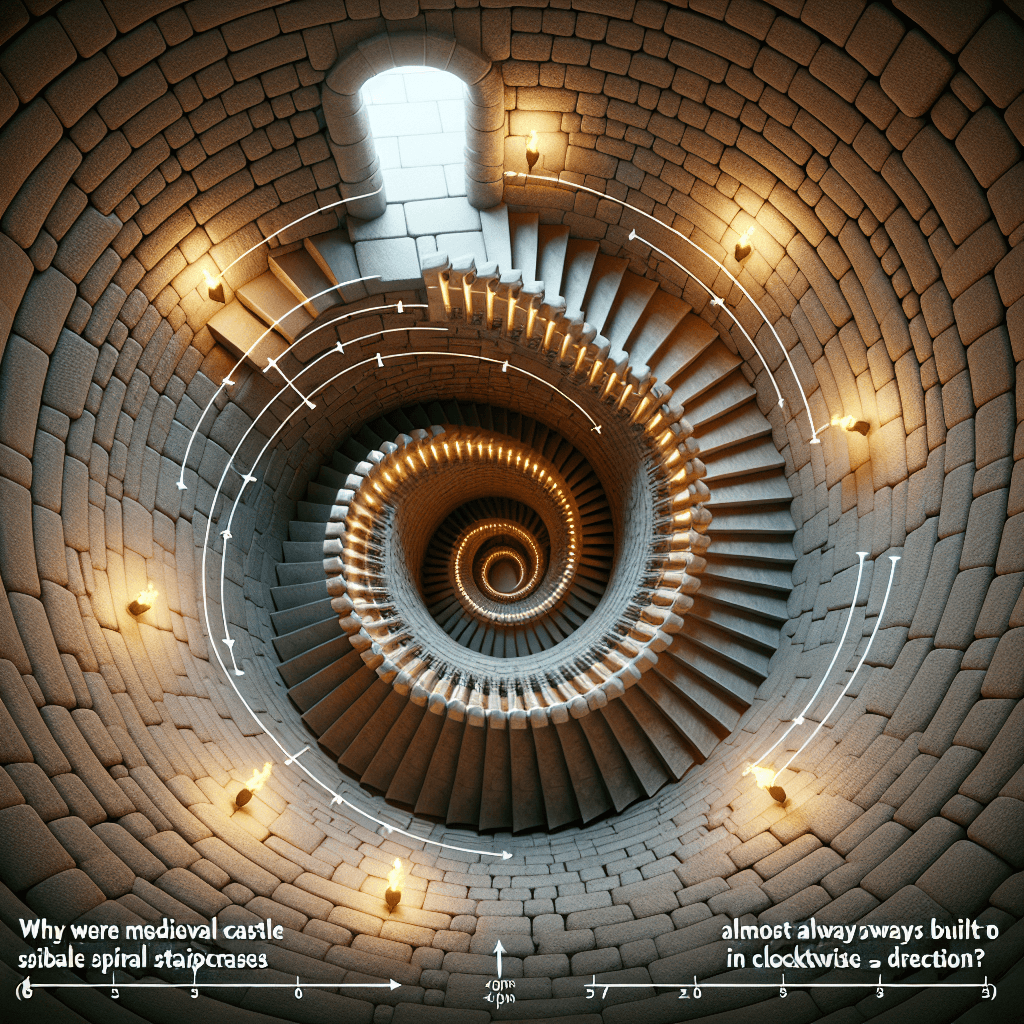
Medieval spiral staircases were built to curve clockwise to provide a tactical advantage for defenders. Since most swordsmen are right-handed, defenders moving down the stairs had ample space to swing their weapons, while attackers coming up were hindered by the central pillar blocking their sword arm.
Defending the Keep: Why Were Medieval Castle Spiral Staircases Almost Always Built to Curve in a Clockwise Direction?
Imagine yourself as a medieval soldier tasked with storming a stone fortress. You have breached the outer walls, but to reach the lord’s private chambers, you must fight your way up a narrow, cramped spiral staircase. As you ascend, you realize your sword arm is constantly bumping against the cold stone of the central pillar, while the defender above you seems to have all the room in the world to strike. This frustrating experience was no accident of architecture; it was a calculated defensive strategy. Why were medieval castle spiral staircases almost always built to curve in a clockwise direction? The answer lies at the intersection of medieval warfare, human biomechanics, and the ruthless necessity of survival. This post explores how a simple architectural twist became a formidable weapon in the arsenal of castle defense.
The Biomechanics of the Sword Arm
The primary reason for the clockwise orientation of medieval staircases is rooted in the fact that the vast majority of the population is right-handed. In the Middle Ages, as in many periods of history, being left-handed was rare and often discouraged. Consequently, castle architects designed defensive structures to favor right-handed defenders.
When a spiral staircase curves clockwise as it ascends, it creates a distinct physical advantage for the person standing at the top.
- The Defender’s Advantage: As a right-handed defender moves down the stairs to meet an intruder, the widest part of the staircase is to their right. This provides ample "swing room" for their sword arm. They can strike with full force and a wide arc, using the outer wall for clearance.
- The Attacker’s Disadvantage: Conversely, a right-handed attacker coming up the stairs finds the central pillar (the newel) situated immediately to their right. This stone column obstructs their sword arm, forcing them to use short, awkward stabbing motions or to expose their body significantly to get a clear swing.
Strategic Obstructions: The Role of the Newel
The central pillar of a spiral staircase, known as the newel, served as more than just a structural support. In a clockwise-winding staircase, the newel acts as a shield for the defender. Because the attacker must hug the outer wall to find room to swing, they are forced to travel a longer distance and are constantly rounding a corner into an unknown threat.
According to historical architectural surveys of British and European keeps, this design was almost universal in military towers. By forcing the attacker to fight "around" the center post, the defender could remain partially tucked behind the pillar, exposing only a small portion of their body while maintaining a clear line of sight to the attacker’s head and shoulders.
Beyond the Curve: Trip Steps and Uneven Risers
The clockwise curve was often supplemented by other "dirty tricks" in medieval engineering. To further disorient an intruder who was already struggling with the clockwise climb, many staircases featured "trip steps."
- Intentional Irregularity: Architects would occasionally build steps with slightly different heights or depths.
- The Home-Field Advantage: The residents of the castle, who used the stairs daily, would develop muscle memory for these irregularities.
- The Result: An attacker, rushing up a dark, narrow, clockwise-curving stair in the heat of battle, would likely stumble on an unexpectedly high riser, making them an easy target for the defender waiting above.
Exceptions to the Rule: The Left-Handed Clans
While the clockwise rule was standard, history provides fascinating exceptions that prove the intent behind the design. The most famous example involves the Kerr family of the Scottish Borders. Legend suggests that the Kerrs had a higher-than-average number of left-handed members.
At Ferniehirst Castle, the spiral staircases were built to curve counter-clockwise (anti-clockwise). This gave the left-handed Kerr defenders the same mechanical advantage that right-handed defenders enjoyed elsewhere. This rare deviation underscores the fact that the direction of the staircase was a deliberate choice based entirely on the physical mechanics of hand-to-hand combat.
Conclusion
The clockwise curve of medieval spiral staircases is a brilliant example of how form follows function—specifically, the function of defense. Why were medieval castle spiral staircases almost always built to curve in a clockwise direction? Because it turned the very stones of the building into a tactical ally, stripping the attacker of their strength while empowering the defender.
Every narrow turn and cramped landing was designed to ensure that if a castle’s walls were ever breached, the final stand in the towers would be as deadly as possible for the invader. Today, as we climb these ancient steps as tourists, we are walking through a piece of military engineering that prioritized survival over comfort, proving that in the Middle Ages, even a staircase was a weapon. If you are interested in the hidden tactics of ancient architecture, keep an eye out for these subtle defensive features during your next historical excursion.


