
Why were Pringles specifically designed in a saddle shape to stay aerodynamic on conveyor belts and prevent breaking
Think Pringles are shaped that way just for the crunch? Discover the high-stakes engineering behind the iconic "saddle" design, mathematically perfected to stay aerodynamic on high-speed conveyor belts and survive the journey to your mouth without a single crack.

Too Long; Didn't Read
Pringles use a hyperbolic paraboloid shape to ensure they remain stable and aerodynamic on fast-moving factory conveyor belts. This specific geometry also provides structural strength, allowing the chips to be stacked perfectly without breaking during transport.
Engineering the Perfect Crunch: Why Pringles Were Designed in a Saddle Shape for Aerodynamics and Strength
Have you ever opened a bag of traditional potato chips only to find a pile of salty crumbs at the bottom? In the mid-1950s, Procter & Gamble set out to solve this universal frustration. They didn't just want a better chip; they wanted a masterpiece of industrial engineering. The result was the Pringle, a snack so scientifically precise that its design involved supercomputers and advanced geometry. Specifically, Pringles were designed in a unique saddle shape—mathematically known as a hyperbolic paraboloid—to ensure they stayed aerodynamic on high-speed conveyor belts and remained intact from the factory to your mouth. This blog post explores the fascinating intersection of physics, mathematics, and food science that created the world’s most famous stackable snack.
The Problem with the Traditional Potato Chip
Before the Pringle debuted in 1968, the potato chip industry faced significant logistical hurdles. Traditional chips are sliced directly from potatoes, resulting in irregular shapes and sizes. These irregularities made them impossible to stack, forced manufacturers to sell "bags of air" to cushion the contents, and frequently led to breakage during shipping. Furthermore, the uneven surfaces meant some chips were greasier than others, and they often went stale quickly due to the air in the bags. Procter & Gamble sought to create a uniform, sturdy, and long-lasting alternative that could be packed efficiently.
The Architects of the Hyperbolic Paraboloid
The creation of the Pringle was a collaborative effort between two brilliant minds:
- Fredric Baur: A chemist and storage packaging engineer who designed the iconic cylindrical can and the basic shape of the chip.
- Gene Wolfe: An engineer (and later a famous science fiction author) who developed the high-speed cooking machine that brought the design to life.
Baur determined that a hyperbolic paraboloid was the ideal shape. In simple terms, this is a "saddle shape" where the surface curves in two directions at once. This geometry isn't just for aesthetics; it provides remarkable structural integrity. Because the shape is "double-ruled," it resists tension and compression better than a flat or simple curved surface, making the thin dough remarkably resistant to cracking.
Aerodynamics and the Conveyor Belt
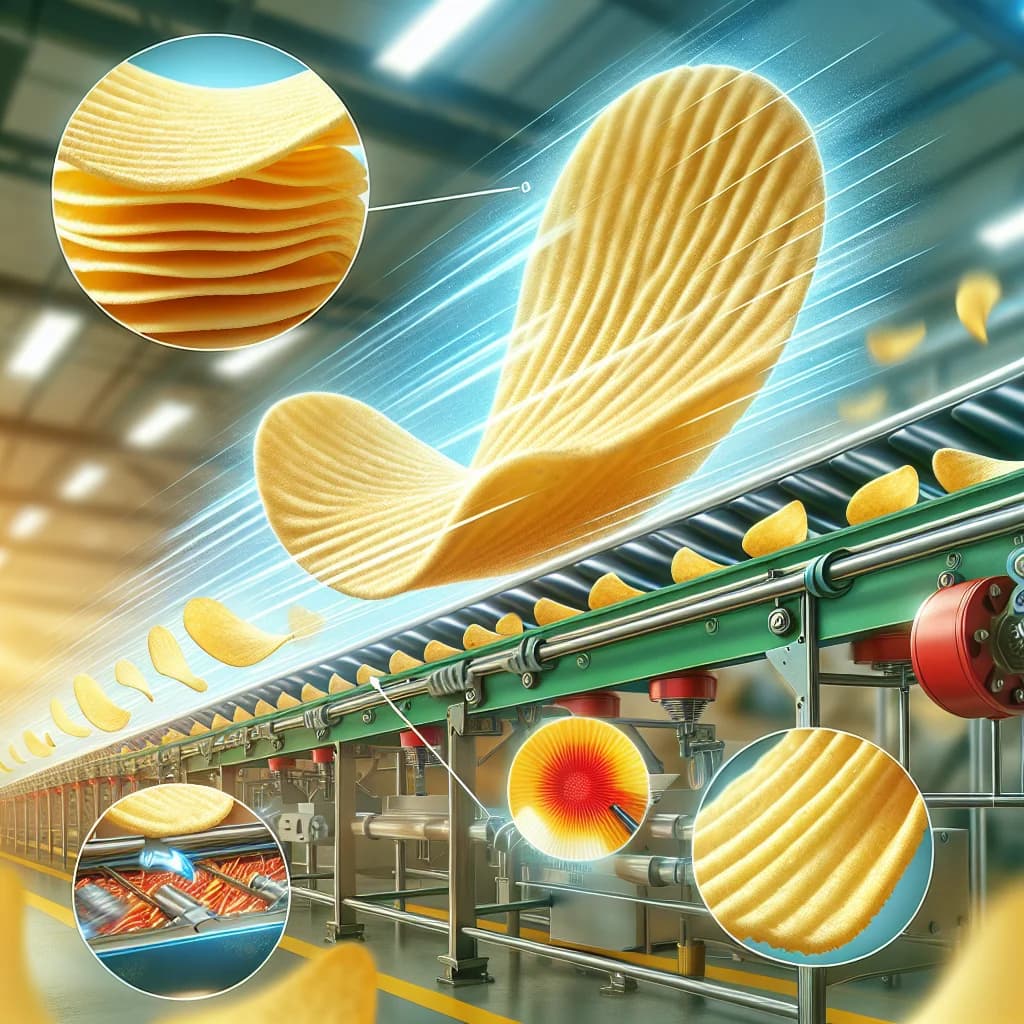
One of the most overlooked reasons for the Pringles' shape is the requirement of the manufacturing process. Unlike traditional chips that are deep-fried in batches, Pringles are made from a dough that is pressed into molds and moved through the fryer on a high-speed conveyor belt.
Preventing "Take-off"
At the speeds required for mass production, air resistance becomes a significant factor. If the chips were flat or irregularly shaped, the air moving across the factory floor would create lift—much like an airplane wing. This would cause the chips to fly off the conveyor belt or flip over, leading to massive waste and machine jams.
Mathematical Precision
By using the saddle shape, the engineers ensured the chips remained aerodynamic. The hyperbolic paraboloid allows air to flow smoothly over and under the chip without creating the pressure differentials that cause lift. This "aerodynamic stability" kept the chips pinned firmly to the conveyor system as they zipped through the frying and seasoning stages at high velocities.
Structural Integrity and the Science of Stacking
The saddle shape also solved the "breakage" problem. In a standard bag of chips, the weight of the chips at the top can crush those at the bottom. However, the Pringle’s shape allows for:
- Nested Stacking: The chips fit into one another perfectly, leaving almost no room for movement.
- Stress Distribution: When a stack of Pringles is subjected to a vertical force (like being dropped or jostled during shipping), the hyperbolic shape distributes that energy outward toward the edges of the chip rather than concentrating it in the center.
- The Protective Tube: Because the chips are uniform and aerodynamic, they can be mechanically slid into a vacuum-sealed canister, which provides a final layer of protection against both physical damage and spoilage.
Conclusion
The Pringle is far more than a simple snack; it is a triumph of industrial design and fluid dynamics. By utilizing the hyperbolic paraboloid shape, the creators ensured that Pringles were specifically designed to stay aerodynamic on conveyor belts and prevent breaking throughout the supply chain. This marriage of mathematics and culinary science allowed for a level of consistency and durability that traditional potato chips simply could not match. The next time you pop the top of a Pringles can, take a moment to appreciate the complex engineering held between your fingers—a shape designed by computers to withstand the rigors of physics.


