
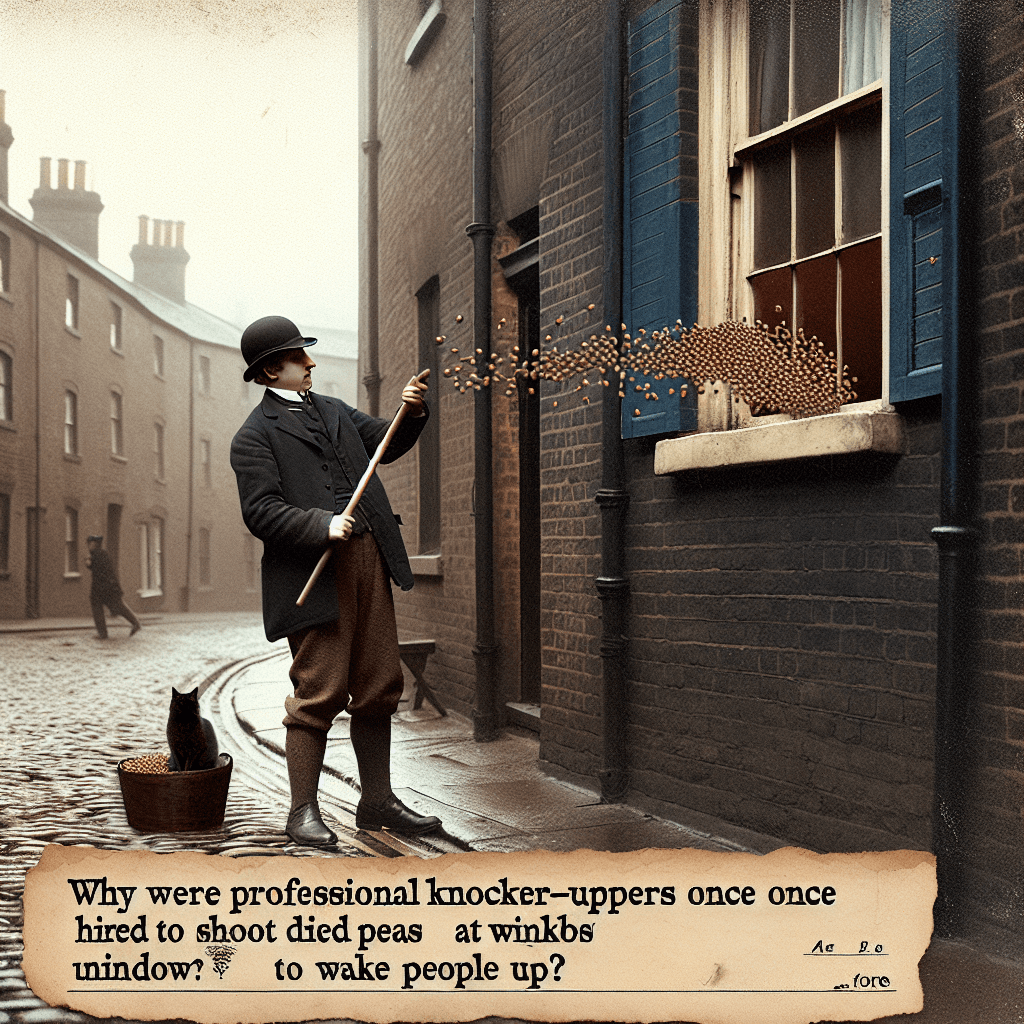
Why were professional knocker-uppers once hired to shoot dried peas at windows to wake people up
Long before digital alarms, the sound of dried peas rattling against a window was the ultimate wake-up call for the industrial working class. Step back in time to discover the bizarre history of the "knocker-uppers" and why a pea-shooter was once the most essential tool for starting the day.

Too Long; Didn't Read
Before alarm clocks became affordable, knocker-uppers used pea shooters as a practical way to wake workers in high-story windows. This method was quieter than banging on doors and more portable than carrying heavy poles, allowing them to target specific clients without disturbing the entire neighborhood.
Before the Snooze Button: Why were professional knocker-uppers once hired to shoot dried peas at windows to wake people up?
Imagine a world where your job security depended entirely on a person standing outside your window at 5:00 AM with a hollow tube and a pocketful of legumes. Before the digital era or even the widespread affordability of mechanical alarm clocks, the Industrial Revolution birthed a unique profession: the knocker-upper. These individuals were the human "snooze buttons" of the 19th and early 20th centuries, ensuring that the labor force of Britain and Ireland arrived at factories and mines on time. This post explores the fascinating history of this profession and answers the specific question: Why were professional knocker-uppers once hired to shoot dried peas at windows to wake people up?
The Necessity of the Human Alarm Clock
During the height of the Industrial Revolution, punctuality became a mandatory requirement for the working class. Factories and mills operated on strict schedules, and being late often resulted in heavy fines or immediate dismissal. However, in the mid-to-late 1800s, mechanical alarm clocks were neither reliable nor affordable for the average worker.
To bridge this gap, the role of the "knocker-upper" (sometimes called a "knocker-up") emerged. For a few pence a week, these individuals would patrol the streets of industrial towns, waking their clients at a predetermined time. They were often elderly men, women, or even off-duty police officers looking to supplement their income.
Methods of Awakening: From Poles to Peas
Knocker-uppers utilized several methods to wake their clients without alerting the entire neighborhood. The goal was to be persistent enough to wake the paying customer, but quiet enough to avoid disturbing those who did not subscribe to the service. Common tools included:
- Long Bamboo Poles: Used to tap on higher-story windows.
- Short Batons or Hammers: Used to knock directly on doors for those living on the ground floor.
- Soft Mallets: Used to create a muffled but distinct sound on glass or wood.
However, the most specialized and intriguing method involved the use of a pea shooter.
Why Shoot Dried Peas at Windows?
The choice to use a pea shooter was not a matter of playfulness; it was a practical solution to several urban architectural challenges.
1. Reaching Great Heights
In densely populated industrial hubs like London, Manchester, and Glasgow, many workers lived in multi-story tenements. A standard pole might reach the first or second floor, but for clients living on the third or fourth floor, a wooden pole became unwieldy and heavy. Using a pea shooter allowed the knocker-upper to reach high windows with accuracy from the street level.
2. Discretion and Specificity
The primary rule of the knocker-upper was "waken the sleeper, but not the neighbor." If a knocker-upper banged loudly on a front door, they might wake three different families in a shared house. Shooting dried peas at a specific pane of glass created a sharp, rattling sound that was loud enough to wake a sleeping worker just inches away, yet remained relatively quiet to those in the next room or across the street.
3. Efficiency and Speed
Walking through a neighborhood with a 20-foot bamboo pole was physically demanding and slow. A knocker-upper equipped with a pocket of peas and a small metal or plastic tube could move quickly through narrow alleys, "firing" at windows in rapid succession. This efficiency allowed them to maintain a larger client list, increasing their weekly earnings.
Notable Figures: The Case of Mary Smith
One of the most famous examples of this practice was Mary Smith, a knocker-upper in East London during the 1930s. According to historical accounts and photographic evidence from the era, Smith was a well-known figure who preferred the pea shooter over the traditional pole. She became a local legend for her accuracy and her dedication to the dockworkers and factory hands who relied on her to start their day.
The Decline of the Profession
The profession of the knocker-upper persisted surprisingly late into the 20th century. While the spread of electricity and the mass production of affordable alarm clocks began to phase out the role in the 1920s and 30s, the practice continued in some northern English mining towns until the 1940s and 50s. As technology became more reliable and shift work patterns changed, the necessity for a person to walk the streets with a pea shooter finally vanished.
Conclusion
The history of the knocker-upper serves as a compelling reminder of the ingenuity required to navigate the challenges of early industrial life. By using dried peas as a precision tool for punctuality, these workers provided a vital service that kept the wheels of industry turning. While we now rely on smartphones and digital alarms, the era of the knocker-upper highlights a time when the human connection—and a well-aimed pea—was the only thing standing between a worker and a lost day’s wages. Understanding these quirky historical professions helps us appreciate the labor-intensive foundations of our modern, automated world.


