
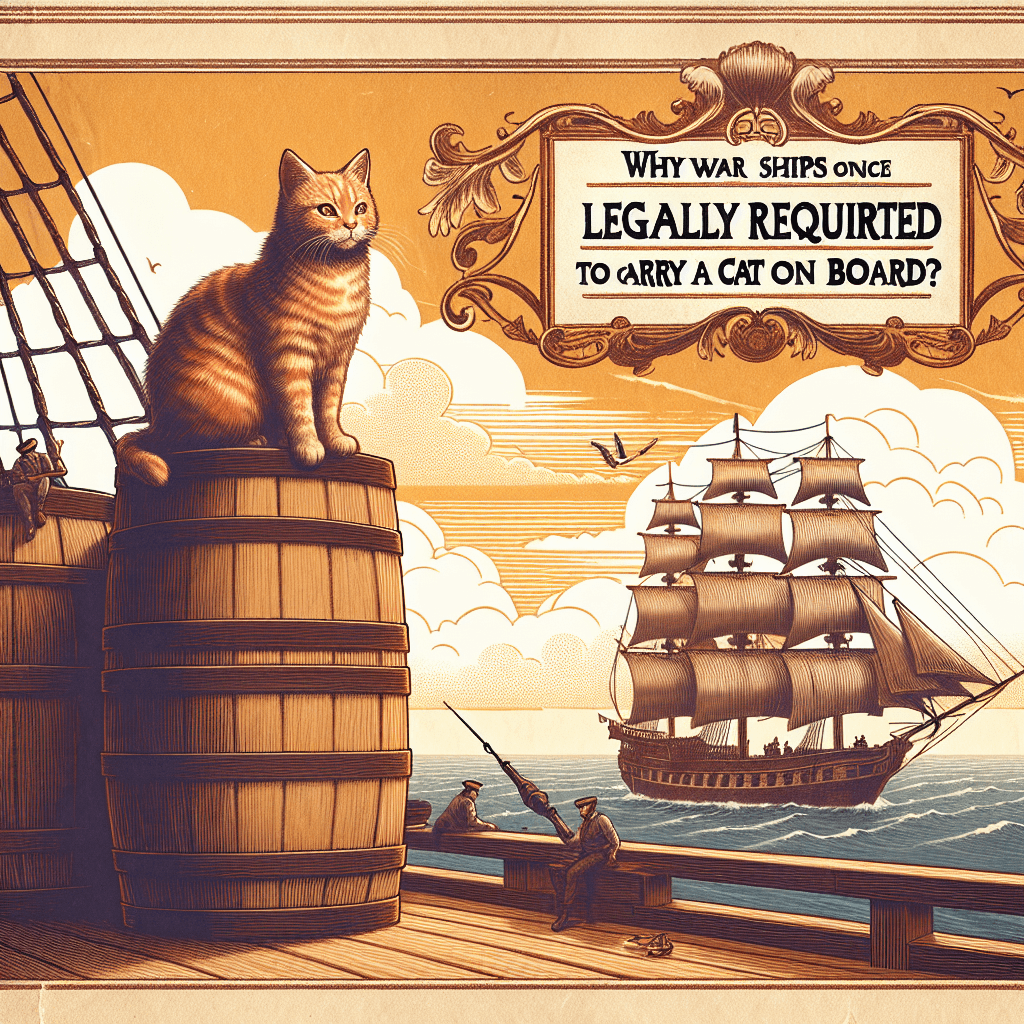
Why were ships once legally required to carry a cat on board
More than just a furry first mate, the ship's cat was a legally mandated officer waging a silent war against an insidious enemy that could sink a vessel from the inside out.

Too Long; Didn't Read
TLDR: Cats were legally required on ships as essential pest control. They protected food rations from rats and mice, prevented pests from chewing through ropes and the wooden hull which could sink the ship, and stopped the spread of deadly diseases.
Feline First Mates: Why Were Ships Once Legally Required to Carry a Cat On Board?
Picture a tall ship from the Age of Sail, its masts creaking as it cuts through the ocean waves. You might imagine a hardened captain at the helm and a bustling crew on deck. But what about a small, furry sailor with four paws and a twitching tail? For centuries, the ship's cat was more than just a charming mascot; it was an essential crew member, so vital that its presence on board was often enshrined in maritime law and custom. This post will navigate the fascinating history of why these feline mariners were not just welcome but practically required on the high seas.
The Primary Enemy: Rodents at Sea
Life aboard a wooden ship was a constant battle for survival, and one of the most persistent threats came in a small, scurrying package: rats and mice. For rodents, a ship was a paradise. It offered shelter from the elements and, most importantly, an abundant supply of food in the ship’s hold. The consequences of an infestation were dire.
Rats could decimate a ship's food stores, contaminating grain, biscuits, and salted meat with their droppings and spreading diseases. On a long voyage, where rations were already tight, this could lead to starvation and illness for the entire crew. Beyond the galley, these pests were a menace to the ship itself. They would gnaw through:
- Cargo: Destroying valuable goods like textiles, spices, and paper.
- Personal belongings: Chewing through sailors' clothes and bedding.
- The ship's structure: Gnawing on wooden planks and creating potential weaknesses.
Most critically, they targeted the ship's rigging.
More Than Just Mousers: Protecting a Ship's Lifeline
A sailing ship's lifeblood was its intricate network of ropes. These ropes controlled the sails, secured the anchor, and held the masts in place. They were often made from natural fibers like hemp, which rats found irresistible for both chewing and nesting. A single frayed or severed rope at a critical moment—during a storm or a complex maneuver—could lead to a torn sail, a lost mast, or a catastrophic loss of control. The ship's cat was the first and most effective line of defense against this kind of disaster.
By relentlessly hunting rodents, a single cat could protect the integrity of the entire vessel. Its job wasn't just to keep the stores clean; it was to ensure the ship remained seaworthy. This protective role made the cat not a pet, but a vital piece of working equipment, as important as a compass or an anchor.
From Practicality to Policy: A Legally Valued Asset
The importance of the ship's cat was so universally understood that it was woven into the fabric of maritime custom and law. While a single, universal "cat mandate" is hard to pinpoint, their value was legally recognized across various maritime codes. For instance, historical maritime insurance policies and cargo manifests often accounted for the presence of a ship's cat.
Some of the earliest formal recognitions can be traced back to ancient Egypt, where cats were revered and used on Nile grain barges to protect precious cargo. Later, medieval maritime laws, such as the famous "Laws of Oléron" which governed North Atlantic shipping, included specific provisions regarding cats. These laws didn't necessarily command a captain to carry a cat, but they did assign a monetary value to them. If a ship's cat was lost or killed through negligence, the responsible party had to pay a fine, underscoring its status as a valuable asset rather than a simple stray. This legal and financial protection effectively made carrying a cat a standard, prudent practice for any captain wanting to protect his ship and investment.
Beyond the Law: Morale and Superstition
Beyond their practical duties, cats provided an invaluable boost to crew morale. On long, arduous voyages that could last for months or even years, sailors faced immense isolation, hardship, and boredom. The presence of a cat offered companionship and a welcome distraction from the rigors of life at sea.
Furthermore, cats became central figures in maritime folklore and superstition. They were believed to be bearers of good luck, and their uncanny ability to sense changes in atmospheric pressure made them seem like living barometers. Sailors believed a playful cat meant fair winds, while an agitated one could foretell an approaching storm. A ship that treated its cat well was a lucky ship, while harming one was considered a one-way ticket to disaster.
Conclusion
The ship's cat was far more than a simple pest controller. It was a guardian of food supplies, a protector of the ship's structural integrity, a legally recognized asset, a furry companion, and a bringer of good luck. The requirement—whether by formal law, custom, or common sense—to have a cat on board highlights a perfect symbiosis between humans and animals in one of the world's harshest environments. So the next time you see an image of a cat on a ship, remember you're not just looking at a pet, but at one of history's most important and accomplished sailors.


