
Why were some medieval castles built with a deliberately weak sacrificial wall
It sounds like strategic suicide, but building a wall designed to fail was one of medieval warfare's most ingenious and deadly defensive traps.

Too Long; Didn't Read
TLDR: A weak outer wall was a deliberate trap. It was designed to be breached easily, funneling attackers into a confined killing ground between it and the stronger main wall, leaving them completely exposed to defenders above.
Blog Post Title: Building to Break: Why Were Some Medieval Castles Built with a Deliberately Weak Sacrificial Wall?
When you picture a medieval castle, you likely imagine impenetrable stone, towering ramparts, and defenses built to last an eternity. The entire point of a castle was to be strong, a symbol of unyielding power. So, it seems completely counter-intuitive that military engineers would intentionally design a part of their fortress to be weak. Yet, that’s precisely what they did. This brings us to a fascinating piece of military architecture: the sacrificial wall. This blog post will explore the calculated genius behind this seemingly flawed design and reveal why building a wall to break was one of the cleverest defensive strategies of the era.
Understanding the Faussebraye: The Sacrificial Wall Explained
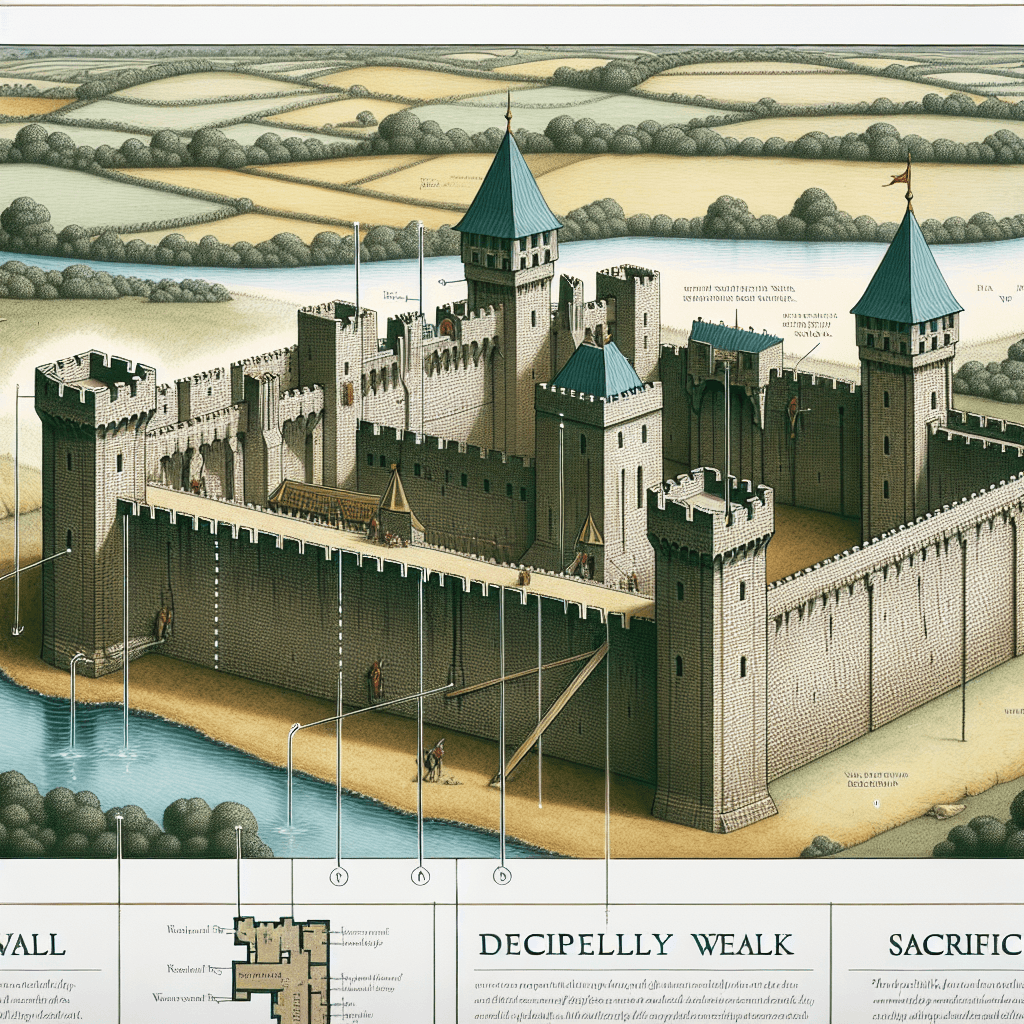
The deliberately weak outer wall, known technically as a faussebraye (French for "false wall"), was a low defensive wall built in front of a castle's main, taller curtain wall. It was not a simple outer fence; it was an integral part of a sophisticated, layered defense system.
Unlike the towering main walls, the faussebraye was shorter and often less robust. To an attacking army, it would appear to be the first major obstacle and a relatively easy one to breach. They would focus their powerful siege engines—trebuchets, mangonels, and battering rams—on this tempting target. And that’s exactly what the castle’s defenders wanted them to do.
A Calculated Collapse: The Primary Defensive Strategy
The true purpose of the sacrificial wall was not to hold back an army, but to fail in a very specific and strategic way. When the faussebraye was inevitably breached by siege weapons or sappers (miners digging underneath), it was designed to collapse outwards and downwards, creating a chaotic pile of rubble.
This debris field was no mere mess; it was a formidable defensive feature. The tons of broken stone would form a steep, uneven slope at the base of the main curtain wall. This artificial slope, known as a talus or glacis, achieved several critical objectives:
- Obstruction of Siege Engines: A battering ram needs a clear, flat approach to be effective against a wall's base. The rubble from the collapsed faussebraye would make it impossible to get a ram close to the main wall. Siege towers, huge wooden structures rolled up to the walls, would also become stuck or destabilized on the treacherous new terrain.
- Creation of a Killing Ground: Attackers who swarmed over the breach in the outer wall would be funneled into a deadly trap. The space between the collapsed faussebraye and the main wall became a "killing ground," where soldiers were slowed by the rubble and completely exposed to archers, crossbowmen, and rocks dropped from the main battlements above.
- Reinforcement Against Mining: The pile of rubble reinforced the base of the main wall, making it much more difficult for enemy sappers to dig tunnels underneath to collapse it from below.
Beyond the Break: Additional Tactical Advantages
The sacrificial wall offered more than just a well-placed pile of rocks. Its very existence provided secondary benefits that could turn the tide of a siege.
- Layered Defense: At its simplest, the faussebraye forced an attacking army to fight through two lines of defense instead of one. This exhausted enemy troops, consumed their resources, and, most importantly, bought precious time for the defenders to organize reinforcements or for a relief army to arrive.
- Psychological Warfare: An attacking force might celebrate the quick and easy breach of the outer wall, believing they were close to victory. This moment of triumph would quickly turn to despair as they realized they had only fallen into a carefully prepared trap, with the far more formidable main wall still looming over them. This psychological blow could be devastating to morale.
- Forward Defensive Positions: Before it was breached, the faussebraye could also serve as a forward position for archers, allowing them to engage the enemy at a greater range and disrupt the setup of their siege camps and equipment.
A prime example of this defensive philosophy can be seen in the legendary Theodosian Walls of Constantinople and in many Crusader castles like Krak des Chevaliers, which perfected the art of concentric defenses and sloping walls to foil attackers.
In conclusion, the deliberately weak sacrificial wall was far from a design flaw; it was a testament to the sophisticated and ruthless ingenuity of medieval military engineers. By understanding the physics of a siege and the psychology of an attacker, they turned a structural weakness into a tactical strength. The faussebraye was designed to fail, but in its failure, it created an obstacle course of rubble, a deadly killing ground, and a formidable barrier against the most powerful siege weapons of the day. The next time you look at a castle's defenses, remember that sometimes the most brilliant strategy is to build something designed to break.


