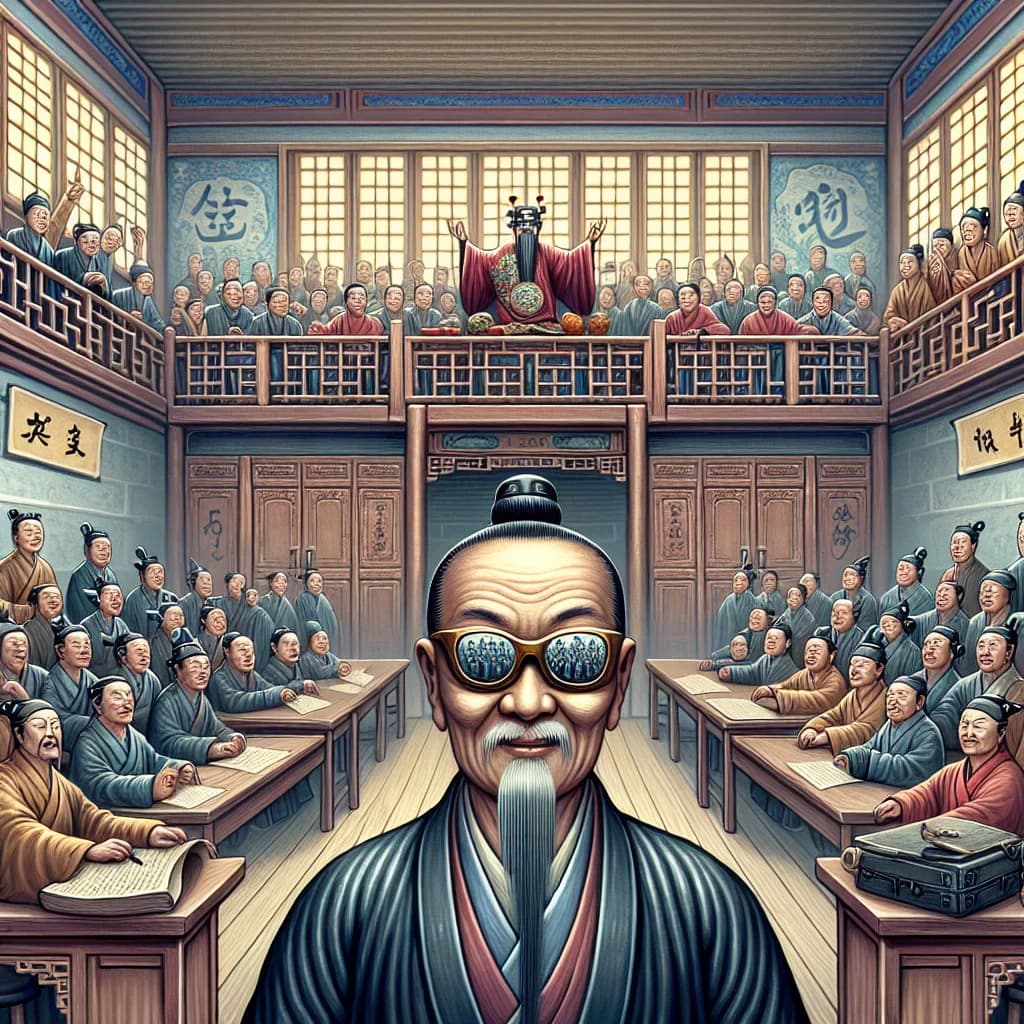
Why were the first sunglasses invented by Chinese judges in the twelfth century to hide their facial expressions
Long before they were a fashion staple, sunglasses were a high-stakes tool for justice used to mask the eyes of the law. Discover how 12th-century Chinese judges used smoky quartz to master the ultimate "poker face" and keep their verdicts hidden until the final moment.

Too Long; Didn't Read
Twelfth-century Chinese judges used smoky quartz lenses to conceal their emotions during trials. This allowed them to maintain an air of impartiality and prevent witnesses from reading their facial expressions during questioning.
The Poker Face of Justice: Why Were the First Sunglasses Invented by Chinese Judges in the Twelfth Century to Hide Their Facial Expressions?
When you slide on a pair of dark aviators or sleek wayfarers today, you are likely thinking about UV protection or completing a summer outfit. However, the history of tinted eyewear has nothing to do with the sun and everything to do with the courtroom. Long before the advent of modern optics, legal authorities in ancient China were using smoky crystals for a purpose that was psychological rather than physiological.
The origin of these early "sunglasses" dates back to the twelfth century during the Southern Song Dynasty. While we often associate innovation with necessity, the necessity in this case was the preservation of judicial integrity and the ultimate "poker face." This blog post explores the fascinating history of why the first sunglasses were invented by Chinese judges to hide their facial expressions and how this practice shaped the evolution of eyewear.
The Composition of Ancient Eyewear: Smoky Quartz
The first recorded "sunglasses" were significantly different from the lightweight plastic and polarized glass we use today. Historical records indicate that these early lenses were crafted from flat panes of smoky quartz, a mineral that naturally possesses a dark, translucent hue.
- Material: Known as ai qing (meaning "tea-colored stone"), the quartz was sliced into thin slabs.
- Functionality: Unlike modern glasses, these quartz lenses offered no corrective power for vision. In fact, because they were often thick and uneven, they likely made it harder to see clearly.
- Aesthetics: The lenses were typically held in place by large, heavy frames made of wood, horn, or metal, resting precariously on the bridge of the nose.
The Judicial "Poker Face"
The primary reason why the first sunglasses were invented by Chinese judges in the twelfth century to hide their facial expressions was to maintain the appearance of absolute impartiality. In the Chinese legal system of the time, the judge held immense power, acting as both investigator and adjudicator.
Preventing Influence
In a courtroom setting, a judge’s reaction to a witness’s testimony—whether it be a flicker of doubt, a nod of approval, or a look of disbelief—could inadvertently influence the proceedings. By wearing smoky quartz lenses, judges could:
- Obscure their eyes: Since the eyes are often the most expressive part of the human face, covering them prevented lawyers and witnesses from "reading" the judge’s thoughts.
- Project Authority: The dark lenses created a sense of mystery and detachment, reinforcing the judge's status as an objective, almost divine arbiter of the law.
- Ensure Fair Testimony: If a witness could not see the judge’s reaction, they were less likely to alter their testimony to please the court or hide information based on the judge’s perceived skepticism.
From the Courtroom to the Commonplace
While the judicial use of tinted lenses remained a staple of Chinese legal culture for centuries, the technology eventually began to spread and evolve.
Medical and Social Transitions
By the 15th century, these smoky lenses were occasionally used for individuals suffering from light sensitivity or eye ailments like glaucoma. However, it wasn't until the lenses reached Europe through trade routes that the focus shifted toward vision correction. Even then, it took several more centuries for "sunglasses" to be marketed for protection against the sun. According to historical accounts of eyewear evolution, it wasn't until the 18th century that James Ayscough experimented with tinted lenses (specifically blue and green) to correct specific vision impairments, still not for sun protection.
Comparison: Ancient vs. Modern Utility
| Feature | 12th Century Chinese Lenses | Modern Sunglasses | | :--- | :--- | :--- | | Primary Purpose | To hide emotions/reactions | UV protection and fashion | | Material | Smoky Quartz | Polycarbonate/Glass | | User Base | Judges and elites | General public | | Vision Quality | Often distorted or dimmed | High clarity/Polarized |
Conclusion
The story of why the first sunglasses were invented by Chinese judges in the twelfth century to hide their facial expressions serves as a powerful reminder that technology often finds its start in unexpected places. What began as a tool for judicial stoicism in the Southern Song Dynasty eventually transformed into a global fashion staple and a critical health tool for eye protection.
Understanding this history gives us a new perspective on our everyday items. The next time you put on a pair of shades to shield your eyes from the glare, remember that you are participating in a tradition that once helped maintain the balance of justice in ancient China. The "poker face" of the 12th-century judge remains one of history’s most clever applications of mineralogy to human psychology.