
Why were the first sunglasses originally worn by Chinese judges to hide their facial expressions during trials
Long before they became a fashion statement, the first sunglasses were designed to master the ultimate "poker face" in the courtroom. Discover how ancient Chinese judges used smoky quartz to hide their emotions and keep the scales of justice shrouded in mystery.

Too Long; Didn't Read
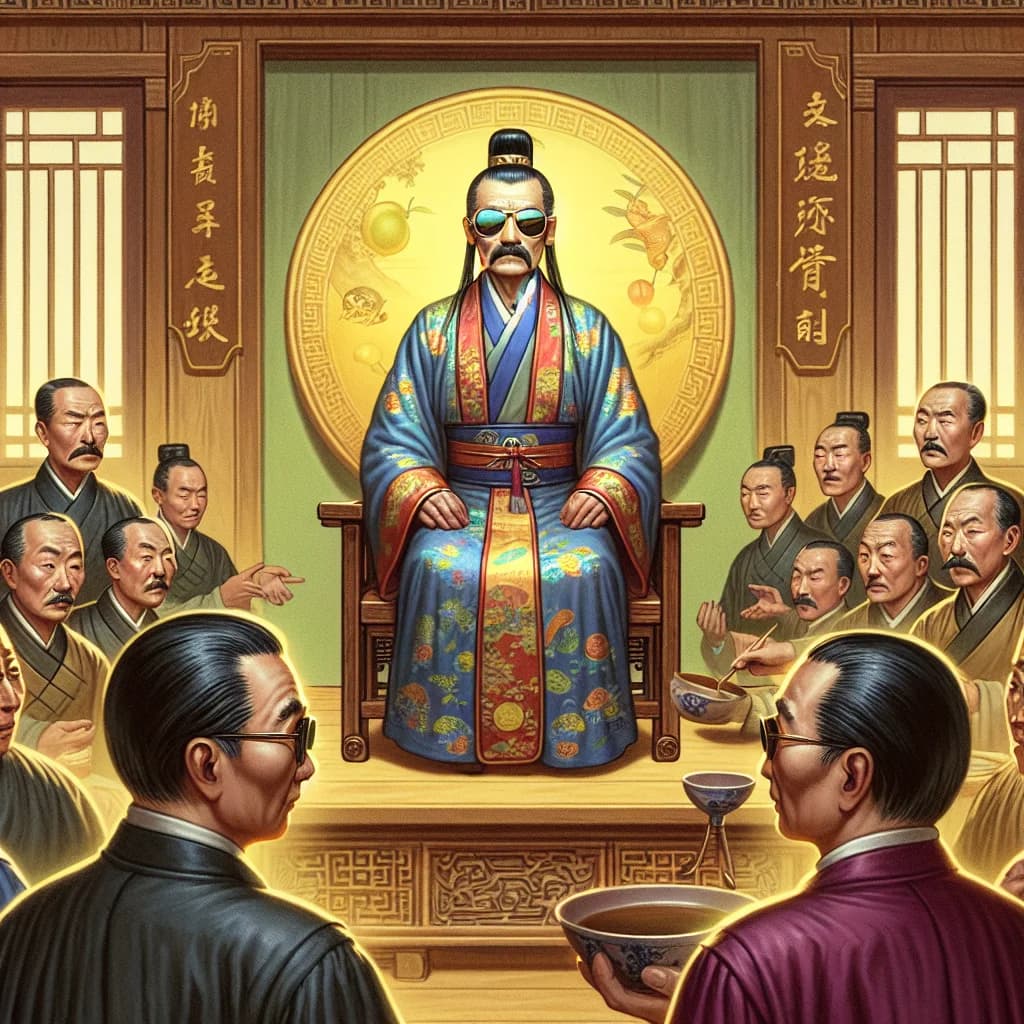
In 12th-century China, judges wore smoky quartz lenses to conceal their facial expressions and emotional reactions during legal proceedings. This allowed them to maintain an air of impartiality and keep their thoughts secret until a final verdict was reached.
The Secret History of Tinted Lenses: Why were the first sunglasses originally worn by Chinese judges to hide their facial expressions during trials?
Imagine walking into a high-stakes courtroom in 12th-century China. You look up at the bench to gauge the magistrate's reaction to your testimony, only to be met with a pair of dark, impenetrable lenses. While we view sunglasses today as essential summer accessories or high-fashion statements, their origin had nothing to do with the sun or style. Instead, they were a sophisticated tool of the legal trade. This blog post explores the fascinating historical context behind these early spectacles and answers the intriguing question: Why were the first sunglasses originally worn by Chinese judges to hide their facial expressions during trials?
The Origins: Smoky Quartz and the Song Dynasty
The history of tinted eyewear begins long before the invention of modern glass or UV-protective coatings. During the Song Dynasty in 12th-century China, the first recorded "sunglasses" were developed. Unlike modern lenses made from plastic or glass, these early versions were crafted from flat panes of smoky quartz, a translucent mineral that naturally possesses a dark, brownish-grey tint.
Historical records indicate that these lenses were not designed to correct vision or block ultraviolet rays. In fact, the primitive cutting techniques of the era often left the quartz with distorted optical properties. However, for the high-ranking officials and judges of the imperial courts, visual clarity was secondary to the social and professional function of the accessory.
The Psychological Tool: Maintaining Judicial Impartiality
In the traditional Chinese legal system, the judge occupied a position of absolute authority. During a trial, it was considered vital that the judge remain an impartial arbiter of the law. This led to a unique problem: the human face is incredibly expressive. A twitch of an eyebrow or a flicker of skepticism in the eyes could inadvertently tip off a witness or a defendant, allowing them to alter their testimony based on the judge's perceived reaction.
To combat this, judges adopted smoky quartz lenses for several key reasons:
- The "Poker Face" Effect: By obscuring their eyes, judges could observe the proceedings without revealing their internal thoughts or emotions.
- Intimidation and Authority: The sight of a stone-faced official with "hidden eyes" created a sense of mystery and detached power, which was believed to encourage honesty in those testifying.
- Strategic Questioning: A judge could stare intently at a suspect to gauge their nervousness without the suspect knowing exactly where the judge's gaze was fixed.
According to historical accounts of the era, this practice ensured that the verdict remained a surprise until the very end of the trial, upholding the gravity and perceived objectivity of the court.
Transitioning from the Courtroom to the Outdoors
While the primary use was judicial, the evolution of these lenses eventually took a turn toward the functional. It wasn't until several centuries later that the concept of "sun protection" began to merge with these tinted spectacles. By the mid-14th century, similar lenses were introduced to Italy, likely via the Silk Road, but they remained a niche item for the elite.
It is interesting to contrast this with modern history. In the 1920s, Sam Foster began mass-producing sunglasses in America for beachgoers, and later, the military developed "aviators" to protect pilots' vision. While we now focus on the medical benefits of blocking UV rays, the Chinese judges were the first to recognize the social and psychological power of hiding one's eyes behind a dark tint.
Conclusion
The evolution of sunglasses is a testament to how human needs shape technology. Why were the first sunglasses originally worn by Chinese judges to hide their facial expressions during trials? Because in the 12th century, the pursuit of justice required a level of stoicism that only smoky quartz could provide. These early lenses served as a physical barrier that protected the integrity of the legal process, ensuring that a judge’s gaze remained as impartial as the law itself.
Understanding this history changes how we view a simple pair of shades. They aren't just for the beach; they are descendants of a sophisticated tool used to navigate the complexities of human truth and deception. Next time you slip on a pair of sunglasses, remember that you are participating in a tradition of mystery and authority that dates back nearly a millennium.


