
Why were the tiny pockets on jeans originally designed to hold a nineteenth-century miner’s pocket watch
Think that tiny pocket on your jeans is just for spare change? Discover the rugged history of this "fifth pocket" and how it was originally engineered to protect a nineteenth-century miner’s most vital tool.

Too Long; Didn't Read
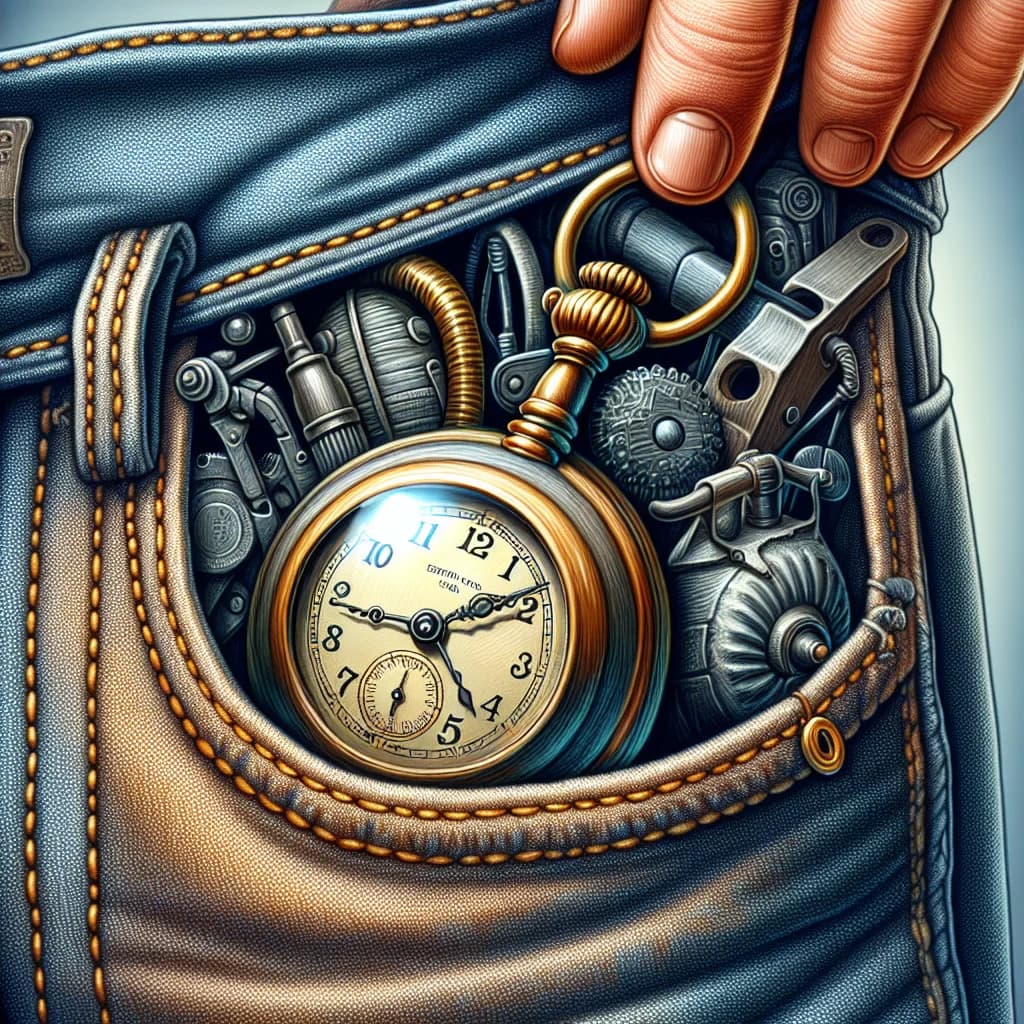
The small pocket on jeans was originally added by Levi Strauss in the 1870s to provide miners and cowboys with a secure, protected place to store their pocket watches while working.
The Secret History of Denim: Why were the tiny pockets on jeans originally designed to hold a nineteenth-century miner’s pocket watch?
Have you ever fumbled with your keys or tried to squeeze a tube of lip balm into that narrow, seemingly useless slit above the front pocket of your favorite jeans? You aren't alone. Millions of people interact with this peculiar piece of tailoring every day without realizing they are touching a direct link to the American Old West. While we might use it for loose change or small tech gadgets today, this feature was once a critical piece of equipment for the working class. This blog post explores the historical necessity behind this design and answers the long-standing question: Why were the tiny pockets on jeans originally designed to hold a nineteenth-century miner’s pocket watch?
The Birth of an American Icon
To understand the tiny pocket, we must look back to the late 19th century. In 1873, Levi Strauss and Jacob Davis received a patent for "Improvement in Fastening Pocket-Openings," a design that revolutionized workwear by using copper rivets to reinforce stress points on "waist overalls"—the original term for blue jeans.
During this era, jeans were not fashion statements; they were rugged tools for miners, surveyors, and laborers. These workers needed clothing that could withstand the abrasive conditions of gold mines and construction sites. Every element of the garment, from the heavy denim fabric to the reinforced stitching, was designed with a specific utility in mind.
Protecting the Miner’s Most Valuable Tool
In the 1800s, the wristwatch as we know it did not exist for the average man; instead, the pocket watch was the standard timepiece. For a nineteenth-century miner, a pocket watch was more than a luxury; it was essential for tracking shifts and coordinating tasks in environments where the sun was not visible.
So, why were the tiny pockets on jeans originally designed to hold a nineteenth-century miner’s pocket watch? Here are the primary reasons for this specific placement:
- Protection from Damage: Miners worked in cramped, rocky environments. If a watch was kept in a standard, large front pocket, it would rattle against other tools or get scratched by debris. The snug fit of the tiny pocket kept the watch stationary and shielded.
- Preventing Loss: A standard pocket was often too loose, increasing the risk of a watch falling out during heavy physical labor. The watch pocket was deep enough to secure the timepiece but narrow enough to hold it firmly against the hip.
- Accessibility: Before this design, miners often kept their watches in their waistcoats (vests). However, in the heat of a mine, workers frequently stripped down to their undershirts. By moving the watch pocket to the trousers, Levi Strauss ensured the timepiece remained on the worker’s person at all times.
Evolution of the Five-Pocket Design
According to historical archives from Levi Strauss & Co., the original "waist overalls" featured four pockets: one in the back, two in the front, and the tiny watch pocket. It wasn't until 1901 that the second back pocket was added, creating the "five-pocket" layout that remains the industry standard today.
While the primary purpose was for watches, the pocket evolved alongside technology. As pocket watches fell out of fashion in favor of wristwatches during World War I, the pocket remained. Over the decades, it has been rebranded by different generations as:
- The Frontier Pocket: Used for storing matches or flint.
- The Coin Pocket: Its most common modern nickname.
- The Ticket Pocket: Used by commuters to hold train stubs.
A Lasting Legacy of Functional Design
The persistence of the watch pocket is a testament to the "if it ain't broke, don't fix it" philosophy of denim manufacturing. Even though the original nineteenth-century miner’s pocket watch has been replaced by smartphones and smartwatches, the pocket remains a signature aesthetic element of denim culture. It serves as a structural homage to the laborers who built the infrastructure of the modern world.
Understanding why the tiny pockets on jeans were originally designed to hold a nineteenth-century miner’s pocket watch gives us a greater appreciation for the items we wear every day. It reminds us that fashion is often rooted in practical solutions to historical challenges. The next time you drop a coin or a guitar pick into that small space, remember that you are utilizing a design intended to protect a rugged miner’s most precious piece of technology over 150 years ago.


