
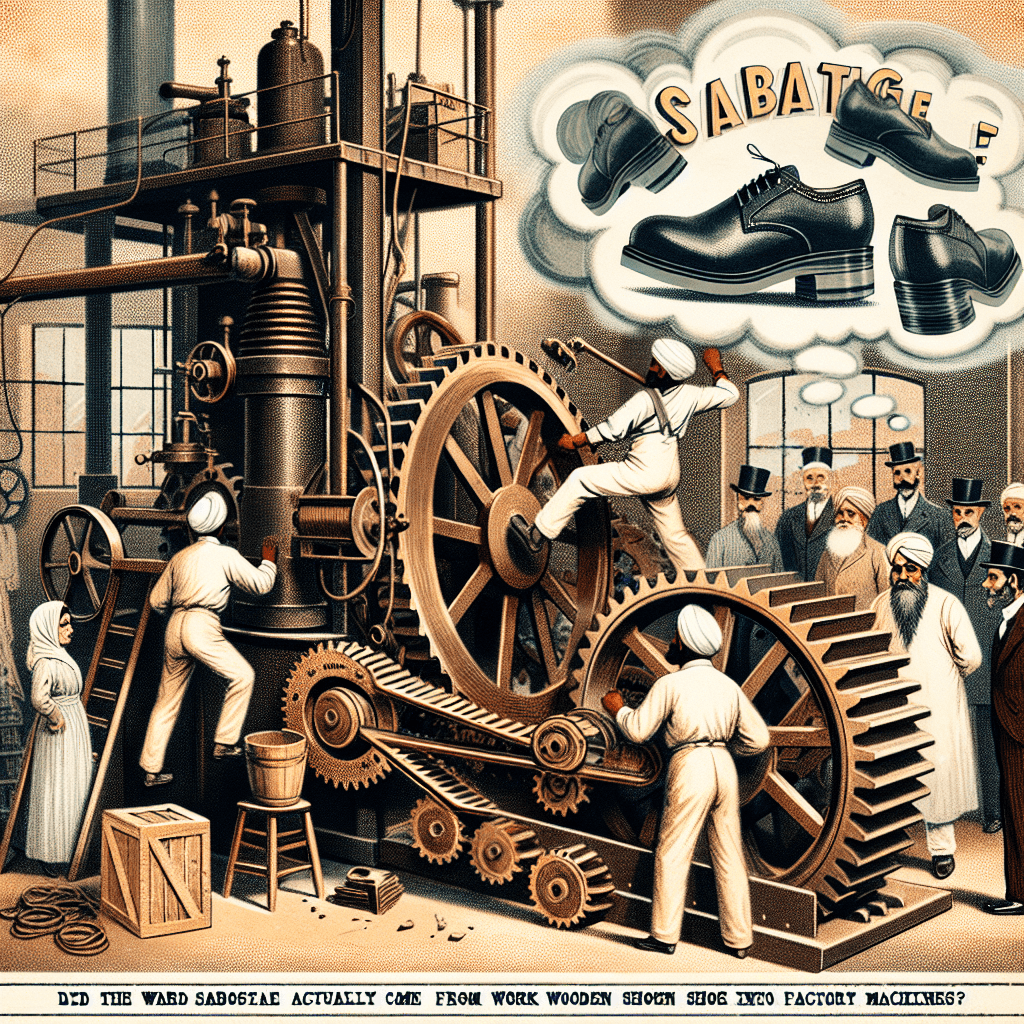
Did the word sabotage actually come from workers throwing wooden shoes into factory machines
The iconic image of a wooden shoe smashing into factory gears is a powerful one, but the real story behind the word "sabotage" is far more surprising than the legend suggests.

Too Long; Didn't Read
TLDR: The story of workers throwing wooden shoes, called sabots, into machinery is a popular myth. The word sabotage actually comes from the French verb meaning to work clumsily or inefficiently, not from the act of destroying machines with shoes.
Unraveling a Myth: Did the Word Sabotage Actually Come from Workers Throwing Wooden Shoes into Factory Machines?
It’s a powerful image: a frustrated factory worker during the Industrial Revolution, pushed to the brink by harsh conditions and meager pay, defiantly throws their wooden shoe—a sabot—into the gears of a massive machine, grinding production to a halt. This story is one of the most famous and compelling tales in etymology, often cited as the definitive origin of the word "sabotage." It paints a picture of direct, grassroots resistance against an oppressive system. But as with many captivating stories, the truth is more complex and, in many ways, more interesting. This post will delve into the historical and linguistic evidence to separate the popular myth from the factual origins of "sabotage."
The Popular Story: A Tale of Clogs and Chaos
The folk etymology of sabotage is simple and dramatic. The story goes that during the early days of industrialization in France and the Netherlands, workers wore wooden shoes called sabots. When they went on strike or wished to protest their exploitation, they would jam these shoes into the factory machinery, causing costly damage and delays. The act became known as sabotage—literally, using a sabot to stop the work.
This narrative is incredibly appealing. It’s a tangible, David-and-Goliath story of the powerless fighting back with the simple tools at their disposal. The image has been cemented in popular culture as a symbol of worker rebellion. However, historical and linguistic experts have found little to no direct evidence to support this specific act as the source of the word. While workers certainly did break machinery, the idea of them specifically using their footwear is likely a later embellishment.
Digging into the Etymology: What the Experts Say
The true origin of the word is more metaphorical than literal. The French word sabot does indeed mean "wooden shoe." From this noun came the verb saboter. Initially, saboter meant to make a clattering noise, similar to the sound of people walking clumsily in wooden shoes.
From there, the meaning evolved figuratively. To saboter something came to mean working clumsily, inefficiently, or producing shoddy work—essentially, to work as if one were wearing cumbersome wooden shoes. It was about botching the job, not necessarily breaking the machine. A worker who was deliberately unproductive or careless could be accused of sabotage. The focus was on the poor quality of the labor, not the destruction of the equipment. According to sources like the Oxford English Dictionary, this sense of the word predates the idea of malicious destruction.
The Rise of the Modern Meaning: Syndicalism and Strikes
The word's shift to its modern, more destructive meaning is closely tied to the rise of the French syndicalist movement in the late 19th and early 20th centuries. Labor unions and organizers began using sabotage as a catch-all term for any tactic used to disrupt industry and pressure employers during disputes.
The French union, the Confédération Générale du Travail (CGT), officially endorsed it as a labor tactic around 1910. However, "sabotage" at this time referred to a wide range of actions, including:
- "Go-slow" tactics: Intentionally working at a snail's pace.
- Work-to-rule: Following safety and other regulations so meticulously that it crippled productivity.
- Malicious obedience: Following orders literally, even when they were obviously flawed.
- And yes, occasionally: The deliberate destruction of property or machinery.
It was during this period of intense labor unrest that the meaning of sabotage broadened to include deliberate damage. The dramatic image of a shoe in the gears likely emerged as a powerful, albeit inaccurate, shorthand to explain the word's connection to the sabot.
Conclusion: A More Nuanced Truth
So, did workers throw their wooden shoes into machines? While not impossible, it is not the true origin of the word "sabotage." The story is a classic case of folk etymology—a plausible and memorable explanation that captures the spirit of an idea but isn't backed by evidence. The word actually evolved from a metaphor for clumsy work (saboter) and was later adopted by labor movements to describe a wide array of disruptive tactics. While the image of a sabot grinding the gears of industry is a compelling myth, the real story reveals a more nuanced history of language, metaphor, and the long struggle for workers' rights.


