
Why are millions of microscopic glass beads mixed into the paint used for highway road lines
Your safety on a dark highway depends on a secret ingredient hidden in plain sight: millions of microscopic glass beads. Discover the fascinating science behind how these tiny spheres transform ordinary paint into a glowing lifeline for every driver.

Too Long; Didn't Read
Microscopic glass beads are mixed into highway paint to provide retroreflectivity. They act like tiny mirrors that reflect light from vehicle headlights back to the driver, making road lines visible and significantly safer during nighttime or low-visibility conditions.
The Science of Night Vision: Why are millions of microscopic glass beads mixed into the paint used for highway road lines?
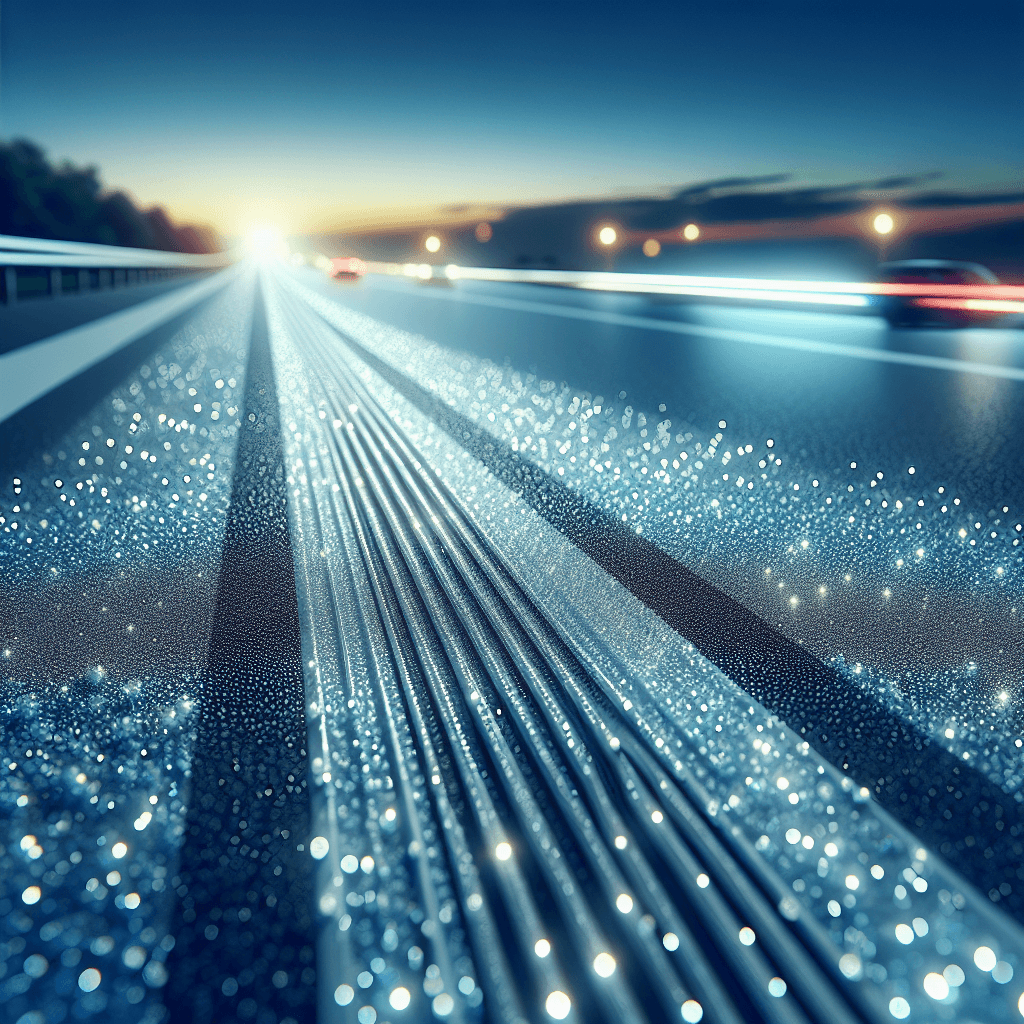
Have you ever wondered why highway lines seem to glow with startling intensity when your headlights hit them at night, yet appear as dull, matte stripes during the day? This phenomenon isn't magic or high-powered electricity; it is the result of clever engineering involving millions of tiny glass spheres. Without these microscopic beads, driving at night would be significantly more dangerous, as standard paint would struggle to remain visible under the glare of modern headlights. This post explores the fascinating physics and safety benefits behind why millions of microscopic glass beads mixed into the paint used for highway road lines are a global standard in infrastructure.
The Principle of Retroreflection
To understand why these beads are necessary, one must first understand the difference between ordinary reflection and retroreflection. When light hits a flat surface, like a standard wall or a mirror, it typically scatters in many directions (diffuse reflection) or reflects away at an angle (specular reflection).
However, microscopic glass beads facilitate retroreflection. This is a process where light rays are returned directly back toward their source—in this case, the driver’s eyes. According to the Federal Highway Administration, retroreflectivity is the primary reason road markings remain visible in low-light conditions. When your headlights strike a bead-embedded line, the glass acts as a lens, focusing the light, hitting the back of the bead (which is coated in paint), and bouncing it straight back to your vehicle.
How the Microscopic Beads Work
The physics of these beads depends on precision. For the "glow" to work effectively, several factors must align:
1. Refractive Index
The beads are typically made from soda-lime glass or high-index glass. The "refractive index" determines how much the light bends when it enters the bead. Most standard beads have a refractive index of 1.5. For extremely rainy or dark conditions, engineers may use "high-index" beads (1.9) to ensure the light returns even more efficiently to the driver.
2. Embedment Depth
The beads cannot simply be mixed into a bucket of paint and slapped onto the asphalt. For maximum efficiency, the beads must be embedded into the binder (the paint or thermoplastic) at a depth of approximately 50% to 60% of their diameter. If they are buried too deep, the light cannot enter; if they sit too high, they will be sheared off by tires or snowplows within days.
3. Sphere Quality
The beads must be as perfectly spherical as possible. Air bubbles or irregularities inside the glass can scatter the light, reducing the brightness of the line. High-quality beads ensure that a consistent "cone" of light is returned to the driver.
Application Methods
There are two primary ways these beads are integrated into our roads:
- Drop-on Application: This is the most common method. As a striping truck sprays fresh paint or molten thermoplastic onto the road, a pressurized system immediately "drops" a layer of glass beads onto the wet surface.
- Premixed Application: In some heavy-duty markings, the beads are mixed directly into the paint material before application. As the top layer of paint wears down over time due to traffic, new beads are exposed, maintaining the line’s visibility throughout its lifespan.
Why This Matters for Road Safety
The inclusion of these beads is a critical safety measure supported by decades of transportation research. Studies by organizations like the American Association of State Highway and Transportation Officials (AASHTO) suggest that high-visibility markings significantly reduce "run-off-the-road" accidents, especially among older drivers or during inclement weather.
Furthermore, as the automotive industry moves toward Advanced Driver Assistance Systems (ADAS) and autonomous vehicles, these beads are more important than ever. Machine vision systems—the "eyes" of self-driving cars—rely on the high contrast and retroreflectivity of road lines to stay centered in lanes and navigate safely.
Conclusion
The next time you find yourself driving safely down a dark highway, you can thank the millions of microscopic glass beads mixed into the paint used for highway road lines. These tiny spheres are a triumph of optical engineering, turning a simple stripe of paint into a sophisticated safety device that guides millions of drivers home every night. By utilizing the power of retroreflection, transportation departments ensure that our infrastructure remains visible, predictable, and safe. As technology evolves, these microscopic beads will continue to play a foundational role in the transition toward smarter, more automated roadways. Understanding the science behind the glow highlights just how much thought goes into even the smallest details of the world around us.


