
Why did a famous Bible once command its readers to commit adultery
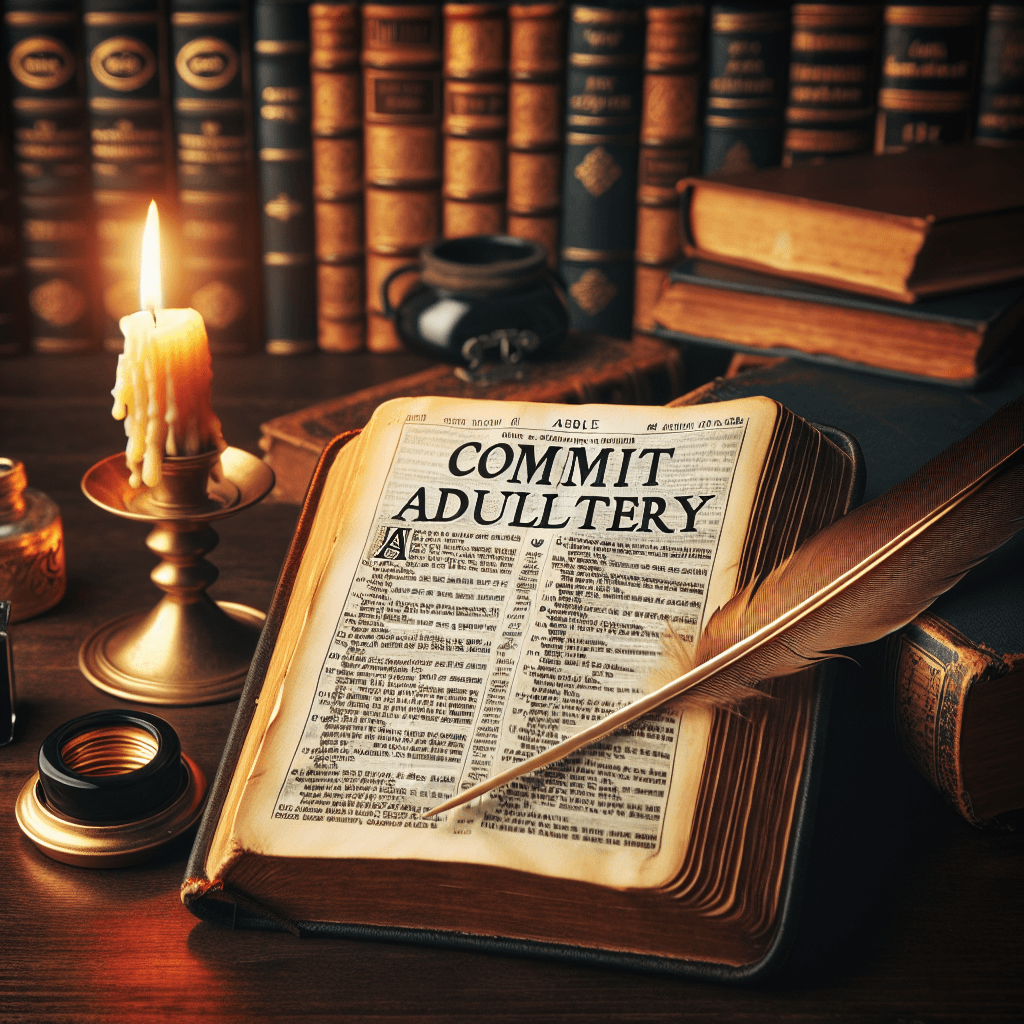
A single, catastrophic typo in a 17th-century printing of the King James Bible turned a holy commandment into an unholy one, creating a sacred text that explicitly ordered its followers to sin.

Too Long; Didn't Read
TLDR: A 1631 printing of the King James Bible, known as the Wicked Bible, accidentally omitted the word not from the seventh commandment, making it read Thou shalt commit adultery. This massive typo led to the printers being fined and most copies being destroyed.
The Wicked Bible: Why Did a Famous Bible Once Command Its Readers to Commit Adultery?
What if the most sacred text in Western civilization, the very book that provides the foundation for the Ten Commandments, contained a glaring error that turned a core moral law on its head? Imagine opening your Bible to Exodus and reading the seventh commandment not as "Thou shalt not commit adultery," but as a direct order: "Thou shalt commit adultery." This wasn't a hypothetical scenario; it was a shocking reality in 17th-century England. This infamous edition, now known as the "Wicked Bible" or the "Sinners' Bible," caused a scandal that led to severe punishment and a legacy that endures centuries later. This post explores the incredible story behind this catastrophic printing mistake, examining how it happened, the swift and severe fallout, and why it remains one of history's most fascinating blunders.
A Commandment's Catastrophic Typo
In 1631, the royal printers Robert Barker and Martin Lucas were commissioned to produce a new edition of the King James Bible. As the official printers to King Charles I, their work was expected to be flawless. However, in their reprint of the holy book, a crucial, three-letter word was omitted from one of the most important passages.
In the book of Exodus, chapter 20, verse 14, the text read: "Thou shalt commit adultery."
This wasn't the only error in the edition—another typo in Deuteronomy 5:24 referred to the "great-asse of God" instead of the "greatnesse of God"—but the command to sin was by far the most egregious. The error went unnoticed for about a year, during which time around a thousand copies of the "Wicked Bible" were printed and circulated throughout England.
The Discovery and Royal Outrage
When the blasphemous mistake was finally discovered, the reaction from the authorities was swift and merciless. King Charles I was enraged, as was the influential Archbishop of Canterbury, William Laud. They viewed the error not just as an embarrassing mistake but as a moral and spiritual offense of the highest order.
Barker and Lucas were immediately summoned to the Star Chamber, a royal court known for its harsh judgments. The printers faced severe consequences for their perceived negligence:
- A Massive Fine: They were fined £300, an astronomical sum at the time, equivalent to a fortune today. This financial penalty ultimately bankrupted Robert Barker.
- License Revoked: Their prestigious license to print was stripped from them, destroying their professional careers.
- Mass Destruction: The court ordered that all copies of the "Wicked Bible" be recalled and publicly burned.
This severe response underscored the immense power and sanctity of the printed word in the 17th century, especially when it came to the Bible.
Was It a Mistake or Malice?
Historians have debated the cause of this scandalous error for centuries. Two primary theories exist.
The most widely accepted explanation is that it was simply a compositor's error—a tired typesetter accidentally left out the word "not" while painstakingly arranging the individual letters for the printing press. In an era of manual printing, such mistakes, known as typos, were not uncommon, though rarely were they so scandalous.
However, a more intriguing theory suggests industrial sabotage. Robert Barker was embroiled in a bitter professional and financial rivalry with another printer, Bonham Norton. Some speculate that a rival, possibly Norton himself, may have paid a typesetter to deliberately introduce the error to ruin Barker's reputation and business. While there is no definitive proof for this claim, the competitive nature of the London printing trade makes it a plausible, if dramatic, possibility.
The Enduring Legacy of the "Wicked Bible"
Thanks to the crown's order to destroy every copy, the "Wicked Bible" is now exceptionally rare. It is estimated that only around 20 copies survive today, held in museums and private collections around the world. These surviving editions are highly sought-after artifacts, serving as a powerful reminder of a moment when a simple typo caused a national scandal. The story of the "Wicked Bible" highlights not only human fallibility but also the immense cultural and religious authority attributed to the Bible, where a single missing word could transform a sacred commandment into a license for sin.
The tale of the "Wicked Bible" is a fascinating footnote in the history of printing. It stands as a testament to the profound impact a tiny error can have, turning a holy book into an infamous artifact and ruining the lives of those responsible. This 17th-century blunder reminds us that behind every printed text, sacred or secular, lies a human process, susceptible to mistakes that can echo for centuries. It serves as a stark and unforgettable lesson on the power of the printed word and the importance of a good proofreader.


