
Why did doctors once believe blowing tobacco smoke up someone's backside could save them from drowning
Before modern CPR, doctors believed the secret to reviving drowning victims lay in a bizarrely personal procedure: the tobacco smoke enema. Discover the strange history of how blowing smoke became the gold standard for 18th-century life-saving—and why it eventually went up in flames.

Too Long; Didn't Read
In the 18th century, doctors used tobacco smoke enemas on drowning victims because they believed the warmth and nicotine could stimulate the heart and lungs while drying out internal moisture. This practice was thought to restore vital heat and breathing until the discovery of tobacco's toxicity led to its medical downfall.
From Life-Saving to Lethal: Why Did Doctors Once Believe Blowing Tobacco Smoke Up Someone's Backside Could Save Them From Drowning?
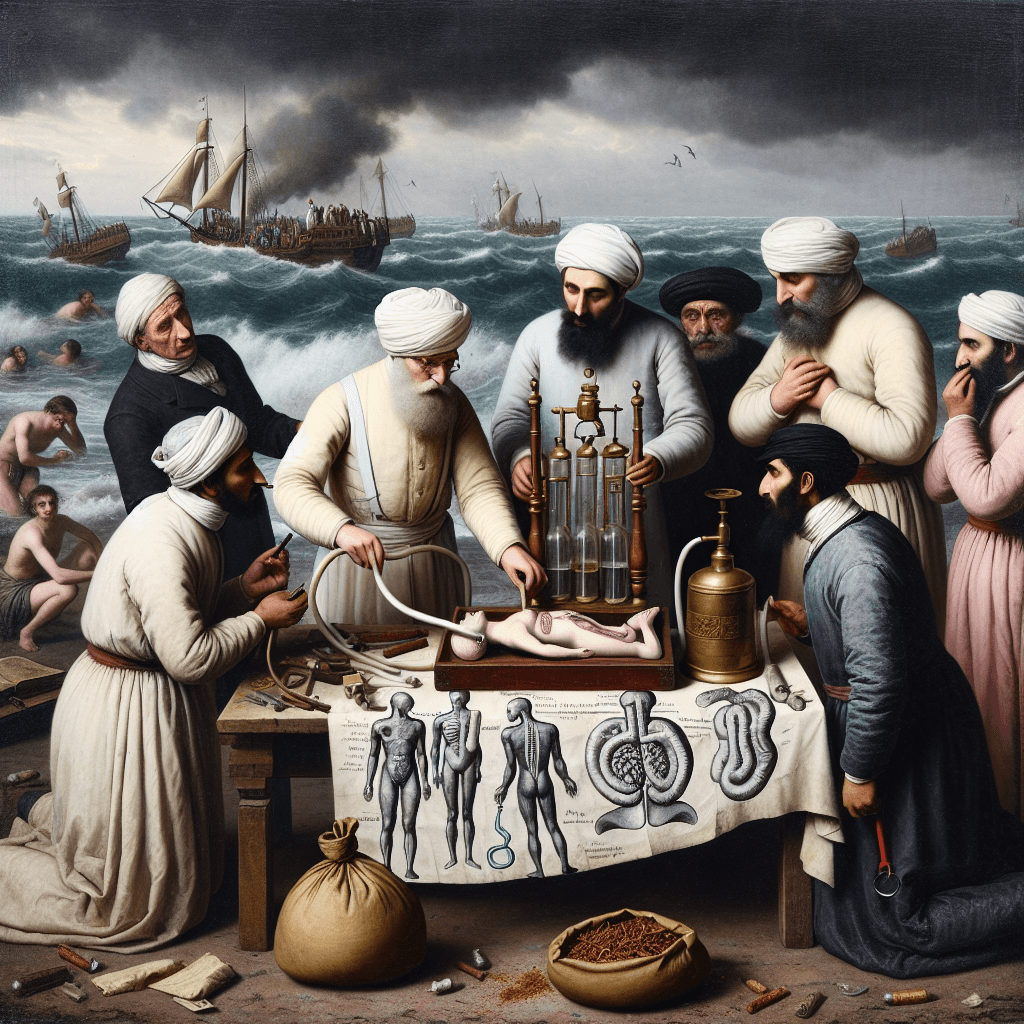
Imagine strolling along the banks of the River Thames in the late 18th century and witnessing a crowd huddled over a near-drowning victim. Instead of chest compressions or mouth-to-mouth resuscitation, you might see a physician frantically pumping tobacco smoke into the victim’s rectum using a set of bellows. While it sounds like the premise of a dark comedy, the tobacco smoke enema was once a pinnacle of emergency medicine. This practice raises a fascinating question: Why did doctors once believe blowing tobacco smoke up someone's backside could save them from drowning? To modern ears, it sounds absurd, but in the context of 18th-century medical theory, it was considered a logical, cutting-edge intervention. This post explores the historical theories and scientific misconceptions that made this bizarre procedure a standard lifesaving technique.
The Logic of Heat and Stimulation
The primary reason physicians supported tobacco smoke enemas was rooted in the prevailing medical understanding of the "vital spark." During the 1700s, doctors believed that death from drowning was often a state of "suspended animation" rather than an immediate end. They theorized that the body was merely too cold and its systems too sluggish to function.
According to research into Enlightenment-era medicine, tobacco was viewed as a powerful stimulant. Because tobacco was "hot" and "dry" in the context of humoral theory, doctors believed it could:
- Restore internal warmth: The heat of the smoke was thought to dry out the moisture from the lungs and warm the victim’s core.
- Stimulate the nervous system: The nicotine in the smoke was expected to irritate the intestinal lining, sparking a physiological reaction that would "wake up" the heart and lungs.
- Induce respiration: It was believed that the pressure of the smoke could stimulate the diaphragm and force the body to begin breathing again.
The Royal Humane Society and the "Tobacco Kit"
The practice became institutionalized largely through the efforts of the "Society for the Recovery of Persons Apparently Drowned," which later became the Royal Humane Society. Founded in 1774, this organization was dedicated to finding ways to resuscitate those pulled from the water.
At the time, the Society placed "resuscitation kits" at various points along the Thames. These kits were remarkably advanced for their era but included a set of bellows and a variety of tubes specifically designed for rectal fumigation. According to historians at the University of Virginia's Claude Moore Health Sciences Library, these kits were considered essential equipment for any apothecary or physician attending to a water-side emergency. The procedure was so highly regarded that the Society even offered rewards to anyone who successfully revived a victim, often using tobacco smoke as the primary method.
The Mechanics of the Procedure
To perform the resuscitation, a physician would insert a long pipe connected to a set of bellows into the patient’s rectum. The bellows contained burning tobacco, and the doctor (or an assistant) would manually pump the smoke into the bowels.
Why the Rectum?
Medical professionals of the 18th century believed the intestines were a direct gateway to the body’s internal systems. While we now know the lungs are the primary focus for resuscitation, the medical consensus then was that the "irritability" of the gut was the fastest way to trigger the "vital spirits." This method was preferred over blowing smoke into the lungs, as it was mistakenly believed that the digestive tract offered a more efficient route for stimulation without the risk of further choking the victim.
The Decline of the Tobacco Smoke Enema
The popularity of the tobacco smoke enema began to wane in the early 19th century as medical science progressed. The primary catalyst for its decline was the discovery of the toxic nature of nicotine. In 1811, English scientist Benjamin Brodie conducted experiments demonstrating that nicotine was a powerful heart poison. He discovered that injecting tobacco into the system could actually stop the heart rather than restart it.
Furthermore, as the understanding of respiration improved, doctors began to realize that oxygen—not smoke or heat—was the critical element needed to revive a drowning victim. By the mid-1800s, the practice of rectal fumigation was largely abandoned in favor of early forms of artificial respiration and chest manipulation.
Conclusion
The history of the tobacco smoke enema serves as a stark reminder of how medical "facts" can shift as our understanding of the human body evolves. Why did doctors once believe blowing tobacco smoke up someone's backside could save them from drowning? It was a combination of desperate necessity, an incomplete understanding of respiratory physiology, and a misplaced faith in the stimulating properties of tobacco. While the procedure appears nonsensical today, it was born out of a genuine desire to save lives using the best tools available at the time. Today, this historical oddity underscores the importance of the scientific method and the constant need to test and refine medical practices to ensure they truly do more good than harm.


