
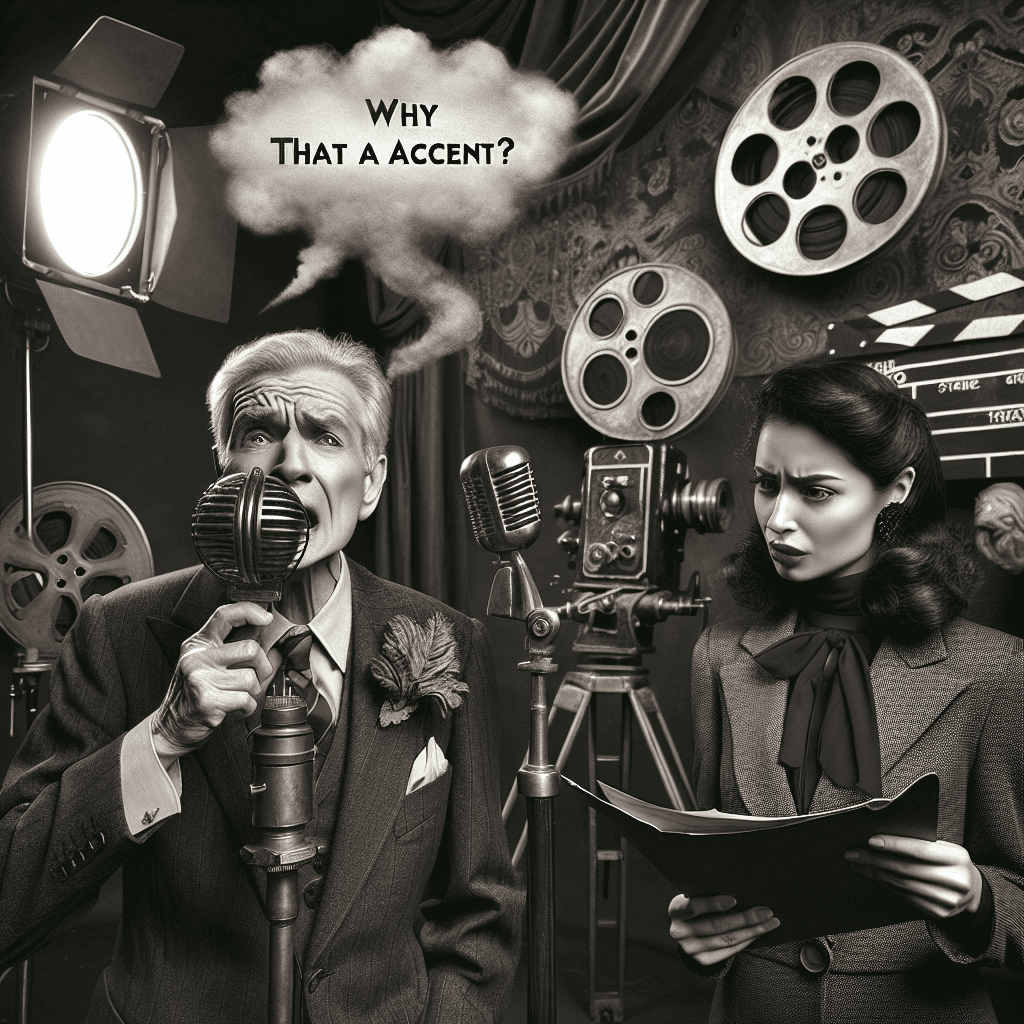
Why do actors in old movies have that weird, fake-sounding accent
That polished, vaguely British accent you hear in classic films wasn’t real. It was a completely manufactured illusion of high society, and its story reveals a bizarre, forgotten chapter of Hollywood history.

Too Long; Didn't Read
TLDR: It was a deliberately taught, artificial accent called the Mid-Atlantic accent, a mix of American and upper-class British English. Actors used it to sound sophisticated and be clearly understood on primitive audio equipment before more realistic acting became popular.
Decoding the 'Movie Accent': Why Do Actors in Old Movies Have That Weird, Fake-Sounding Accent?
Ever watched a classic film from the 1930s or ‘40s and found yourself captivated, not just by the black-and-white cinematography, but by the peculiar way the actors speak? Their voices are crisp, their vowels are clipped, and their speech has a strange, almost placeless quality that sounds neither fully American nor entirely British. You’re not imagining it, and it’s not how everyone used to talk. That distinctive cadence is a deliberately crafted accent, and understanding its origins reveals a fascinating intersection of technology, class, and the art of performance. This post will decode that "weird, fake-sounding accent" and explore why it was once the gold standard of Hollywood.
What is That Accent, Anyway? The Mid-Atlantic Sound
That old-timey movie accent has a name: the Mid-Atlantic accent, sometimes called the Transatlantic accent. The name is a clue to its sound—it was designed to land somewhere "in the middle of the Atlantic Ocean," blending features of cultivated American English with the British "Received Pronunciation" (the accent often associated with the BBC or the Royal Family).
Crucially, it was not a natural, regional dialect. No one was born speaking this way. Instead, it was an acquired accent, taught in elite East Coast boarding schools, finishing schools, and, most importantly, in drama programs. For aspiring actors of the Golden Age, mastering the Mid-Atlantic accent was as essential as learning to hit your mark. It was the sound of sophistication, education, and worldly prestige.
The Reasons Behind the 'Talkies' Talk
The widespread adoption of the Mid-Atlantic accent wasn't just a stylistic whim. It served several practical and cultural purposes during the dawn of sound in cinema.
The Need for Clarity
The single biggest driver was technology. When "talkies" first emerged in the late 1920s, sound recording and playback equipment was primitive. Microphones weren't very sensitive, and the speakers in cavernous movie palaces could be muddy. The Mid-Atlantic accent, with its sharp enunciation, crisp consonants (especially 't's), and deliberate avoidance of mumbling, was engineered for maximum clarity. Every syllable was designed to cut through the technological limitations and be understood by the entire audience.
A Touch of Class and Universality
In the early 20th century, a British-inflected accent was a strong signifier of high social standing and a worldly education. By adopting this sound, Hollywood studios could:
- Elevate their stories: It made characters seem more sophisticated and aspirational.
- Create "placeless" actors: The accent erased any specific regional identity (like a Brooklyn or Southern drawl), allowing stars like Cary Grant or Katharine Hepburn to believably play characters from any background, as long as it was an upper-class one. It made them universally marketable.
Theatrical Tradition
Many of the first film actors came directly from the stage, where vocal training was paramount. On stage, actors had to project their voices to the back of the theater without microphones. This required a powerful, highly articulated, and somewhat stylized manner of speaking. The Mid-Atlantic accent was a direct descendant of this theatrical vocal training, adapted for the new medium of film.
The Decline of a Dialect: Why We Don't Hear It Anymore
By the end of World War II, cultural tides were turning. The Mid-Atlantic accent began to sound increasingly artificial and out of touch with a world that was starting to value authenticity and realism. The rise of new acting styles, most notably "Method" acting championed by stars like Marlon Brando and James Dean, celebrated naturalism. These actors brought a raw, emotional, and vocally unpolished energy to the screen, using their natural regional accents. As sound technology improved, the technical need for hyper-enunciation disappeared. The Mid-Atlantic accent quickly became a relic, a linguistic signpost of a bygone era.
Conclusion
That "weird, fake-sounding accent" from old movies is a linguistic time capsule. It wasn't fake so much as it was highly constructed—a tool born of technological necessity and cultural aspiration. The Mid-Atlantic accent represents a pivotal moment in film history when Hollywood was defining its voice, literally. While we may not hear it in modern cinema, it remains an indelible part of the classic films we love, reminding us that the way we tell our stories, and even the way we speak, is constantly evolving. The next time you watch a classic, listen closely; you're hearing not just a performance, but a piece of history.


